






 Portuguese
  Spanish


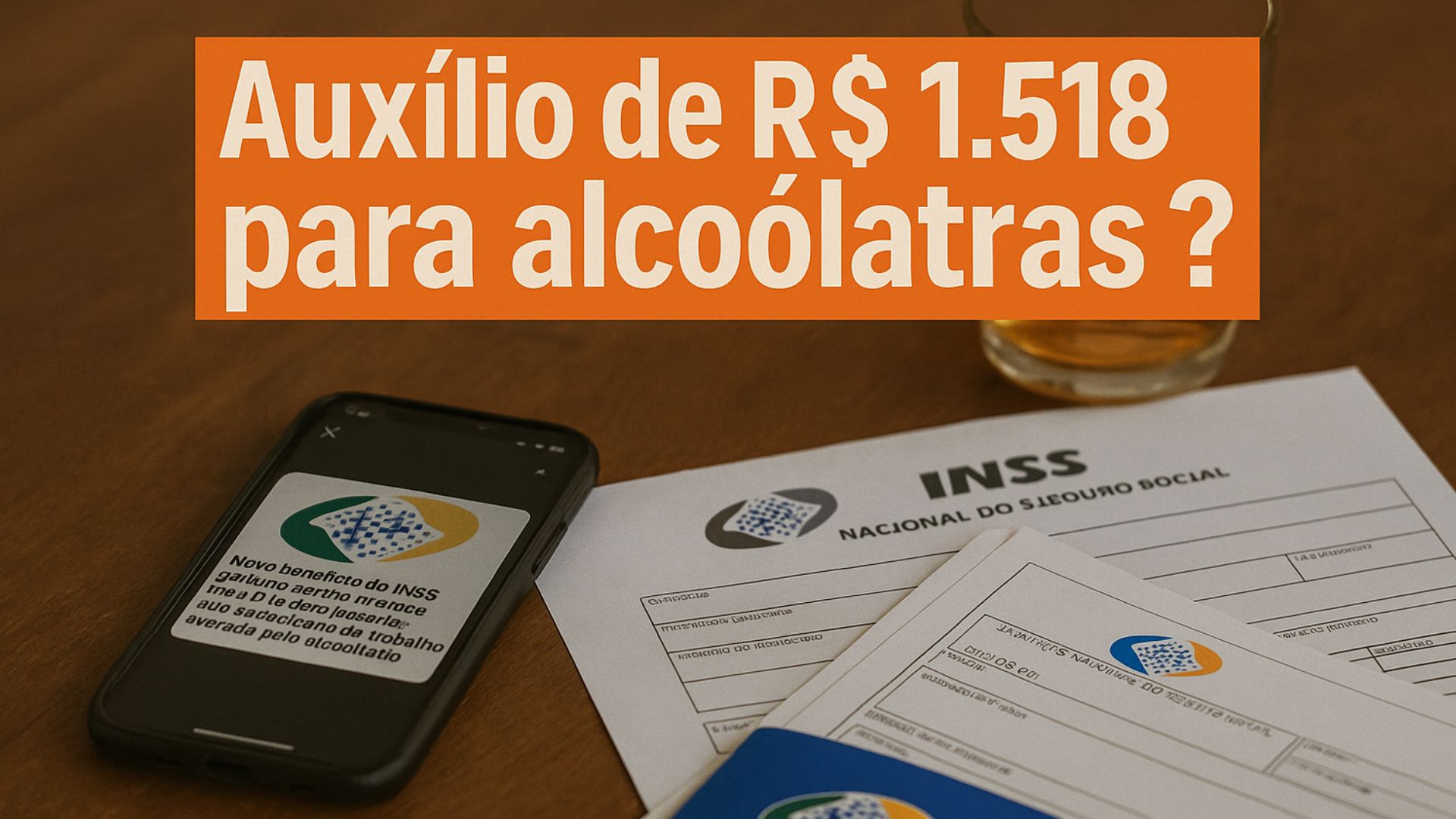


Social Media Post Generated Over 1.5 Million Views by Suggesting the Creation of an INSS Benefit for Alcohol Dependents, but Official Agencies Denied and Clarified Which Programs Actually Exist.
It is false that the federal government has created a “new INSS benefit” for people with alcoholism worth R$ 1,518.
The message, which went viral on X this September and surpassed 1.5 million views, uses the INSS logo and suggests automatic payment of a minimum wage to those whose capacity to work has been affected by dependency.
There is no “Alcoholic Benefit” or any exclusive program with direct cash transfers to this audience.
-
How to Prevent Brown Recluse Spider Bites: Common Hiding Spots and Free Tips to Reduce Risks

-
Natto: The Unusual Japanese Superfood Gaining Popularity on Social Media and Driving Record Exports
-
Brazilian Mayor Goes Undercover as Homeless for 24 Hours to Assess Public Services

-
15-Year-Old Entrepreneur Malu Lira Publishes 20 Children’s Books on Financial Education, Earns $500,000, and Expands Her Project to the Amazon Rainforest




The misleading post mixes image and caption with an official tone to induce credibility.
The text claims that the institute “guarantees a minimum wage” to anyone who proves alcoholism, without mentioning criteria, laws, or the process required to access benefits.
In practice, what exists is a set of pension and assistance rules that apply to different diseases and conditions, and not to a specific group.
Federal government agencies were consulted by fact-checking initiatives.
INSS, Ministry of Social Security, Ministry of Development and Social Assistance, and Secretariat of Social Communication denied the creation of a new benefit.
The departments clarify that individuals with alcohol dependency may, in certain cases, access benefits already provided by law, as long as they meet legal requirements and undergo medical and social evaluation.
In other words, alcoholism can be considered in expert evaluations, but does not automatically grant the right to a minimum wage.
What Exists Today in INSS and Assistance
The legislation provides for temporary incapacity assistance when the insured needs to be absent from work for more than 15 days and can prove, through a report, the temporary inability to perform their activities.
There is also the permanent incapacity retirement, intended for those who, after treatment and rehabilitation, remain incapacitated for any work activity.
In these situations, alcohol dependency may be noted in the patient record and influence the expert conclusion, as long as the technical criteria are met.
In addition to the pension realm, there is the BPC (Continuous Cash Benefit), provided for in the Organic Law on Social Assistance since 1993.
The BPC pays a minimum wage to those over 65 years old and to persons with disabilities in social vulnerability, upon medical and social evaluation and verification of family per capita income below the legal limit.
Alcoholism, by itself, is not a “category” of the BPC.
In some cases, however, the set of functional limitations resulting from dependency can be considered in the analysis of disability.
Even so, the granting depends on reports, documents, and meeting all socioeconomic requirements.
Where the Confusion on Social Media Comes From
The rumor relies on a real data point to build a false narrative.
In 2025, the minimum wage is R$ 1,518, a figure frequently used as a reference for assistance and pension benefits.
The misleading message takes this number and presents it as if there were a program created for “alcoholics,” without clarifying that the figure is merely the national floor, applied to benefits that are not automatic and are not exclusive to alcohol dependency.
Another point contributing to the distortion is the existence of specific court decisions recognizing, in very specific contexts, severe alcohol dependency as a disability for BPC purposes.
These cases are individual, based on medical and social evidence, and do not translate into a general rule valid for all.
By turning exceptional situations into supposed broad and immediate rights, misinformation gains traction and confuses the public.
What the Ministries Inform
According to official statements and responses to fact-checks, there has been no creation of a “new benefit”.
For the INSS, if the insured needs to be absent due to an illness — including alcohol dependency — they must request incapacity benefits, which will be analyzed case by case by medical evaluation.
Meanwhile, the MDS reiterates that the BPC continues to be governed by the same rules: evaluation of disability and socioeconomic context, without provision for automatic payment solely based on an alcoholism diagnosis.
In the meantime, the Secretariat of Social Communication of the Presidency emphasizes that the use of the INSS brand in pieces promising money without requirements is a misinformation tactic.
There is no ordinance, law, or regulatory act creating a “subsidy for alcoholics” of R$ 1,518.
Shelter and Treatment
The MDS and other branches of social and health departments finance shelter and care services for people with disorders related to alcohol and other drug use.
These initiatives include licensed therapeutic communities and psychosocial care networks, with rules for hiring, monitoring, and accountability.
The goal is to provide treatment and social reintegration, not to transfer money directly to those sheltered.
The model is residential and temporary, of a voluntary nature, and the stay is conditioned on clinical and social protocols.
This arrangement explains why messages circulate that mention the government and alcohol in the same context, but does not imply the existence of a benefit in kind.
Network services differ from individual financial benefits: the former provide care; the latter transfer income.
Mixing the two creates narrative shortcuts that do not correspond to the current public policy.
What to Do in Case of Incapacity or Vulnerability
Those facing work incapacity due to dependency can contact INSS to request temporary incapacity assistance or permanent incapacity retirement, armed with recent clinical documentation.
Individuals in social vulnerability with disability resulting from severe functional limitations can seek the BPC, as long as they meet income criteria and undergo medical and social evaluations.
Additionally, families and individuals can turn to the health network and social assistance in municipalities for shelter, follow-up, and treatment.
In summary, Brazilian legislation provides for technical and socioeconomic criteria for granting benefits. Diagnoses, including that of alcoholism, do not guarantee granting on their own.
Thus, according to specialists, the viral promise of an automatic payment of R$ 1,518 for “alcoholics” is not supported by official regulations, administrative decisions, or policies announced by the federal government.






