Portuguese
  Spanish


With The Growth Of The Pulp Industry, A Previously Forgotten Highway Has Become A Bottleneck For Heavy Freight. The Government Has Finally Announced A Recovery Plan.
The state of Mato Grosso do Sul is about to take a crucial step to improve its logistical infrastructure.
A Previously Little-Traveled Highway Has Become Essential For The Transportation Of Products From Key Sectors.
However, with the significant increase in heavy truck traffic, the road has deteriorated rapidly.
-
Brazilian Steel Giant Partners with USP to Develop 40% Stronger Rebar for World’s Tallest Residential Building in Brazil’s Senna Tower

-
Oil Prices Drop to $72 as 20 Million Barrels Pass Through Strait of Hormuz in 24 Hours, Easing Supply Fears but Regional Tensions Keep Market on Edge

-
Brazil’s Ministry of Justice Investigates CazéTV for Betting Ads During World Cup Broadcasts

-
Brazilian Retail Giant Americanas Faces $10 Billion Asset Freeze Amid Investigation into Hidden Debts


Now, the state government promises a major intervention that could transform this reality.
Work Will Be Launched By March
The Agesul (Agency for Undertakings of Mato Grosso do Sul) has completed the project and intends to launch, by March, the bidding for the recovery of a portion of MS-377.
The highway, which connects BR-262 to the city of Inocência, plays a fundamental role in the logistics of agribusiness and the pulp industry.
Strategic Role of MS-377 In The Economy
In recent years, the flow of heavy vehicles has increased rapidly, primarily driven by Suzano and Arauco, two giants in the pulp industry.
The road has become the main transportation route for ore, construction materials, and eucalyptus logs.
Moreover, the arrival of new undertakings has reinforced the need for infrastructure improvements.
Priority Section Of Recovery
Although a complete restructuring of MS-377 is not planned, the state government announced that 50 kilometers of the highway will be recovered.
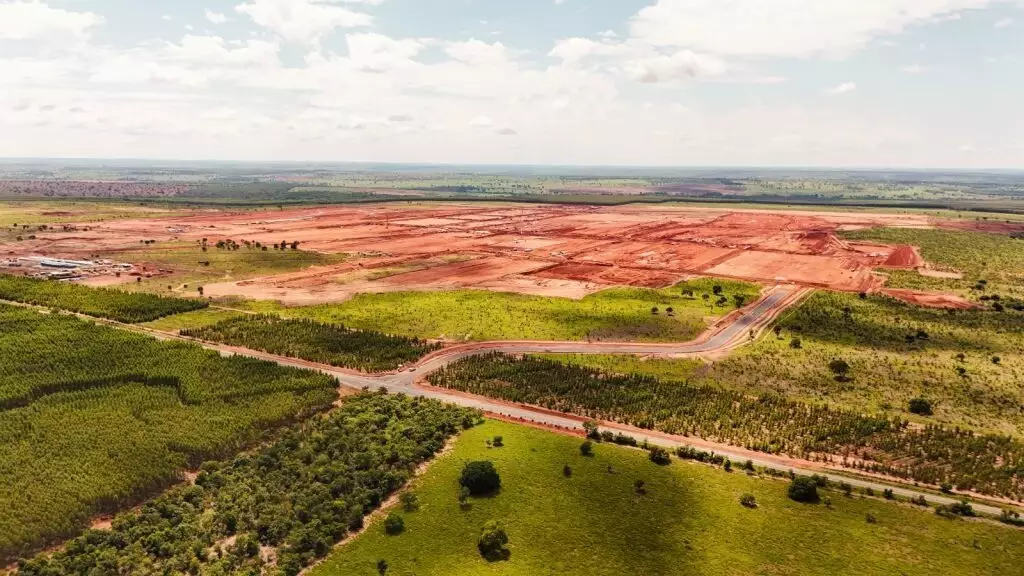
This section comprises the access to the city of Inocência to the junction with MS-320, precisely the area that houses the new industrial unit of Arauco.
Currently, the company’s work is in the earthworks phase, with construction scheduled to begin in the second half of 2025.
Logistical Infrastructure and Regional Growth
The installation of the logistics center of Suzano in the region was another factor that drastically increased traffic on MS-377.
The company invested in the construction of a storage and shipping terminal for the produced pulp, using the railway network of Ferronorte for transport to the Port of Santos.
Previously, the transportation was done via the western network, but the deactivation of the tracks forced companies to adapt their routes.
Parallel Works and New Investments
In addition to the recovery of the highway, the state government has already started the construction of a airfield in the region, an investment of R$ 3.1 million.
The goal is to improve mobility and meet the growing demand of the industrial and business sectors.
At the same time, new private ventures are emerging near the access junction to the city, consolidating local economic growth.
Project Details And Investments
Agesul has not yet disclosed the exact amount for the work on MS-377, but preliminary information indicates that the project will include asphalt recovery and the implementation of third lanes to enhance traffic flow.
The Intense Traffic Of Trucks Has Already Compromised The Quality Of The Road, which today presents several pothole-ridden and poorly maintained sections.
Other investments in the state’s road network are planned.
The government formalized a loan of R$ 2.3 billion with BNDES, intended for works on 818 kilometers of highways, with 569 kilometers for new pavements and 249 kilometers for the recovery of existing roads.
Environmental And Sustainable Impacts
With the growth of industrial and logistical activity in the region, experts warn of the need for sustainable planning.
The increase in traffic may generate environmental impacts, such as noise pollution and gas emissions.
Companies like Suzano and Arauco have already adopted measures to reduce their environmental impact, but the need for efficient and sustainable road planning becomes increasingly evident.
Challenges For The Future
The investment in infrastructure is seen as positive, but experts caution that the recovery of 50 kilometers may not be sufficient to meet the growing demand.
With the advancement of the pulp sector and the intensification of agro-industrial production, a continuous plan for maintenance and expansion of the road network will be necessary.
Is Infrastructure A Bottleneck For Growth?
Given the exponential growth of the pulp sector and the increasing demand for adequate infrastructure, the question remains: will current investments be enough to keep pace with the region’s economic expansion? Share your opinion in the comments!