






 Portuguese
  Spanish


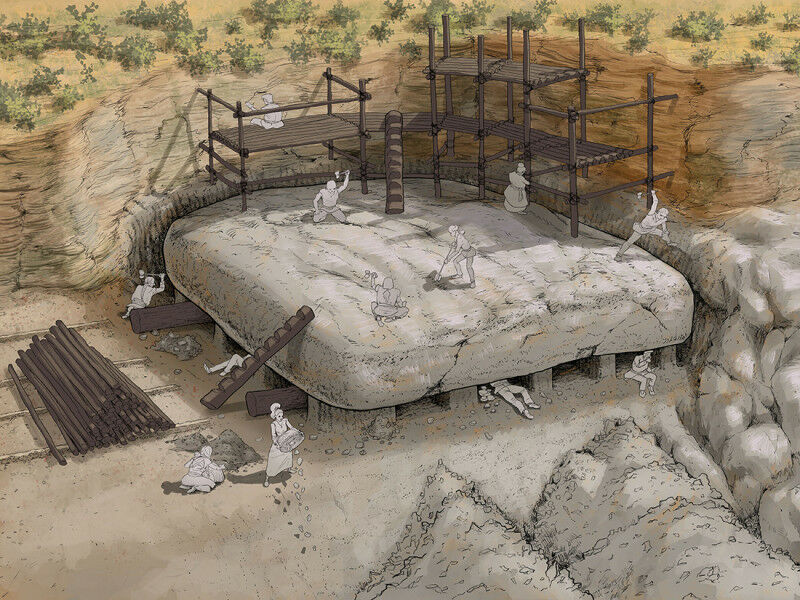


Archaeological Discovery Reveals A Monumental Structure Built By Ancient Peoples Almost 6,000 Years Ago, Demonstrating Great Skill In The Use Of Giant Stones.
Almost six thousand years ago, long before the pyramids of Egypt were erected, a mysterious civilization built a monumental structure with colossal stones weighing up to 150 tons. How did these native peoples, without metal tools or advanced technology, move and fit such gigantic blocks?
What motivated this impressive construction? The answers are hidden in one of the most enigmatic archaeological sites in history.
This is the Dolmen of Menga, located in Antequera, Spain, and is one of the most impressive megalithic structures in the world. Built around 3,800 B.C., it is older than the pyramids of Egypt.
-
Couple Converts 1925 Detroit Bank into Home, Earns $40,000 Annually on Airbnb

-
Tired of Seeing People Sleep in the Cold, London, Canada Opens First Modular Shelter for Homeless with 60 Cabins, Heating, Meals, and Dog Area
-
Brazil’s $1.3 Billion, 870-Meter Immersed Tunnel to Be Latin America’s First of Its Kind, Featuring Special Public Facilities and Information Center
-
Brazilian Innovator Develops Concrete Blocks from Recycled Plastic, Eliminating Mortar and Reducing Construction Costs


A study published in the journal Scientific Reports, from the Nature group, revealed details about the origin and transport of the colossal stones used in this construction.
Researchers from the University of Seville, led by José Antonio Lozano from the Spanish Institute of Oceanography – CSIC, participated in the research.
The study utilized high-resolution geological mapping, petrographic and stratigraphic analyses to determine the origin of the stones of the monument.
The team concluded that the giant blocks, including the largest of them, Cobija 5, weighing approximately 150 tons, were extracted from quarries located at Cerro de La Cruz. This site is located about one kilometer straight west of the Dolmen of Menga.
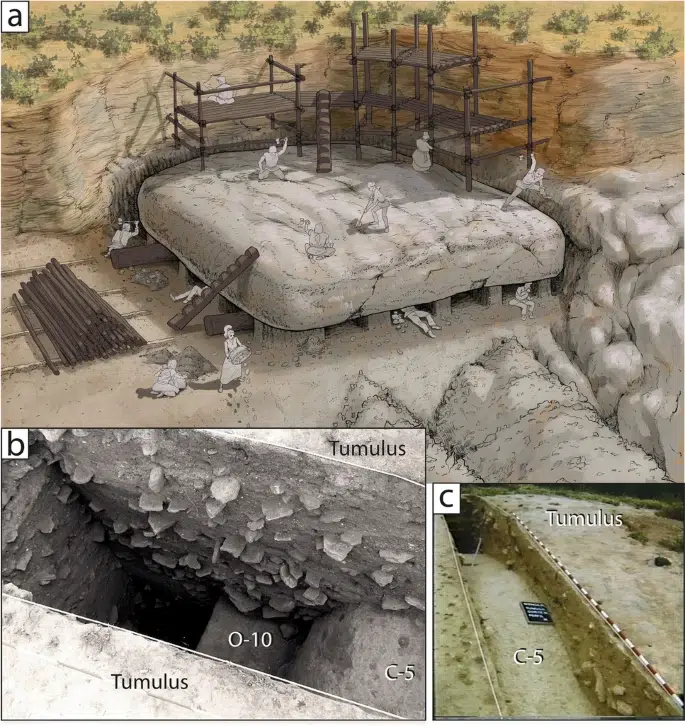
a ) Artistic representation of the extraction activity for the extraction of the crest C-5 in the Quarry Cerro de la Cruz
b ) Aspect of the thickness and shape of the crest C-5, of the support of part of the orthostat O-10 and of the tumulus structure.
c ) Convex morphology of the top of crest C-5 and thickness of the tumulus structure.
Soft Stone And Technological Advancement
The stones used are mainly calcarenites, a poorly cemented detrital sedimentary rock. This characteristic makes them comparable to the so-called “soft stones” used in modern civil engineering.
The study suggests that the choice of this material indicates the use of new technologies at the time. The transport of the stones occurred in a downward direction, with an average slope of 22°, facilitating movement to the final location.
The presence of natural fractures in the quarries aided in the extraction and transport of the stones. The study highlights that the Late Neolithic communities had an advanced knowledge of the geotechnical properties of rocks and soil.
They avoided the use of marls and clays for the location of the megalith and chose suitable substrates to ensure the stability of the structure.
Detailed Planning And Complex Logistics
The construction of the Dolmen of Menga required intensive planning and precise logistics. The movement of the stones, some weighing tens of tons, required sophisticated techniques.
It is estimated that the carpentry used in the transportation and elevation of the rocks required large amounts of wood.
The construction of ramps and specific paths for the movement of the blocks was essential. Each stone was transported with care to avoid damage, given that calcarenites are relatively fragile. The study suggests that the organization of this operation mobilized a large contingent of workers and material resources.
One of the most notable aspects of the monument is Cobija 5, the largest stone used in the structure. Located at the back of the megalithic temple, its position highlights the complexity of the construction and the skill of the builders of the time.
This element reinforces the idea that Menga represents one of the greatest achievements of megalithic engineering in prehistoric Iberia and Europe.
Advanced Knowledge Of Rocks And Soil
The location of the quarries was an essential factor in the construction of the Dolmen of Menga. The study shows that the builders had advanced knowledge about the materials used.
They avoided the use of poorly consolidated rocks and carefully selected the soil for the structure’s foundation.
To ensure the stability and preservation of the monument, the builders created a waterproof mound. This method prevented water infiltration and helped preserve the soft stones.
In addition, structural pillars were used to reinforce the construction and ensure its longevity. This approach reveals a sophisticated understanding of megalithic engineering and architecture.
UNESCO World Heritage
The Dolmen of Menga is part of the Antequera Dolmens Site, declared a UNESCO World Heritage Site in July 2016.
This recognition reinforces its historical and archaeological importance. The monument is considered the largest megalithic structure in Western Europe, predating the pyramids of Egypt.
The construction technique employed in the Dolmen of Menga also differentiates it from other megalithic monuments, such as Stonehenge in the United Kingdom. While Stonehenge had its first phase of construction around 3100 B.C., the Dolmen of Menga was erected about 300 years earlier. Furthermore, the techniques employed in soil selection and stone transport demonstrate an advanced level of planning and execution.
The discovery regarding the origin of the stones and the logistics involved in the construction of the Dolmen of Menga expands the understanding of Neolithic societies. The study shows that these communities had a sophisticated understanding of geology and engineering techniques. The complexity of the work reinforces the significance of this monument as one of the greatest achievements of prehistoric Europe.
The research conducted by José Antonio Lozano’s team highlights the ability of these ancient civilizations to develop innovative solutions for the construction of lasting monuments. The Dolmen of Menga remains a testament to the technological advancement and ingenuity of Neolithic communities, establishing itself as one of the most important landmarks in human history.




Fotos do lugar pf