






 Portuguese
  Spanish


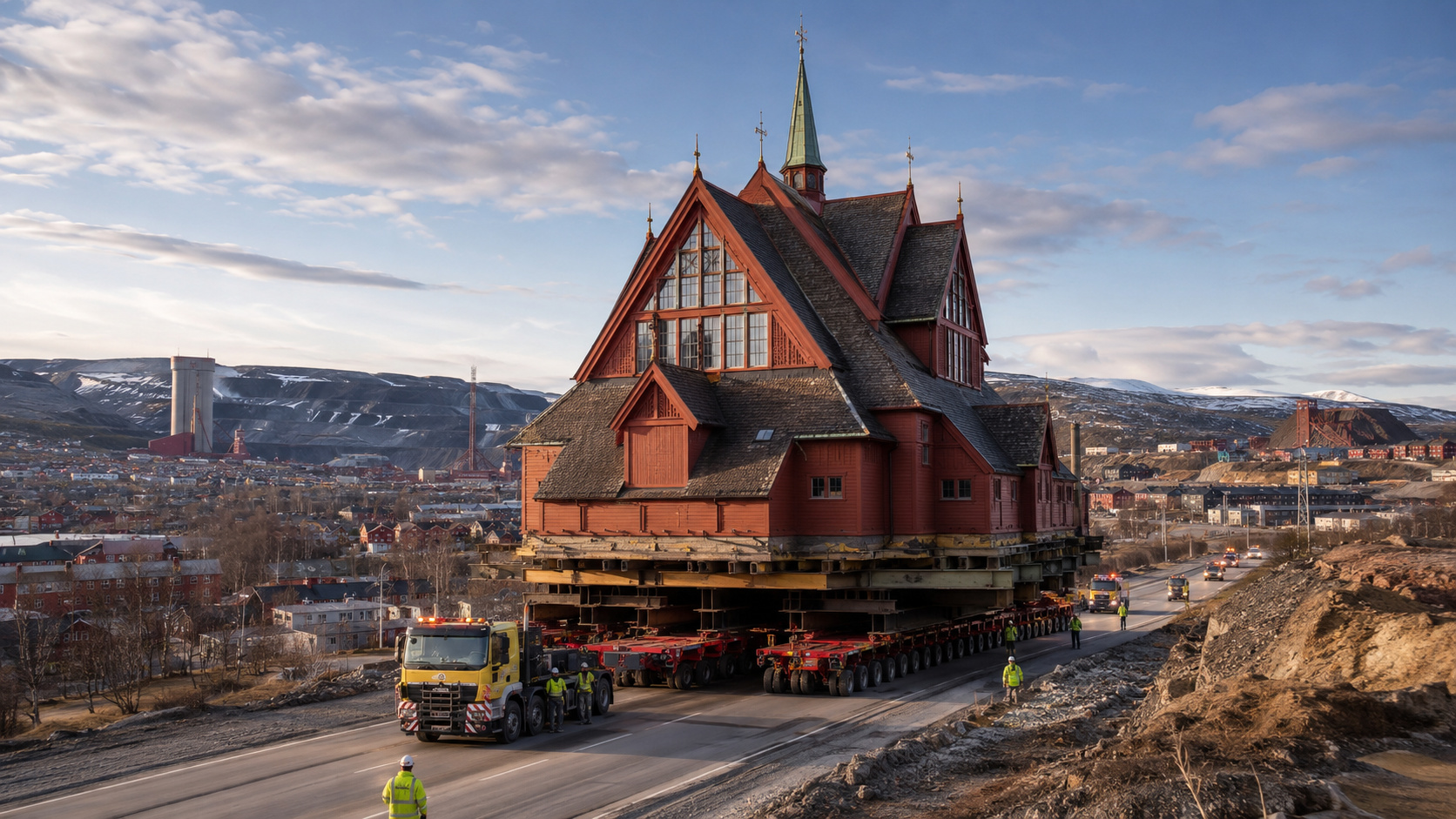

The wooden church of Kiruna traveled 5 km to escape subsidence, a situation where the ground loses firmness near the iron mine. The operation preserved a historic building but revealed the human cost of underground mining, which requires the relocation of houses, buildings, and routines of thousands of people in the Swedish city.
In 2025, a wooden church weighing about 600 tons was moved from its foundation and traveled 5 km through the streets of Kiruna, in northern Sweden. The structure was placed on a large transport framework to escape the area where the ground began to lose stability.
The information was published by Reuters, an international news agency with global coverage. The church was not relocated for aesthetic or tourism purposes, but because the expansion of underground iron mining placed part of the city in a risk area.
The journey preserved an important building for Kiruna. At the same time, it exposed a difficult reality for those living in the city: the mine advances, the terrain changes, and entire neighborhoods need to be reorganized.
-
Indian Farmers Use 200-Year-Old Bamboo Tube System for Drip Irrigation Without Electricity or Pumps

-
Racing Motorcycles Rescued from Irish Sea Shipwreck, Joey Dunlop Wins Three Isle of Man TT Races Days Later

-
Before Sending Humans to the Moon, the U.S. Considered Detonating a Nuclear Bomb Near the Moon to Dazzle the World
-
In Cape Verde, Ekonatura Recycles 100 kg of Glass and Plastic per Hour into School Bags





Historic wooden church moved from the place where it remained for over a century
The church of Kiruna remained in the same spot for over a century. In 2025, workers lifted the structure above the base and placed it on a trailer prepared to carry an entire building.
The operation required care because the building is made of wood and weighs about 600 tons. It was not enough to remove walls, windows, and roof to reassemble everything later. The decision was to transport the entire church.


Moving the entire building helped maintain the appearance and structure of the site. Even so, the relocation removed the church from the space where it had been part of the city’s life for many generations.
Iron mine causes the ground to sink and forces Kiruna to relocate part of the city
The problem affecting Kiruna is called subsidence. In simple terms, this happens when the ground loses firmness and can give way due to activities carried out below the surface.
The expansion of the underground iron mine made it necessary to move residents, buildings, and services from areas where the ground may become unstable. The risk is not only inside the mine, as it reaches the city’s streets and buildings.
Some public and commercial buildings need to be dismantled. Others can be moved whole, as happened with the church. The urban change involves protecting people, preserving important buildings, and continuing mining activity.
Road was widened and church’s journey took two days
The church traveled a route prepared to support the weight of the structure. The road had to be widened to allow the safe passage of the building to the new area of Kiruna.
Reuters, an international news agency with global coverage, detailed that the journey took two days. The church moved slowly on a special trailer, on a 5 km route to the new urban center.
Moving a church is not like transporting a regular house. The structure needs to remain balanced throughout the journey to avoid damage to the wood, roof, and internal parts.
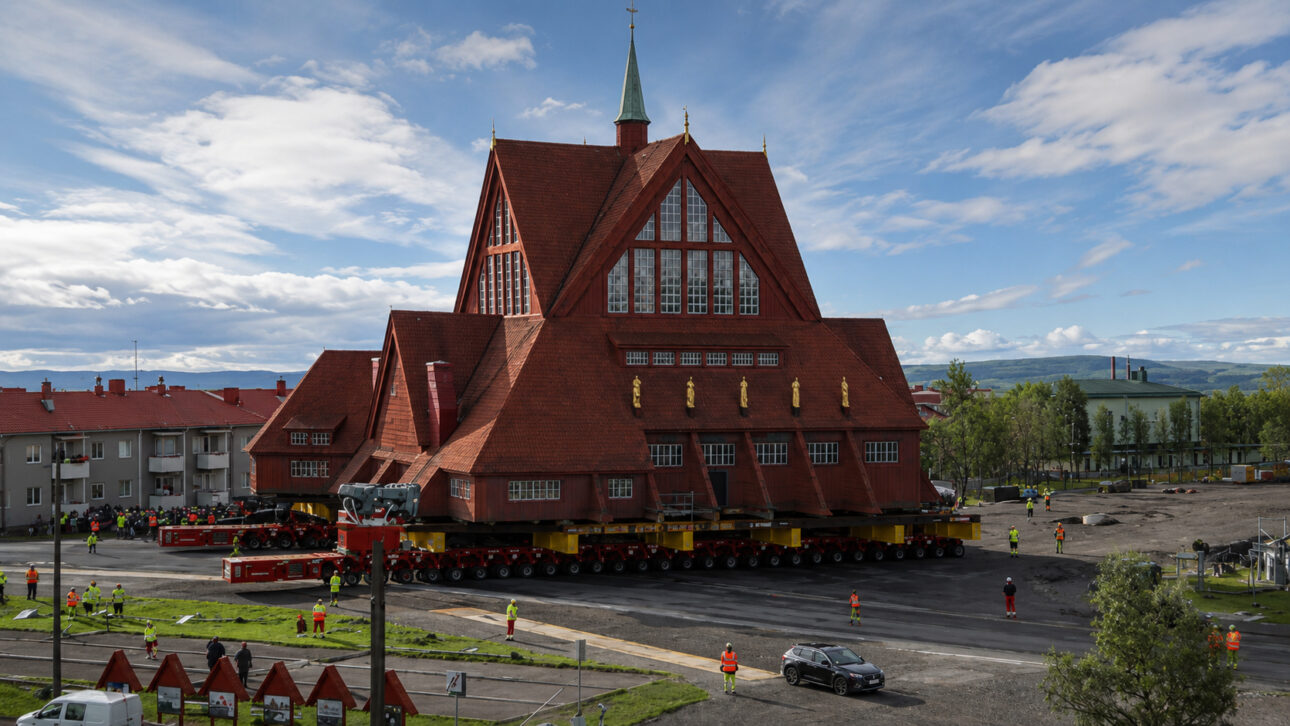
The operation drew attention due to the size of the building and the care required. However, the relocation is just part of a larger transformation affecting the entire city.
About 3,000 houses and 6,000 people are part of the move in Kiruna
In August 2025, the urban relocation project involved about 3,000 houses and approximately 6,000 people. Families need to leave areas near the mine and move to new locations within the city.
The transfer does not happen all at once. Houses, shops, public buildings, and services undergo changes in stages, because a city is not just about buildings. It also needs to maintain roads, work, commerce, and access to basic services.
The new center of Kiruna received hundreds of homes, shops, and a new city hall. Meanwhile, the old part of the city loses structures that have been in the same place for decades.
For many residents, the move means changing addresses and moving away from familiar streets, neighbors, and spaces. The church moved 5 km became a visible image of this separation between the old and new city.
Sámi community fears impacts on reindeer herding
Mining also affects the Sámi community, an indigenous people of the region who maintain reindeer herding as part of their life and culture. Areas used by the animals are at the center of concerns.
Lars Marcus Kuhmunen, president of the Gabna Sámi community, warned that the region includes grazing areas and places where reindeer calves are born. The expansion of mining could reduce the paths used by the animals at different times of the year.
There is also a plan for a new mine near the current operation. The concern is that new extraction areas could hinder the passage of reindeer between summer and winter areas.
The relocation of the church preserves an urban heritage, but does not resolve the impacts faced by communities that depend on the territory to work and maintain traditional practices.
Transported church reveals the weight of mining on an entire city
The story of the church in Kiruna shows that mining can affect much more than the area where the ore is extracted. When the ground loses stability, the city must deal with housing, heritage, commerce, streets, and public services.
Moving an entire church 5 km preserves a historic building. Even so, it does not eliminate the need to relocate people and alter the routine of entire neighborhoods.
The challenge of Kiruna involves finding space for mining while at the same time protecting those who live in the city. The operation made it clear that an urban change of this size requires planning, construction, and attention to social impacts.
The wooden church remains standing, but in another part of Kiruna. The building was saved from unstable ground, while the city continues reorganizing houses, streets, and services near the iron mine.
The image of a 600-ton church crossing the city is impressive, but it also reveals a decision that goes far beyond engineering. The relocation represents an attempt to preserve part of the local history amid a transformation that affects thousands of residents.
How should a city protect its residents and history when mining requires new areas? Comment and share this report.


