






 Portuguese
  Spanish


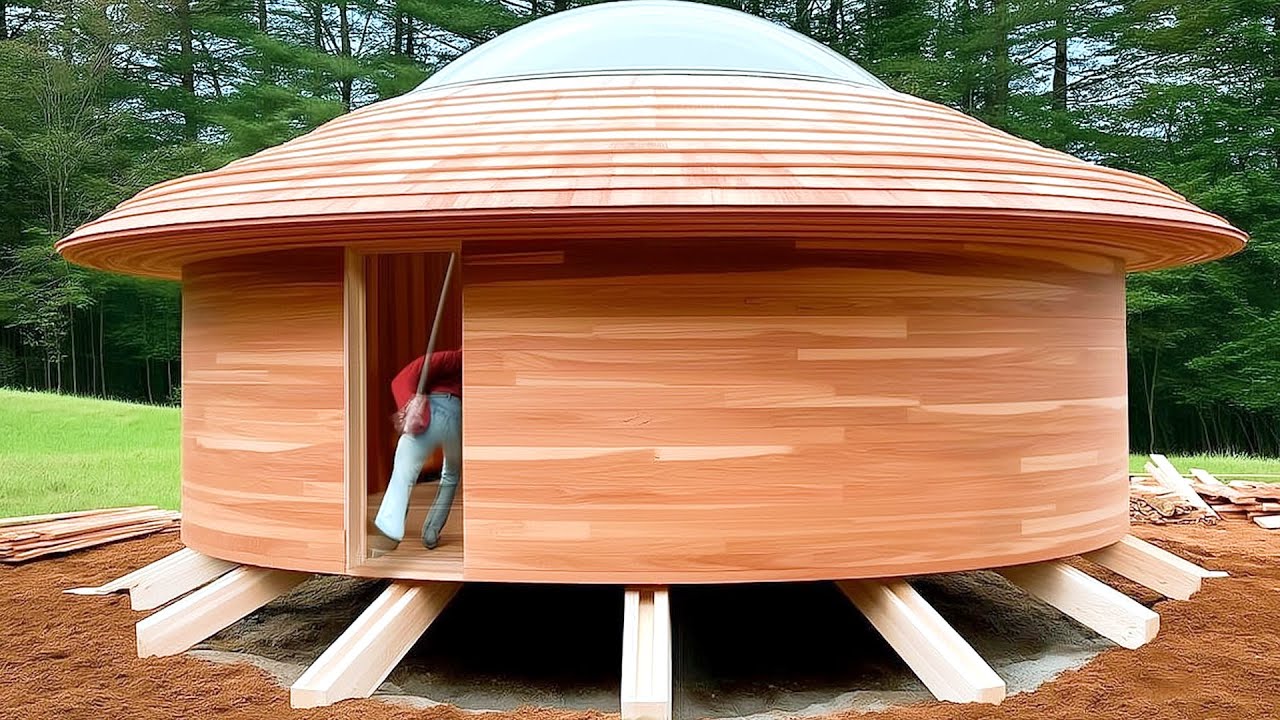


Man Builds Off-Grid Japanese House by Himself in 30 Days, with Insulation, Roof, Plumbing, and Complete Interiors in the Middle of the Forest.
The scene is quiet, with tall trees and a river flowing just ahead. In this isolated patch of woods, a Japanese craftsman decided to build a functional house from scratch, using accessible materials and lean construction techniques. Without a construction team, heavy machinery, and on a tight budget, the project took only 30 days and resulted in the complete construction of a circular wooden residence with thermal insulation, roof, plumbing system, internal finishes, and usable spaces year-round.
The project is an example of Japanese architecture applied to off-grid living: minimal, efficient, climate-adapted, and built with high artisanal precision.
Circular Foundation on Concrete Pillars
The first documented step shows the preparation of the land and the installation of the concrete pillars. These blocks are distributed in a circular geometry to support the floor and elevate the structure above ground moisture.
-
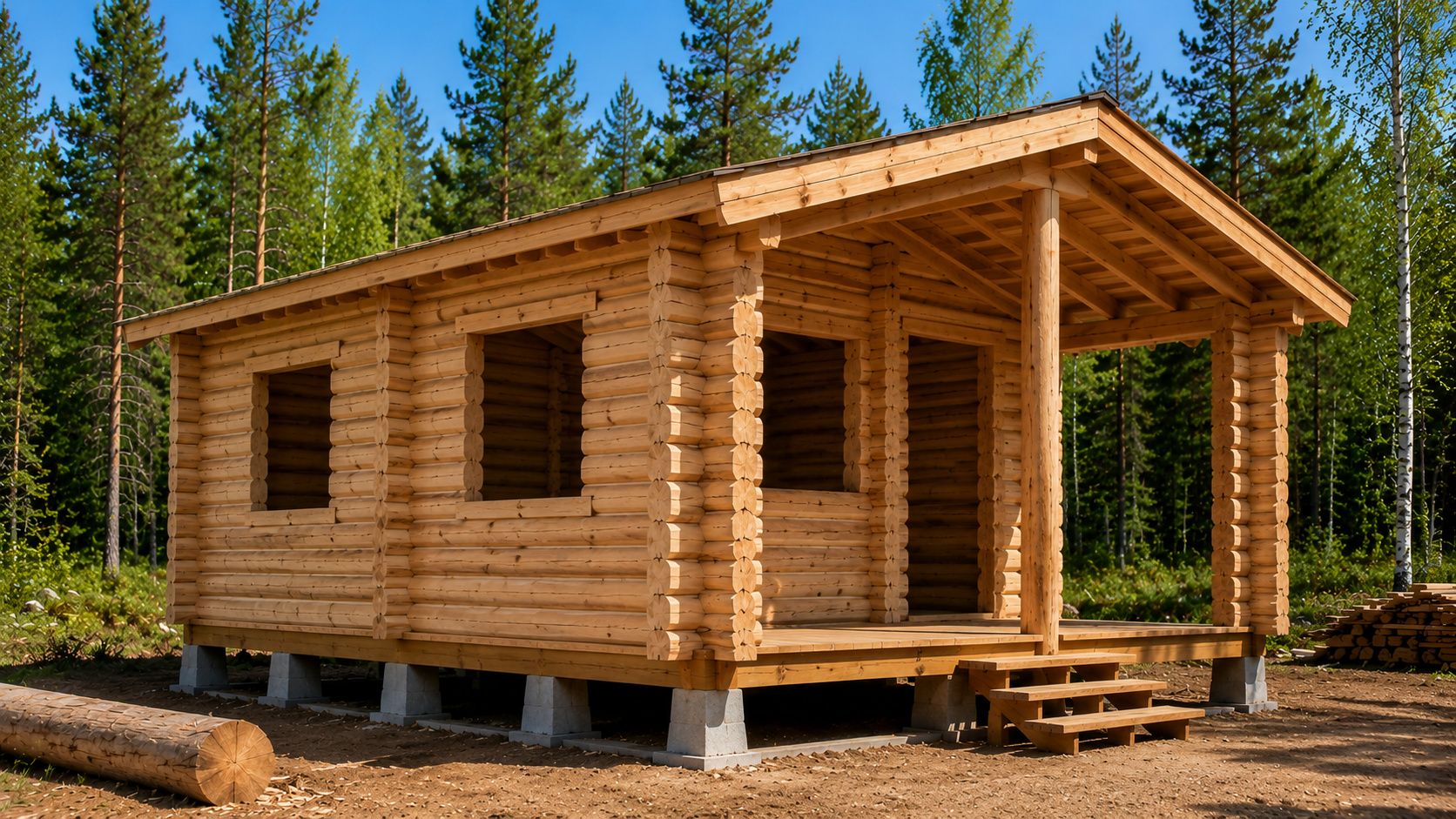
Innovative Project Demonstrates How to Build a Modular, Eco-Friendly Cabin Using Recycled Timber Logs

-
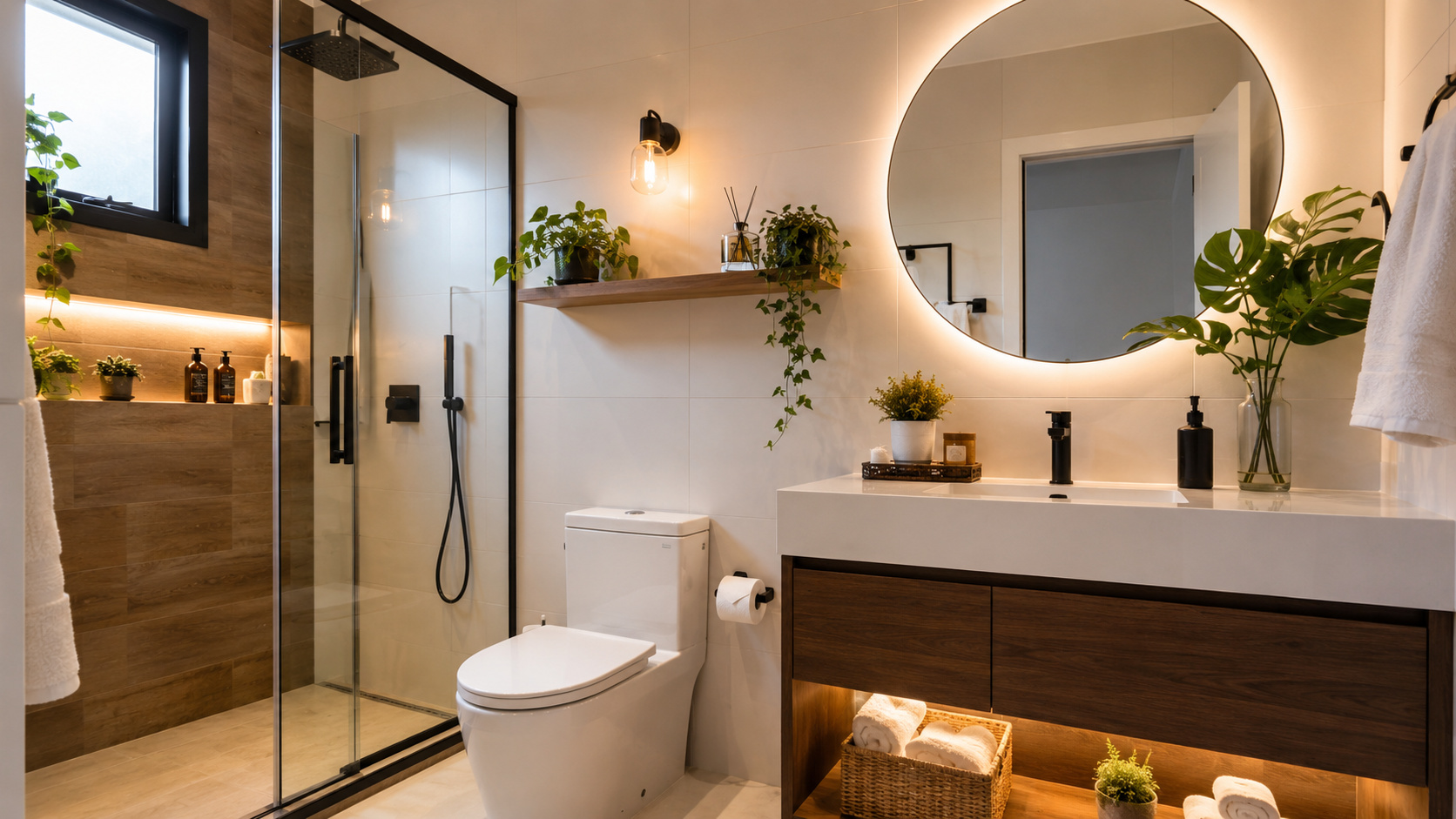
Transform Your Bathroom with Paint, Mirrors, LED Lighting, and Accessories for a Quick, Cost-Effective Makeover
-
Couple Converts 1925 Detroit Bank into Home, Earns $40,000 Annually on Airbnb

-
Tired of Seeing People Sleep in the Cold, London, Canada Opens First Modular Shelter for Homeless with 60 Cabins, Heating, Meals, and Dog Area


Next, treated wooden beams are cut, fitted, and secured with screws, forming the structural band that supports the floor. This circular geometry is a key point of the project: it reduces waste, distributes loads evenly, and facilitates the later installation of the cone-shaped roof.
With the entire base leveled, the craftsman starts installing sheets of OSB and plywood to form the floor. The result is a solid structural disk, already prepared to receive walls and installations.
Pre-Fabricated Walls and Thermal Insulation
After the floor, the craftsman assembles vertical panels made of wooden structure + external OSB. Each panel is manually raised, fitted, and screwed to the circular floor until the entire perimeter of the house is closed.
The most interesting technical point of this phase is the thermal insulation treatment. Between the internal beams, he installs insulating blankets specified as “430”, designed to reduce thermal loss and humidity—something crucial in the Japanese climate, which can alternate between humid summers and harsh winters.

After insulation, OSB sheets close the walls from the inside, forming a resistant structural sandwich that is economical and energy-efficient.
Cone-Shaped Roof Structure and External Closure
With the walls ready, the assembly of the roofing begins, which may be the most delicate part of the construction: the installation of the covering. Radial beams are installed converging to the center, creating the conical shape. After that, wooden sheets cover the entire structure, creating the roof’s base.

For sealing, an external system with membranes and blankets is applied, protecting against leaks. At the top of the cone, the craftsman installs a translucent dome that acts as a natural skylight, illuminating the interior during the day without electrical consumption.
Externally, the closure receives a layer of mortar over a metal mesh, a method that adds rigidity, finish, and resistance to water and wind.
Plumbing System, Bathroom, and Interiors
Despite being off-grid, the house receives a simple and functional plumbing system. Hot and cold water installations run through a small technical wall, connecting to a Japanese toilet with built-in functions and electronic control—a detail that shows a balance between rusticity and comfort.

Inside, the craftsman installs wooden flooring, simple frames, and dry finishes. The final environment has a warm and cozy aesthetic, with exposed OSB walls and natural lighting coming from the skylight.
This combination of lightweight materials, accessible industrial elements, and low-complexity techniques transforms a set of boards, blankets, screws, and panels into a complete living space.
Minimal, Smart, and Realistic Architecture
The project draws attention for its balance between:
• Low cost
• Low mechanization
• Quick assembly
• High thermal insulation
• Small environmental footprint
• Off-grid independence

In addition to being buildable by a single person, the house demonstrates how circular architecture combined with efficient insulation creates a real residential space, not just a temporary shelter.
In times of growing interest in minimalist solutions, DIY, tiny houses, off-grid, and permaculture, the project stands out as a practical demonstration of what can be achieved when planning, manual skill, and constructive intelligence converge.

It is the type of construction that, if scaled up, could easily serve as a model for eco-tourism cabins, small retreats, living in remote areas, or low environmental impact housing.


