Portuguese
  Spanish


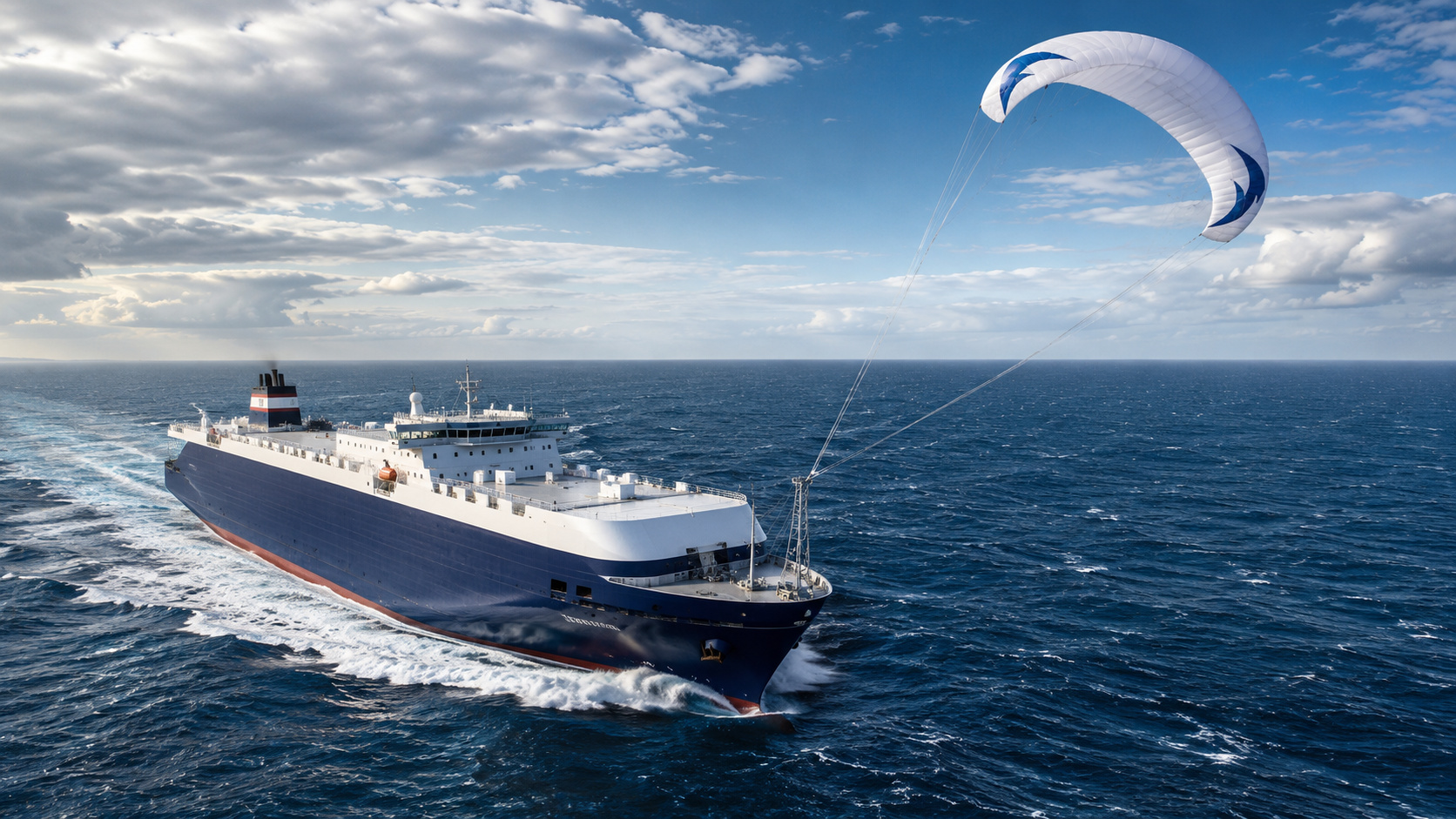

An automated kite of 500 m² harnessed the wind in the Atlantic to give extra power to the Ville de Bordeaux, which transports large aircraft parts between Europe and the United States, while the engines remained indispensable throughout the maritime operation.
Larger than many apartments, the automated kite of 500 m² was installed on the cargo ship Ville de Bordeaux to use the wind as navigation support. In the open sea, the cables carried the kite’s force to the vessel and helped create traction, that is, a pull that contributes to the ship’s advancement.
The information was released by Airseas, a French company that develops naval wind propulsion. On May 23, 2023, the validation of traction flights confirmed that the kite was able to pull the Ville de Bordeaux during tests conducted in the Atlantic.
The system is called Seawing and does not turn the cargo ship into a vessel powered solely by wind. The technology works as a reinforcement for the engines, with the potential to reduce part of the fuel and emissions on long journeys.
-
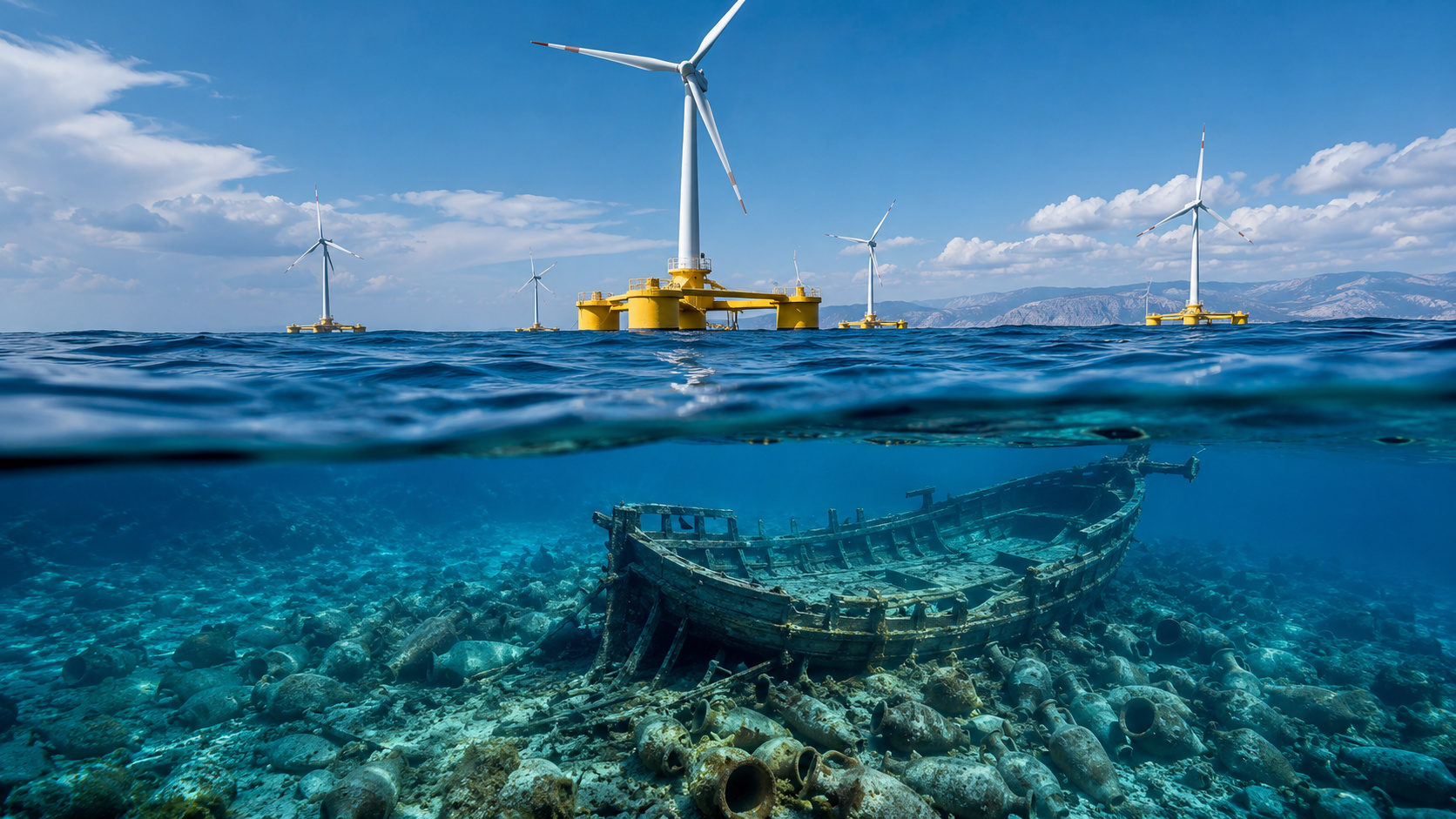
Floating Wind Farm in the Ionian Sea Alters Plans to Protect Ancient Greek Shipwreck with Over 300 Amphorae

-
Sunken Ships Near Israel and Southern France Carried Tin from Britain, Evidence of a 4,000-Kilometer Trade Route Supplying the Mediterranean 3,300 Years Ago
-
Robots Tested in the Atlantic to Inspect Offshore Turbines Without Initial Human Deployment
-
CMA CGM Launches World’s Largest Clean-Fuel Container Ship: 400 Meters Long, 24,212 Containers, LNG-Powered



How the automated kite pulls the ship in the ocean
The kite is attached to the ship by strong cables. After rising in front of the vessel, it captures the wind’s force and transfers this momentum to the hull. This transfer is called traction, the force that helps the cargo ship move forward.
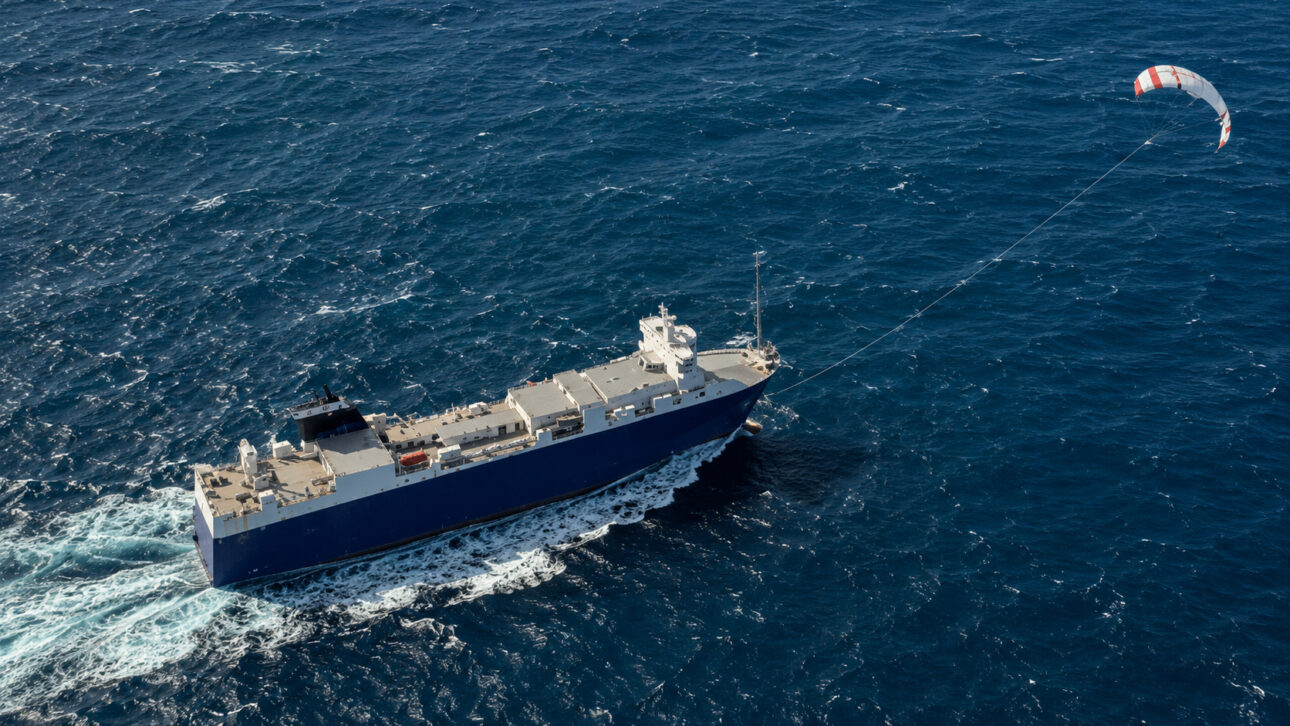
The Seawing was designed to operate with automation. The team can launch, raise, lower, and retrieve the kite using the system’s own controls. This reduces the need for manual movements by sailors on deck.
In the tests, the kite flew in the open sea and generated enough force to pull the ship. This validation showed that the equipment was able to move from the flight phase to assist propulsion, collaborating with the movement produced by the engines.
Tests in the Atlantic led the 500 m² kite to pull the Ville de Bordeaux
The installation of the kite on the Ville de Bordeaux was announced on December 14, 2021. The plan included monthly trips across the Atlantic starting in January 2022, with six months of sea trials before a broader operation.
Airseas, a French company developing naval wind propulsion, recorded on May 23, 2023, the validation of traction flights. The company reported that the system delivered the first tons of force to aid propulsion and reduce fuel consumption and emissions.
The advancement did not mean that the kite started to move the freighter on its own. It showed that the 500 m² structure managed to perform at the most crucial point of the test, when the wind ceases to be just part of the weather and becomes a supporting force for the ship.
Airbus ship transports airplane parts between Europe and the United States
The Ville de Bordeaux was chartered by Airbus, a European company involved in aircraft manufacturing, to transport airplane components between Europe and the United States. The route turns the kite test into an experience within a real industrial operation, with cargo and transatlantic trips.
The choice of a freighter that already carries large airplane parts helps to highlight the challenge. The ship needs to fulfill its logistical function while also accommodating a structure that rises, flies, and returns to the deck during operation.
The kite also needs to be stored when not in use. Therefore, it does not function like a regular sail permanently attached to the ship. The setup relies on control equipment and a routine prepared to launch and retrieve the wing.
Why engines remain essential even with wind power
The kite assists the ship but does not replace the engines. The wind provides a complementary force, while the engines remain a central part of the operation necessary to transport the cargo along the maritime route.
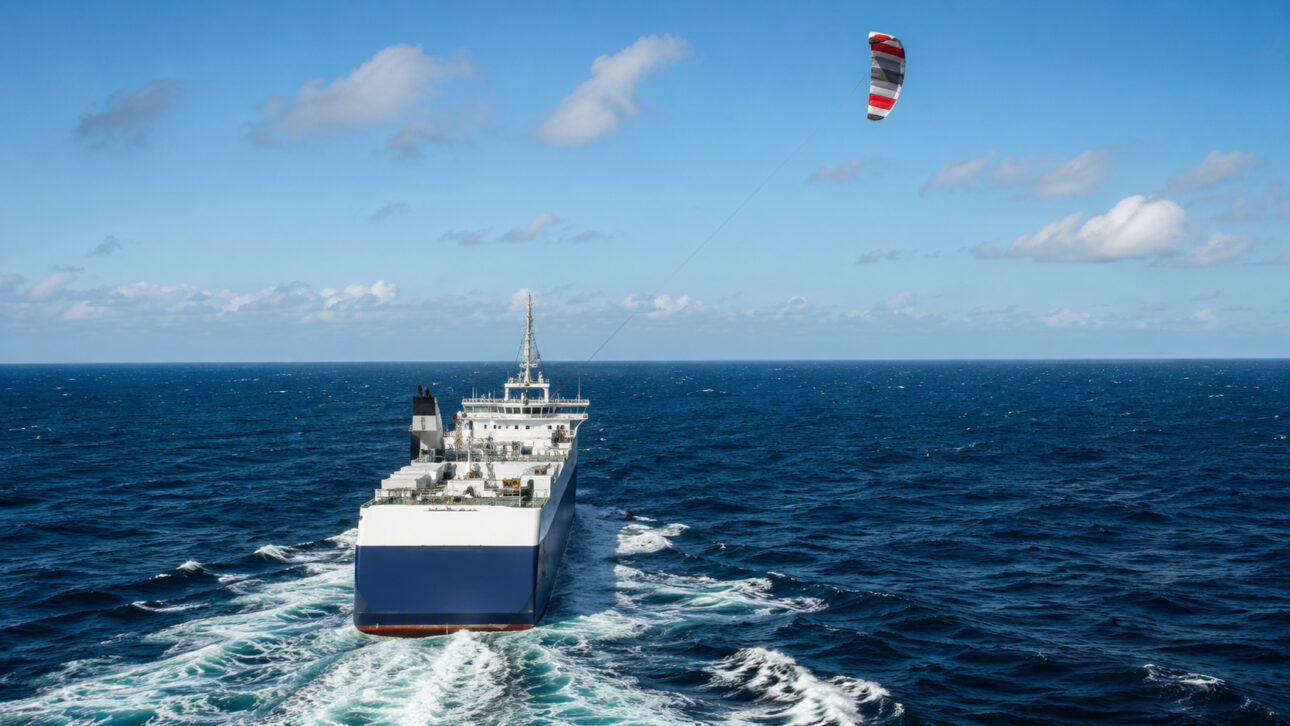
This difference avoids a misinterpretation. The image of a giant kite pulling a freighter might give the impression that fuel is no longer necessary, but the Seawing was tested as wind-assisted propulsion, that is, a reinforcement for the existing propulsion.
The validation released by Airseas confirmed the traction strength of the kite. The statement did not present a specific number of fuel saved by the 500 m² equipment on the Ville de Bordeaux.
What would make a kite like this reach Brazilian cargo ships
The material released about the Ville de Bordeaux does not announce the installation of the Seawing on Brazilian ships. Therefore, there is no confirmation of tests of the 500 m² kite on Brazilian routes.
An adoption on Brazilian cargo ships would require an evaluation of the installation and control of the system on each vessel. The experience of the Ville de Bordeaux showed stages of launch, ascent, descent, retrieval, and traction before the kite was tested in the function of pulling the ship.
In practice, a kite of this size would not be just an accessory on the deck. It would need to be integrated into the ship’s routine and tested on real journeys, without compromising the cargo and operations already happening on board.
The automated kite of 500 m² showed that the wind can help a cargo ship move across the Atlantic without removing the engines from the center of the operation. The Ville de Bordeaux continued carrying Airbus parts but gained extra strength capable of relieving part of the effort made by the fuel.
The experience combined a visually unusual technology with an already existing industrial route. The kite does not eliminate the engines, but it shows that the wind can be used as support in long crossings.
Do you think cargo ships operating in Brazil should test an automated kite to reduce part of the fuel, even without replacing the engines? Share your opinion in the comments.