






 Portuguese
  Spanish


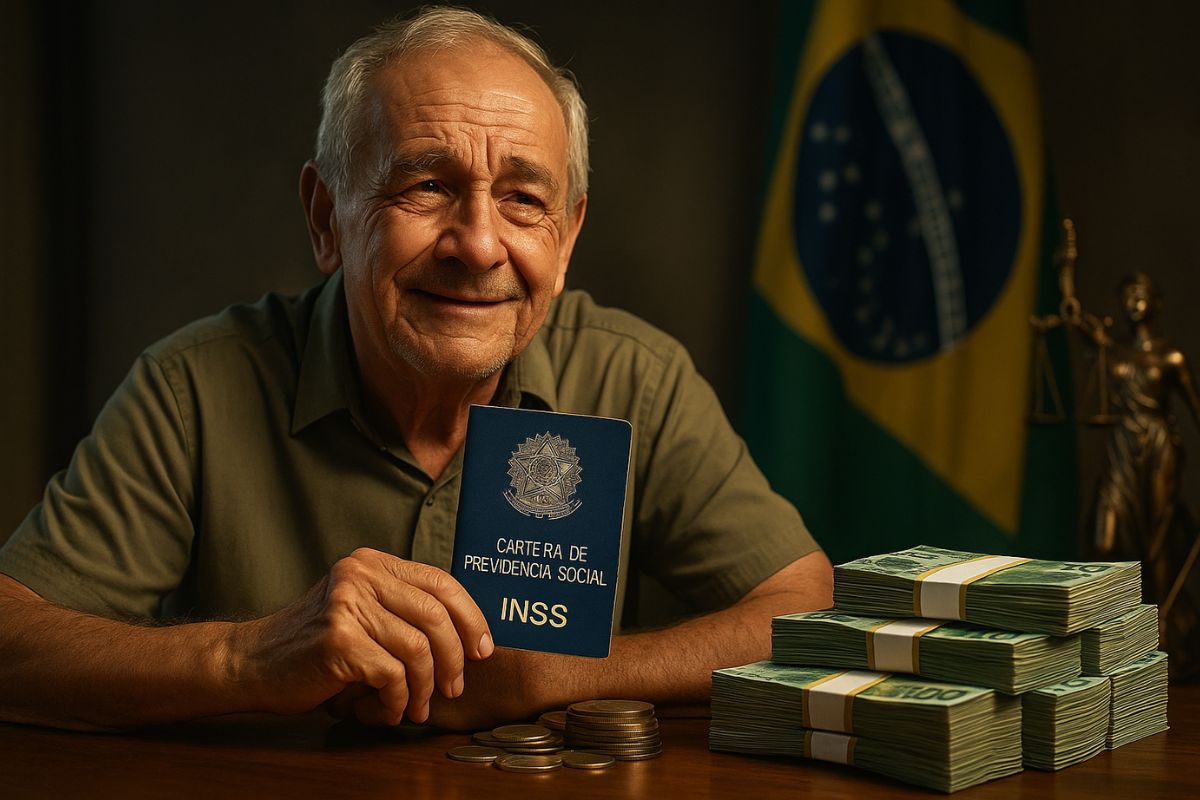


Even Those Who Never Contributed to INSS Can, in Specific Situations, Obtain Social Security or Assistance Benefits Including Retirement by Recognized Link or BPC/LOAS From 65 Years Old.
The general rule of Social Security is clear: to have the right to retirement, it is necessary to contribute monthly to the INSS (National Institute of Social Security). The system is contributory, meaning each worker finances the benefits they may one day access. However, as explained by lawyer Cíntia Brunelli, there are three specific situations in which elderly individuals can receive retirement or benefits even without having made direct contributions to the INSS.
These exceptions are essential for workers who operated informally, in rural areas, or who fall under criteria of social vulnerability.
Knowing these rules can make the difference between being without protection in old age or securing a monthly benefit.
-
Owner of Havan Visits Paraguay to Discuss Lower Taxes, Local Suppliers, and International Expansion with President

-
Brazilian Construction Retail Chain Closes After 60 Years, Begins Liquidation Sale Across Five Cities

-
Brazil Approves Landmark Bill Requiring Workplace Adaptations for Autism Inclusion

-
Brazil’s Micro-Entrepreneur Program May See Major Changes: Income Cap Could Increase to R$ 130,000, Annual Inflation Adjustments, and Allow Hiring of an Additional Employee


When Contribution Was the Responsibility of Third Parties


In many cases, the worker was not obliged to make contributions to the INSS, but rather another party. This applies to:
CLT Employees: the contracting company is responsible for the contributions. If they did not pay, the worker does not lose the right, provided they present proof of the link, such as employment card, receipts or labor documents.
Service providers for companies: self-employed individuals like hairdressers, lawyers, or manicurists who worked for legal entities depended on the contributions made by the contractor. If that did not occur, it is still possible to seek recognition of the contribution period.
Special insured individuals (rural workers): those who live off family farming do not need to directly contribute. The contributions are made by those who purchase the production, and the worker maintains the right to benefits if they can prove the activity.
In these cases, the INSS may recognize the period and include the time in the calculation for retirement.
Recognition of Links Without a Signed Employment Card
Many Brazilians worked for years without formal registration.
Those who performed typical employee functions with fixed hours, subordination, and salary can request that this time be recognized as CLT links.
Evidence can be presented in various formats: receipts, bank transfers, photos, messages, or even witnesses.
If the request is denied by the INSS, it is possible to appeal to the Labor Court.
When recognized, this period normally counts towards retirement, preventing the contribution time from being lost.
Continuous Benefit (BPC/LOAS)
Another possibility is the Continuous Benefit (BPC/LOAS), which is not a retirement benefit but a social protection guaranteed by the Organic Law of Social Assistance. It is paid to:
- Elderly Individuals Aged 65 or Older, or people with long-term disabilities.
- Amount: 1 minimum wage per month.
- Criterion: family income of up to 1/4 of the minimum wage per person, duly proven in CadÚnico.
According to Cíntia Brunelli, the BPC guarantees a minimum income to those who could not retire.
However, it does not pay a 13th salary and does not generate survivor pensions, as it is assistance and not a social security benefit.
Difference Between Retirement and BPC
The INSS retirement typically requires at least 15 years of contributions and guarantees additional benefits, such as 13th salary and survivor pension for dependents.
On the other hand, BPC/LOAS does not require contributions but is limited to income and age criteria.
This distinction is essential for families to understand the scope of each modality and not confuse social security rights with assistance benefits.
In practice, elderly individuals without a contribution history can still be supported by the INSS, either through recognition of links, by responsibility of third parties, or through BPC/LOAS.
For those who still have contribution time, specialists like Cíntia Brunelli recommend considering joining as a voluntary insured person, since even those who start contributing after the age of 50 can meet the minimum 15 years required.
And you, do you know anyone who managed to receive from the INSS without ever directly contributing? Do you think it is fair that the system allows this type of benefit?
Leave your opinion in the comments — we want to hear real experiences on this topic.


Eu acho que quem não contribuiu com INSS não deveria ter o direito de receber esse benefício ( Bpc Loas , porque quem contribui já está difícil de se aposentar, não acho certo pessoas que nunca contribuiram ter esse benefício só porque o governo quer ajudar o menos favorecido
Enquanto os contribuintes do INSS tem dificuldade em receber esse direito que lhe é devido
Enquanto o governo da benefício a pessoas que nem precisa.
Pois tem muitas pessoas que tem
Uma renda fixa e mais que 2 salários recebendo esse benefício do BPC.
EU não sou a favor.
Tenho 15 anos de contribuição e 53 anos de idade, quando posso me aposentar,no momento desempregada?
É complicado pq a pessoa contribui e recebe um salário o outro nunca contribuiu e recebe também. Tá errado. Pelo menos a metade né não integral já q não contribuiu nada né.