






 Portuguese
  Spanish
  2 min of reading
  0 comments


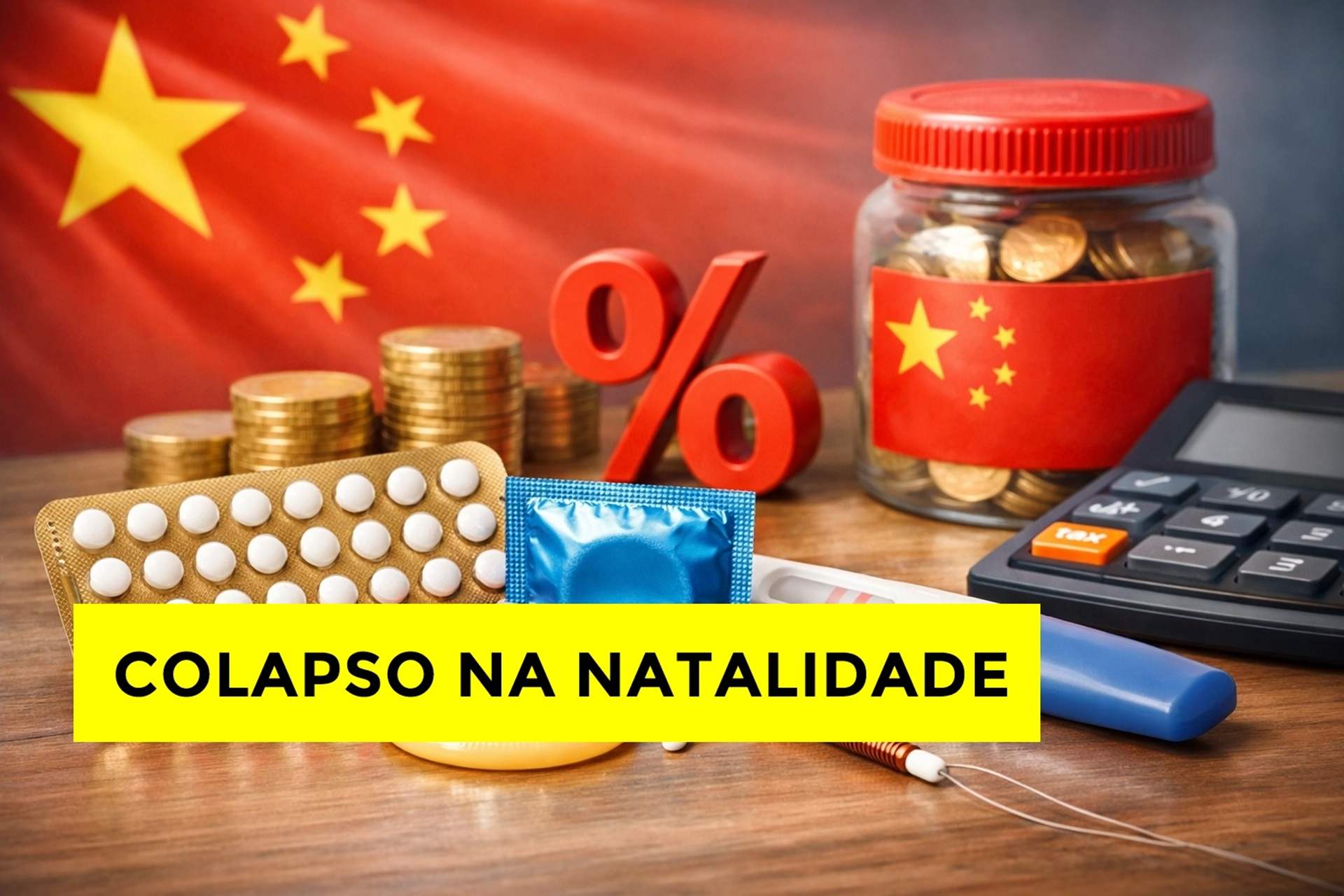
Measure Takes Effect on January 1, 2026, Ending More Than 30 Years of Exemption, Following a Drop from 14.7 Million to 9.5 Million Births and Provoking Negative Reactions on Chinese Social Media.
China has decided to tax contraceptives with a 13% VAT starting January 1, 2026, ending a historic exemption amid a drop in birth rates from 14.7 million in 2019 to 9.5 million in 2024, according to official data.
End of Tax Exemption After More Than Three Decades
Contraceptive drugs and products will no longer be exempt from the 13% value-added tax, Sky News reported on December 18, marking the first change of this kind in more than 30 years.
The measure was announced as part of initiatives to stimulate an increase in births, but generated widespread negative reactions and ridicule on the Chinese social media shortly after the official announcement.
-
11-year-old boy creates his own World Cup album in Sertão da Paraíba and impresses with his drawing talent

-
60 years ago, a farmer sold his assets to buy an idle nut factory, suffered a setback in the first month, and then watched his children build a giant metallurgical company in SC.

-
Eleven Brazilian cities appear among the most threatened in the world by extreme heat, while an international study warns that poverty, low tree coverage, and expensive energy increase the risk in the capitals.
-
Why do some drivers put a white cloth on the car?


Continued Decline in Birth Rate Pressures Public Policies
In 2024, China recorded 9.5 million births, a number significantly lower than the 14.7 million observed in 2019, according to the National Bureau of Statistics, reinforcing the scenario of demographic decline.
Since 2023, the country, with 1.141 billion inhabitants, has ceased to be the most populous in the world, a position now held by India, which reached 1.465 billion inhabitants during the same period.
Fears About Health and Social Impacts
Experts warn that the increased costs of contraceptives could lead to higher cases of unwanted pregnancies and sexually transmitted infections, without necessarily influencing reproductive decisions of couples who do not want children.
“For couples who do not want children or do not want more children, a 13% tax on contraceptives is unlikely to influence their decisions,” said Qian Cai from the University of Virginia to Sky News.
Diverging Views Among Researchers
Yi Fuxian, senior scientist at the University of Wisconsin-Madison, described the decision as “perfectly logical,” highlighting that the country is shifting from population control to encouraging growth, as he told Sky News.
He stated that the change represents a return to traditional methods, turning contraceptives into common commodities, after decades of strict family planning policies.
History of Strict Population Control
Between 1980 and 2015, the Chinese Communist Party prohibited couples from having more than one child, imposing severe penalties on those who violated the rule, including administrative and social sanctions.
In some cases, women were subjected to forced abortions, and children born beyond the legal limit were denied citizenship, according to historical records from that period.
Gradual Changes to Child Limits
About ten years ago, the limit was expanded to two children and, in 2021, to three, while still broadly encouraging the use of contraceptives, which were sometimes free in the country, even amid increasing debates about demographics.









Be the first to react!