Portuguese
  Spanish


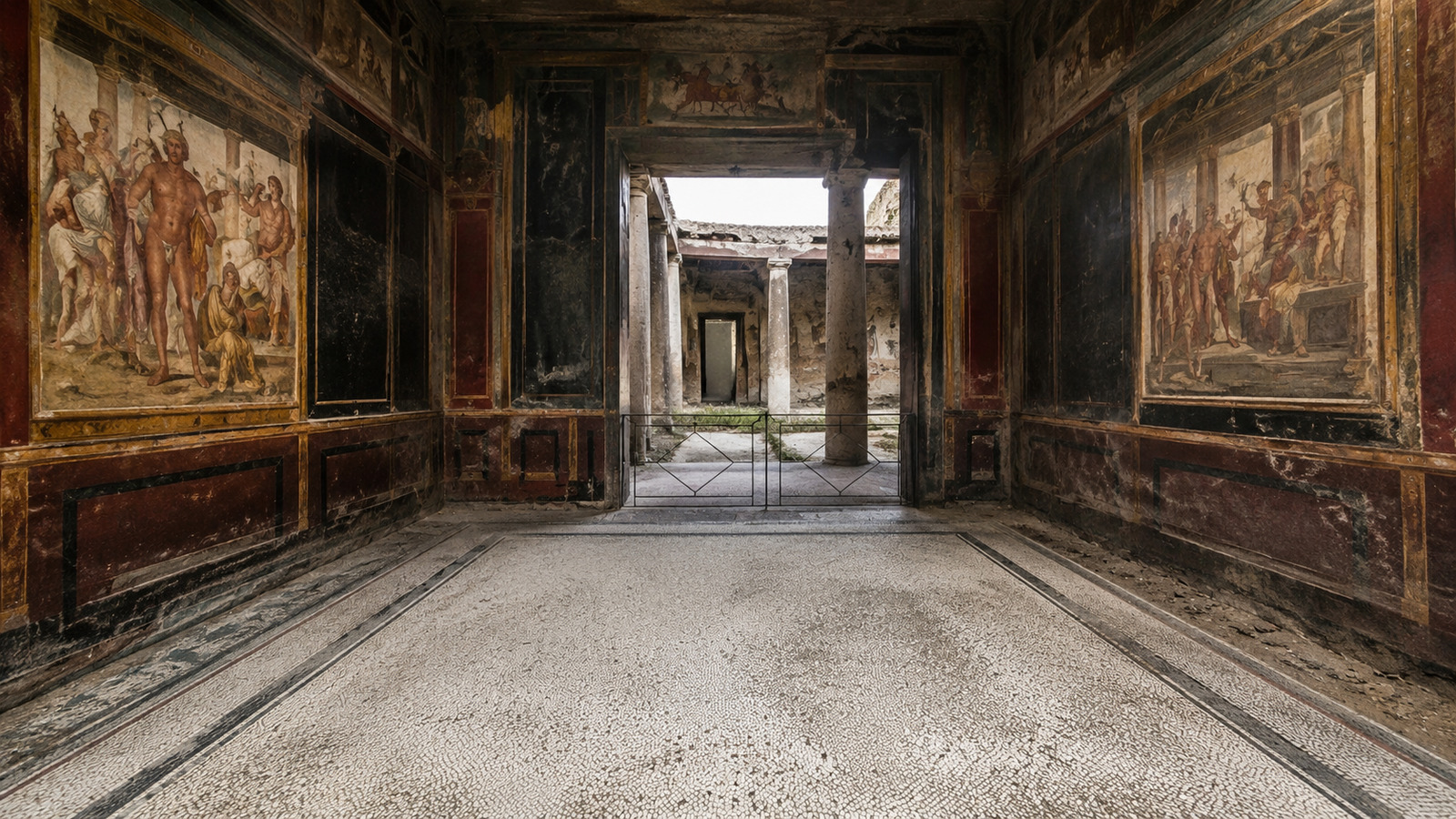


Discovery in Region IX reveals a refined 15-meter environment, with dark walls, mythological scenes, mosaic floor, and details that help understand banquets and private life in ancient Pompeii
A banquet hall with well-preserved frescoes inspired by the Trojan War was discovered in Pompeii, southern Italy, during excavations in Region IX conducted in 2024. The environment, located in an ancient private residence on Via di Nola, measures 15 meters in length by six in width and features mythological scenes used for reception and conversation among guests.


Banquet hall found in ancient residence of Pompeii
The discovery occurred in an excavation area of Region IX, a district of Pompeii that housed homes and workshops.
The hall was located inside an ancient private property on Via di Nola, considered the longest street in the ancient city.
-
Bioengineer Develops Microscope That Magnifies Objects Up to 2,000 Times Using Just a Folded Sheet of Paper, a Tiny Lens, and Less Than $1, Bringing Lab Science Anywhere for Less Than the Cost of a Candy

-
Dog Walker in English Forest Uncovers 3,400-Year-Old Bronze Age Axe
-
Texas Blackout Inspires Student to Develop Bionic Leaf Catalyst for Converting Sunlight, Water, and Bacteria into Fuel

-
Brazilian Students Develop Process to Turn Styrofoam Waste into Water-Purifying Charcoal




The environment came to be called the “black room” because of the color of the walls. According to experts, the dark tone probably helped to disguise the soot left by the oil lamps used in the location.
The hall was described as a refined space for hosting guests during moments of socializing. Besides the unusual size, the state of preservation of the frescoes caught the attention of the archaeologists involved in the investigation.
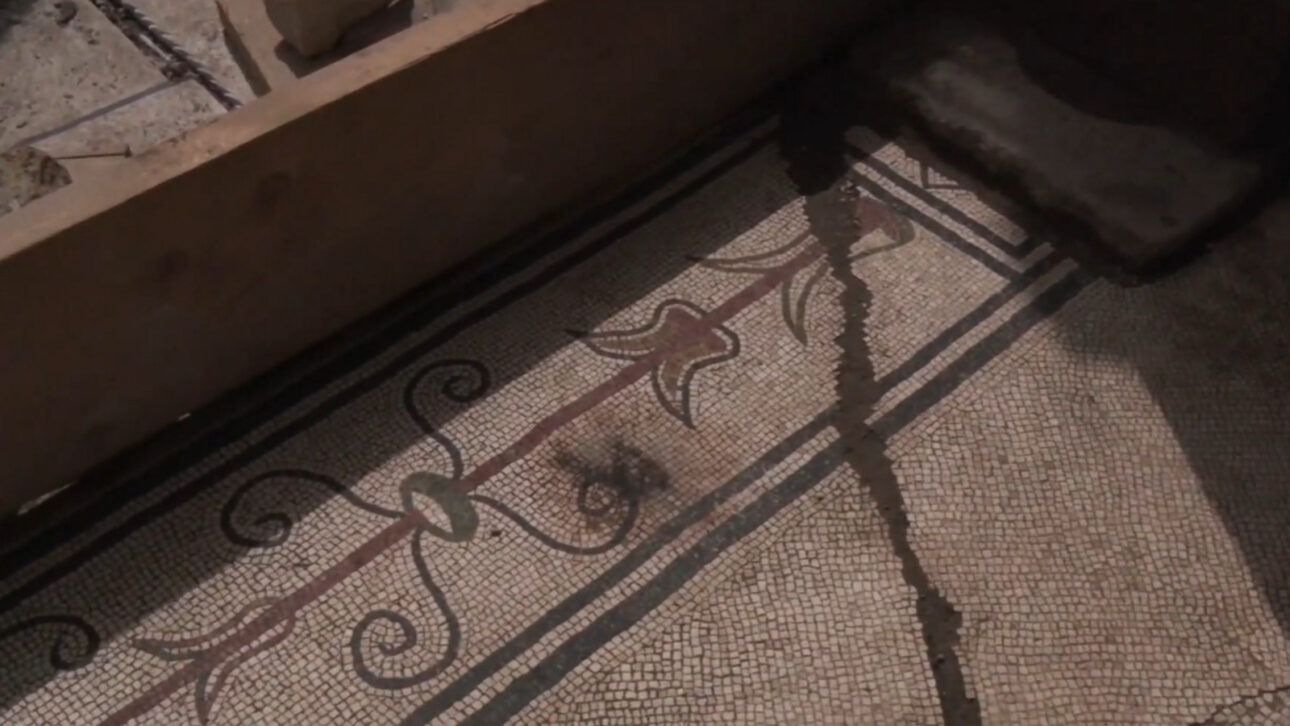
The floor also reinforces the sophisticated character of the space. It is made up of a mosaic with more than a million small white tiles, a detail that shows the care applied in the construction and decoration of the room.
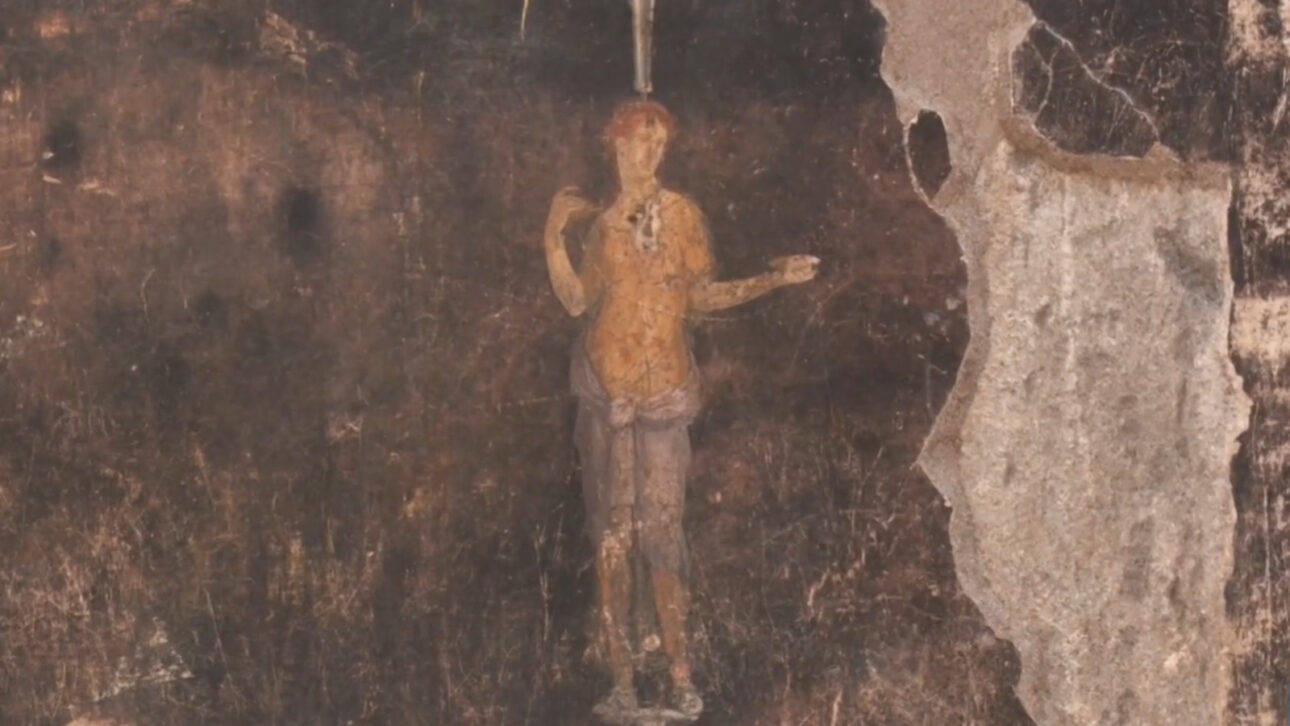
Frescoes show Helena, Paris, Apollo, and Cassandra
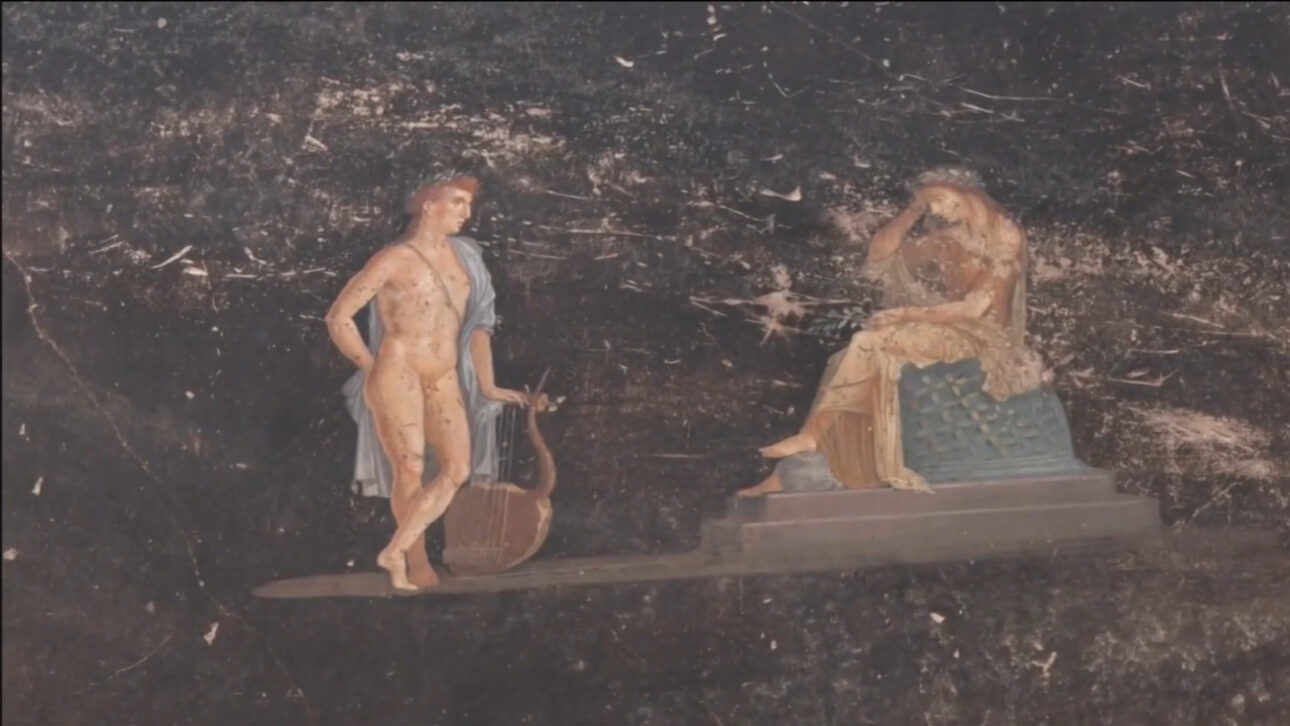
The walls of the banquet hall in Pompeii feature characters from Greek mythology, with scenes related to the Trojan War. One of the frescoes shows Helen of Troy meeting Paris, the Trojan prince, for the first time.
In the same composition, a dog and an inscription in Greek with the name “Alexandros” appear, another way to identify Paris. According to Greek tradition, the elopement of Helen and Paris triggered the Trojan War in the 12th century BC.
Another fresco depicts the god Apollo trying to woo Cassandra, a priestess associated with Trojan narratives.
According to legend, Apollo gave her the power to foresee the future but cursed her so that no one would believe her predictions after being rejected.
Gabriel Zuchtriegel, director of the Pompeii archaeological park, stated that these figures had a clear function within the space. They served to entertain guests and offer conversation topics during banquets.
Images served as conversation topics at dinners
For Zuchtriegel, the mythological couples depicted on the walls were not just romantic in appearance.
They opened up space for conversations about destiny, individual choices, war, and tragic events linked to ancient narratives.
The director mentioned Cassandra, who could see the future but was not heard; Apollo, who supported the Trojans without guaranteeing victory; and Helen and Paris, whose relationship appears as a cause or pretext for the war.
Zuchtriegel also highlighted the visual effect of the paintings in the environment. According to him, the dinners took place after sunset, and the unstable light of the lamps gave the impression of movement to the images, especially during gatherings accompanied by Campanian wine.
The works were classified as belonging to the “third style,” also called the ornate style. The dating indicated for this artistic set is between 15 BC and 40-50 AD.
The director also stated that it is difficult to assess the quality of an ancient work but highlighted the attention to details, expressions, and shadows. For him, the theme of the paintings also makes the set impressive.
Excavations in Regio IX have already revealed other findings
The room opens to a courtyard with a long staircase that led to the first floor of the property. Under this staircase, archaeologists found a large pile of construction materials.
In the arches of the staircase, there were charcoal drawings. They depicted two pairs of gladiators and a figure described by archaeologists as a large stylized phallus.
Excavations in Regio IX began in February of last year and have already revealed other important findings.
Among them is a house with a cramped bakery, where it is believed that enslaved people were kept in private captivity and exploited in bread production.
In one of the bakery’s rooms, the remains of three victims of the Vesuvius eruption, which occurred in 79 AD, were found. In another area of the residence, a still-life fresco depicting a pizza was identified on a hallway wall.
In December, archaeologists also found 13 statuettes in an upright position, probably on a shelf in the hallway of a house.
According to researchers, these figures indicated evidence of pagan rituals in Pompeii before the city’s destruction by Vesuvius.
The Italian Culture Minister, Gennaro Sangiuliano, stated that Pompeii continues to be a treasure capable of surprising with each new excavation.
The ruins were discovered in the 16th century, and the first excavations began in 1748. Today, Pompeii is the second most visited archaeological site in the world.
This article was prepared based on the information provided about the excavations in Pompeii, with data, numbers, and statements preserved as per the consulted material.