Portuguese
  Spanish


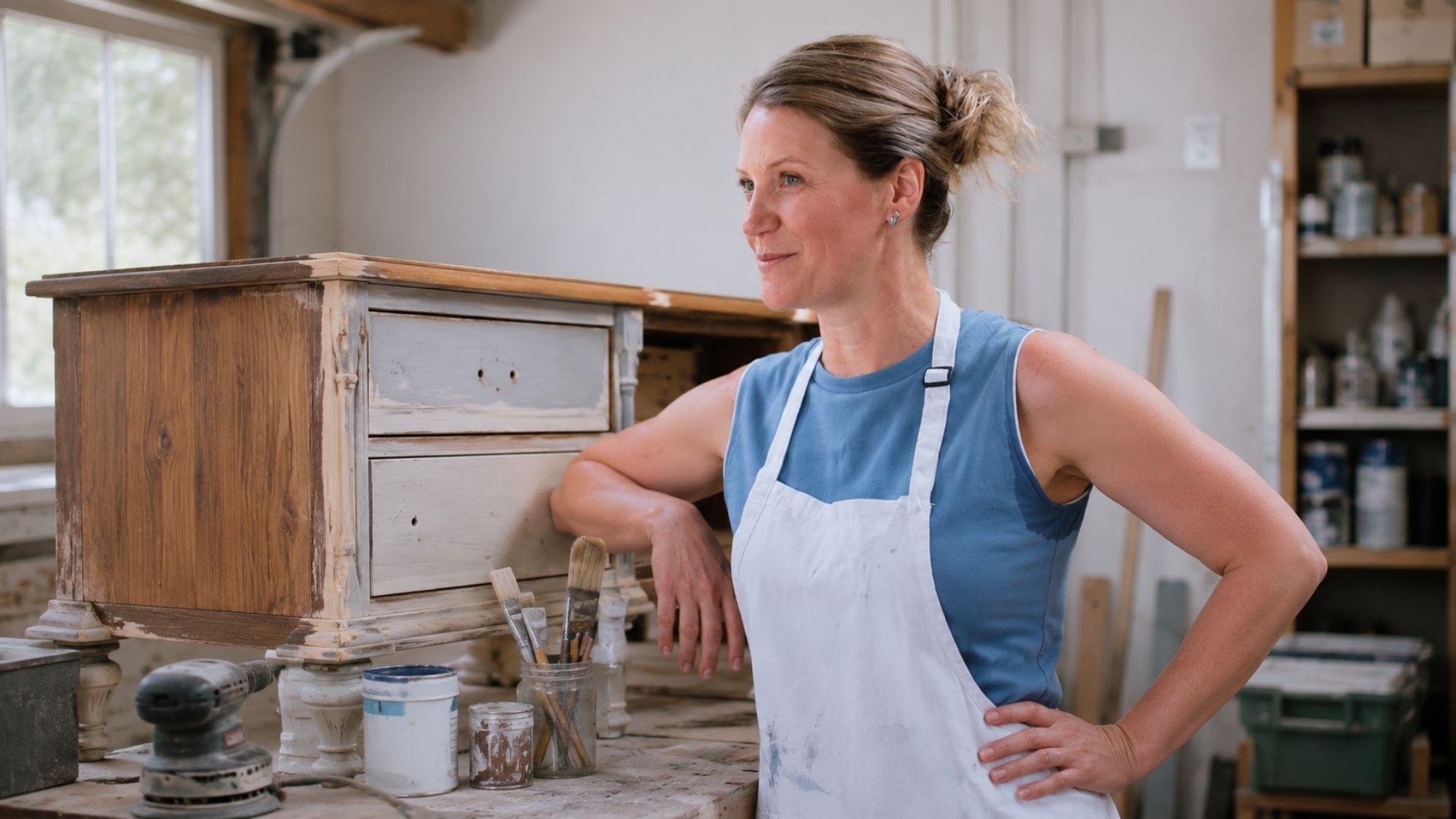

A mother who considered herself a ‘Pinterest failure’ taught herself through videos to restore wooden furniture thrown in the trash. With just $100 and a garage, she turned the hobby into a business and claims to earn about $15.9k per month, a nice extra income.
She called herself a “Pinterest failure,” that person who tries to copy a beautiful project from the internet and doesn’t get it right. Even so, a mother of two learned to restore wooden furniture thrown in the trash and turned it into a source of income, as told by Under30CEO. It all started at home, with very little money.
Known only as Cara, she says she spent about $100 on materials and set up a workshop in her own garage. According to the account, what was a hobby turned into a business and today yields, on average, close to $15.9k per month, combining furniture restoration and what she earns with videos.
The starting point was curiosity. Without any course or experience, she learned each step by watching videos online and practicing until mastering sanding, painting, and changing handles. That’s how old pieces got a new look inside the garage at home.
-
Denmark Constructs World’s Largest Immersed Tunnel to Connect with Germany, Sinking 217-Meter Concrete Sections in the Baltic Sea

-
Low-Cost Concrete Panel House Goes Viral: Investor Reveals Prefabricated Kit Structure for Around $1,500, Assembled in 30 Days, with Plans for Rental and Resale Income

-
Polymeric Mortar Revolutionizes Brazilian Construction with Efficient, Clean Application and Uniform Finish

-
Biologist Builds 160m² Dream Home in Brazil for $32,000 Using Eco-Friendly Bricks, Achieving 67% Savings Through Smart Planning and Simple Solutions




Next, see how Cara learned to restore wooden furniture in videos, where she finds the pieces, how much she claims to earn per month, and why this story of income made at home speaks directly to Brazil.
Who is Cara, the mother who called herself a ‘Pinterest failure’

The nickname says a lot about the beginning of the story. “Pinterest Fail” is what we call someone who tries to replicate those beautiful decoration ideas from the internet and ends up with a very different result than expected. That’s how Cara saw herself before discovering the craft.
The turning point came from a concrete need. A mother of two teenagers, she started looking for a way to generate income at home after the family faced job loss and tight finances, a scenario that pushed many people to reinvent themselves.
That’s when the old furniture came into play. Instead of looking at a discarded dresser and seeing trash, Cara began to see potential. “I always called myself a Pinterest fail mom, but I can see what a piece can become,” she summarized, according to the account.
This perspective changed everything. From the idea of restoring wooden furniture that others threw away, she found not only an occupation but a way to turn time and work into money, without leaving the garage.
The nickname, by the way, is quite relatable. Almost everyone has attempted a DIY project that didn’t turn out like the photo, and it’s precisely this feeling that the term “Pinterest fail” conveys. The difference is that Cara turned self-criticism into a starting point for a real business.
How she learned to restore wooden furniture through videos
The most surprising thing is that no one taught her in person. According to the account, Cara learned each step of the craft by watching videos online and practicing on her own, in the trial-and-error scheme that only repetition resolves.
The learning process went through well-defined stages. Sanding the wood to remove the old finish, applying paint or varnish, fixing loose parts, and replacing old handles with new ones, all of this she mastered gradually, guided by the explanations she saw on the screen.
This type of home training has special value. By learning to restore wooden furniture in practice, without relying on expensive courses, she shows how the free knowledge available in videos can become a skill capable of generating real income.
Constant practice did the rest. Each recovered piece of furniture taught something new about types of wood, paints, and tools, and what started as imitation of tutorials turned into her own technique, with a finish good enough to be sold.
This story says a lot about the current moment. It has never been easier to learn a manual craft without leaving home, as video platforms provide step-by-step instructions for almost everything, for free. The challenge is no longer access to information but the discipline to practice until you get it right.
US$ 100 in the garage: the cheap start of the business
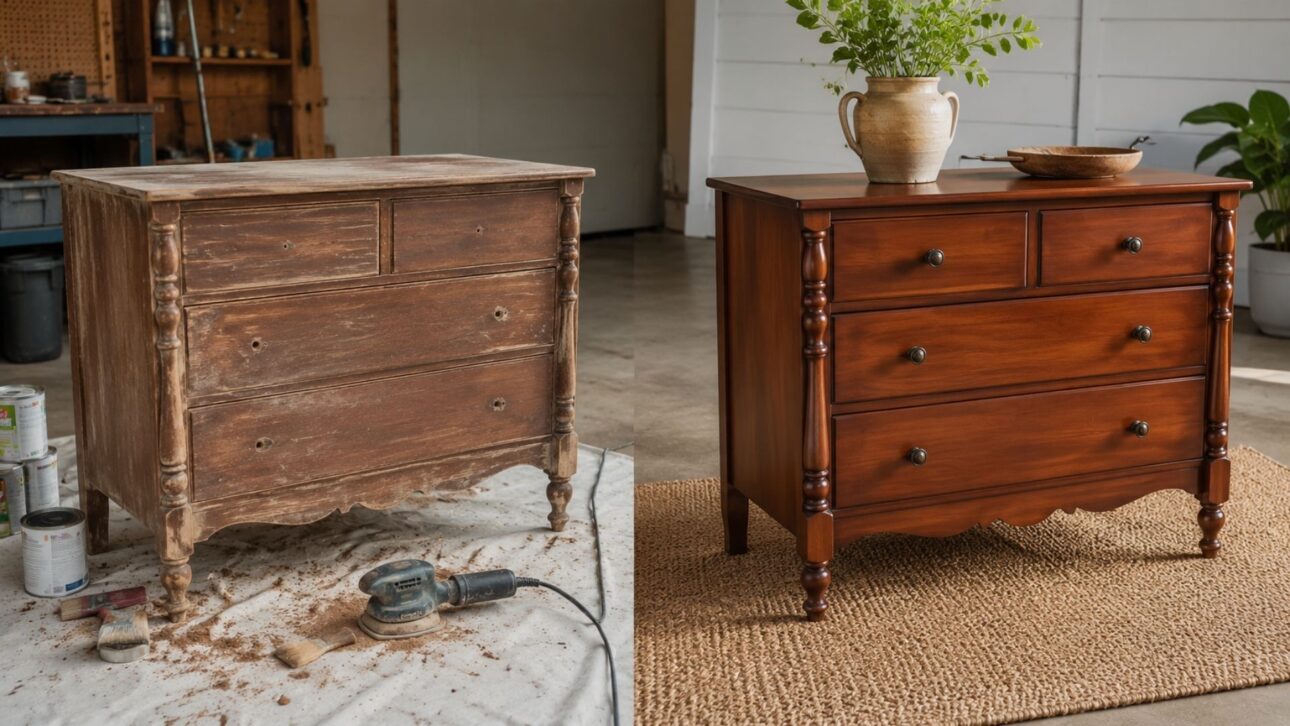
The initial investment was minimal. According to the account, it was possible to start with a cost of around US$ 100 in basic materials and tools, which makes this type of business accessible to almost anyone willing to work.
The space also did not require luxury. The home garage itself became a workshop, with no need to rent a warehouse or commercial space. It was there, among cans of paint and sandpaper, that Cara began transforming discarded pieces into furniture ready to sell.
This low cost is part of the secret. When you pay little to start and use a space you already have, the financial risk of the business drops significantly, and each sale turns into profit faster than in ventures that require a large investment.
No wonder the proposal attracts so many people. The idea of restoring wooden furniture in the garage, with little money and reused material, combines low investment, manual work, and the chance for extra income without leaving home.
This type of activity is growing worldwide. The so-called side jobs, done in spare time to supplement the budget, attract those who want to test an idea without quitting their job. A garage workshop fits well into this logic because it starts small and grows as it succeeds.
Where she finds the furniture: sidewalk, thrift stores, and auctions
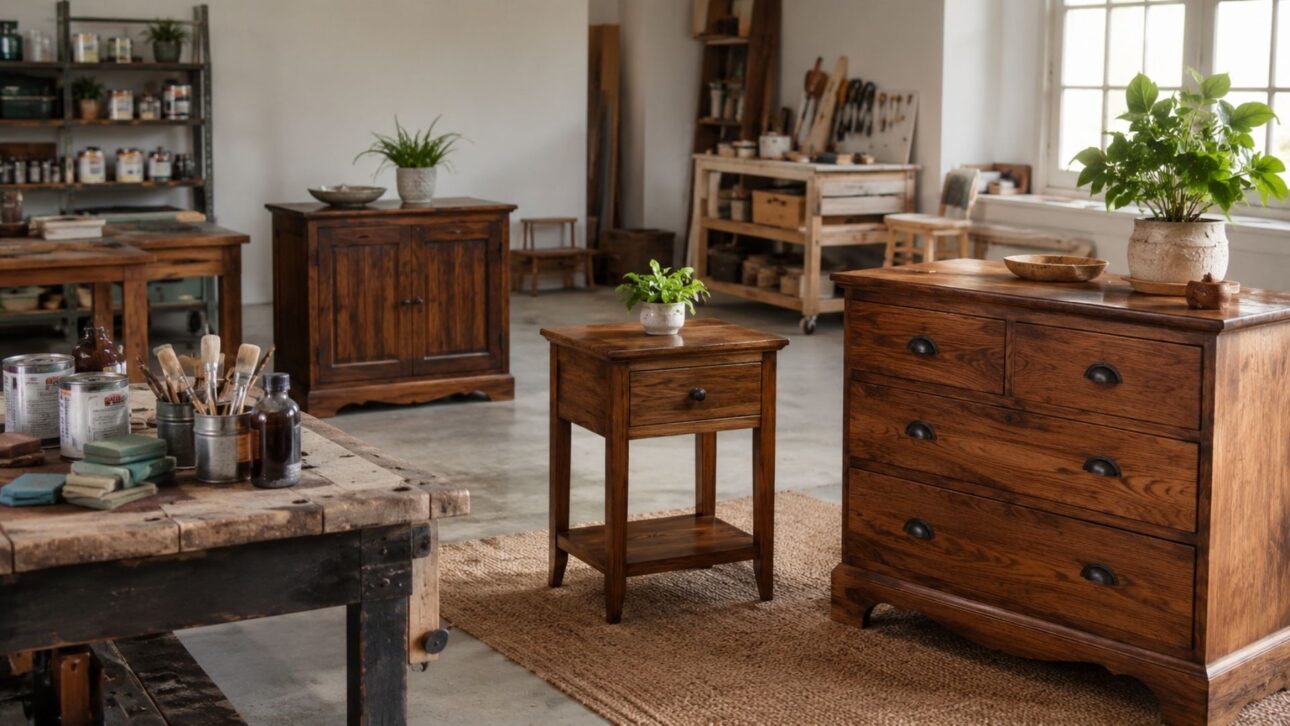
The raw material is scattered everywhere. According to the account, Cara scavenges pieces on sidewalks, where furniture is left as trash, as well as donation stores and thrift shops that sell used items at low prices.
Online auctions complete the hunt. Over time, she began to acquire pieces in estate auctions online, expanding the options beyond what she found on the street. It’s a scavenging job that requires a trained eye to find what’s worthwhile.
Not every piece of furniture is suitable, however. She prioritizes pieces with good structure, which she often refers to as “good bones,” capable of withstanding sanding, painting, and new hardware. Furniture from the 1980s, for example, often combines a firm structure with decorative details.
This criterion avoids losses. By carefully selecting what she collects, Cara ensures that the effort of restoring wooden furniture is worthwhile, transforming robust but unattractive items into desirable pieces, without wasting time on what cannot be repaired.
There is a reason to focus on older pieces. Many older pieces of furniture were made from solid wood, more resistant than much of what is sold today, assembled with pressed material. Restoring these pieces takes advantage of a quality that the current market rarely offers and helps the business stand out.
The formula that keeps the business running: buy low and sell high


The heart of the profit lies in the price difference. According to the account, Cara’s rule is to pay around $80 to $100, or less, for a dresser, reserving exceptions only for truly special pieces. This is the basis for making the numbers work.
On the other side, the selling price jumps. After being restored, a dresser is usually sold for something between $800 and $1,200, according to the account. The difference between what she pays and what she receives is what sustains the business.
An example shows the potential. She mentions having paid $11 for the top part of a china cabinet and, after dividing the piece into two different projects, sold the separate parts for a total of over $3,000, an impressive return on the initial expense.
The volume helps to scale. In a few months, she and her husband managed to refurbish five to six pieces per week, a pace that turns the manual work of restoring wooden furniture into a constant source of income.
It’s worth remembering that the real cost is not just the piece itself. The time spent sanding, painting, and assembling, as well as the paint and hardware, must be accounted for. Even so, when the work results in well-sold pieces, the margin of the business remains attractive.
How much does she earn per month?
The numbers she mentions are impressive. According to the account, in the first year, the couple raised about $80,000, and the monthly average started to hover around $15,900, equivalent to approximately R$ 88,000 at the approximate exchange rate, a figure worth reading with caution.
It’s worth understanding where this total comes from. According to her, just from selling furniture, the revenue is around US$ 4,000 per month, and the rest comes from other business-related fronts, such as earnings from videos and social media.
The year’s total reinforces the account. She claims that by the end of May, the revenue amounted to about US$ 79,445, which gives a monthly average of approximately US$ 15,889. Since these are values reported by her, they are presented here as a narrative, not as audited data.
Even so, the logic is clear. Buying cheap, adding value with manual work, and selling high is what allows a garage activity to generate an income that many people do not achieve in formal employment.
It’s important to read everything with a grounded perspective. These are numbers she herself discloses, subject to better and worse months, and that mix different sources of income. Even though they are not audited, they show the size that a home activity can reach when it gains an audience.
From Repair to YouTube: How Videos Became Income
The scale shift came from the networks. According to the narrative, one of her posts about paying off debts caught the attention of producers connected to financial presenter Dave Ramsey, who encouraged her to film her own work and show the process.
She agreed to the idea. She set up a camera in the garage, started publishing videos showing how she restores each piece, and according to the narrative, the channel was monetized in about five months, creating a new source of income beyond selling furniture.
The reach opened other doors. With the growth, she even collaborated with influencer MrBeast’s team in a charitable action, the type of partnership that expands the audience and reinforces the personal brand built around the business.
This is an important point in the story. The videos stopped being just promotion and became a product, showing that teaching how to restore wooden furniture can earn as much as selling the furniture itself, with the advantage of reaching people worldwide.
This model has become common among small businesses. Showing the behind-the-scenes of the work creates an audience that trusts the brand and still generates income through ads and partnerships. In her case, the videos became both a showcase and a product, reinforcing the main business.
What This Has to Do with Brazil
The idea fits like a glove in the Brazilian reality. Here, it’s common to see solid wood furniture being thrown away, old and sturdy pieces that, with good work, could regain value instead of becoming trash.
The learning path is also the same. In Brazil, thousands of people learn trades by watching free videos, and restoring wooden furniture is a skill that combines low investment with good demand, especially in times of tight budgets.
There is no shortage of sales channels here. Online marketplaces, second-hand apps, thrift stores, and antique fairs make it easy to advertise a restored piece across the country. Those who learn to restore wooden furniture find an audience willing to pay for design with history.
There is also the appeal of the circular economy. By recovering instead of discarding, the country reduces waste and gives new life to noble materials, in the same spirit of reuse that makes Cara’s business work inside a simple garage.
Wood waste is a real problem in the country. Pieces that could last decades end up in dumpsters for lack of repair, while trees continue to be cut down to make new furniture. Restoring what already exists is a direct way to reduce this cycle and value the wood that has already been cut.
Finally, there’s the lesson about extra income. In a Brazil full of people looking to supplement their salary, turning a hobby into a source of money, using what you have at home, is a concrete example of how creativity and work can go hand in hand.
And you, would you restore a wooden piece of furniture found in the trash?
Cara’s story shows that you can make income from what many people see as trash. Self-taught, she learned to restore wooden furniture through videos, started with about $100 in the garage, and says she now earns around $15.9 thousand per month from sales and online content.
More than a stroke of luck, it’s an example of method. Buying cheap or discarded pieces, restoring them with manual work, and selling them well turned a “Pinterest fail” into a real business, run from home, without a boss and with flexible hours. For her, the skill she learned on her own from the screen became a source of monthly income, not just an occasional weekend gig.
And you, would you restore a wooden piece of furniture found in the trash to resell, or would you be willing to learn the trade by watching videos like she did? Share your opinion here in the comments and share with those who always say they’re not cut out for manual work.