






 Portuguese
  Spanish


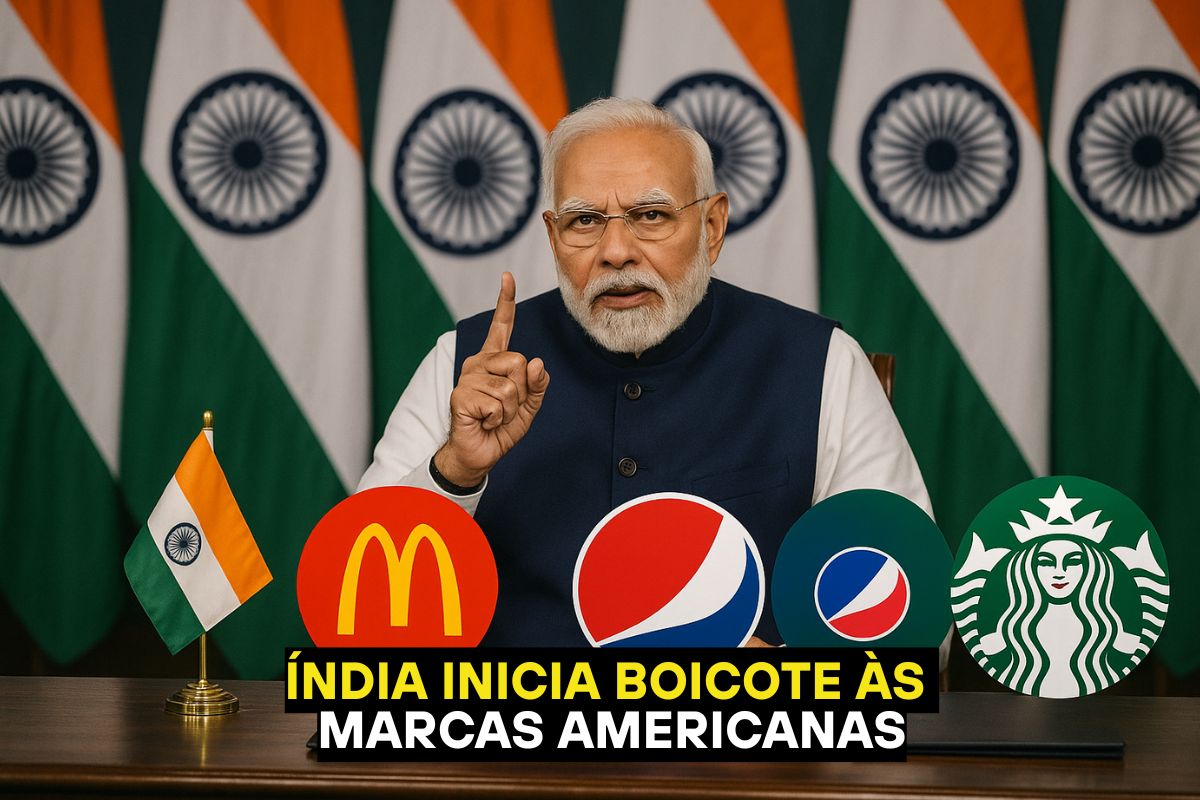


With 1.4 Billion Inhabitants, Country Adopts Self-Sufficiency Campaign After U.S. Tariffs and Challenges Presence of Giants Like McDonald’s, Pepsi, and Apple.
According to the Exame portal, India, with its population of 1.4 billion people, has become the epicenter of a boycott against American brands, a direct result of increased trade tariffs imposed by the United States. Prime Minister Narendra Modi’s appeal for citizens to prioritize local products has strengthened the self-sufficiency campaign known as “Swadeshi.”
This scenario marks a new chapter in tensions between New Delhi and Washington, putting the space for global companies at risk in one of the largest consumer markets in the world.
The measure could reshape bilateral relations and generate profound impacts on the global economy.
-
Brazil’s 2026 Tax Refund: Record 9.58 Million Filers in Largest Payout Ever, But a Key Detail on Priority Recipients Draws Nationwide Attention

-
Itaú Alters Hybrid Work Model, Increasing Office Days from 2028, Prompting Employees to Adjust to New Routine
-
Facing Labor Shortage, Japan Plans to Invest $34 Million to Attract Foreign Workers in Construction, Healthcare, Industry, and Commerce

-
Brazilian City Makes Remarkable Leap, Becomes 4th Wealthiest in the Country with GDP of R$ 134.1 Billion




The Indian Self-Sufficiency Strategy
Modi’s speech was emphatic: dependence on foreign products weakens the local economy. The leader urged citizens to gradually abandon items made outside the country and reinforced that retailers should prioritize Indian products.
The “Swadeshi” campaign gained momentum rapidly. Local companies began investing in advertising and expanding the presence of national alternatives, while consumers were encouraged to rethink everyday choices, from food to technology.
Who Are the Main Targets
The boycott is not symbolic: names like McDonald’s, Pepsi, and Apple, icons of American presence in retail and consumer culture, have become direct targets.
With strong penetration in Indian cities, these companies face unprecedented resistance.
The case of Amazon.com also draws attention.
The American retailer is one of the main gateways for U.S. products, but now faces a hostile environment in a market that helped consolidate its international expansion.
Context of Trade Tensions
The spark of the crisis was President Donald Trump’s decision to impose a 50% tariff on imported Indian products. The measure was seen in New Delhi as a direct attack on the country’s competitiveness.
In response, the Indian government not only encouraged local consumption but also reduced internal taxes to accelerate domestic economic growth.
This reaction seeks to turn the challenge into an opportunity to consolidate the national industry.
Outlook and Ongoing Negotiations
Despite the confrontational climate, there are signs that the two countries are seeking a diplomatic solution. Indian Commerce Minister Piyush Goyal is expected to visit Washington soon to try to ease tensions.
This agenda could define the direction of the trade partnership and the space that American companies will have in India going forward.
The big question is whether the boycott will be temporary or signify a structural change in Indian consumer behavior.
For global companies, the risk is seeing one of the largest emerging markets become less receptive to their dominance.
The boycott against American brands in India calls into question the presence of multinationals in a billion-dollar market and exposes weaknesses in relations between New Delhi and Washington.
The movement, driven by internal policies and external tensions, could redefine the balance of power in international trade.
Do you agree with this change? Do you think the boycott will have a lasting impact on the market or will it just be a temporary movement?
Leave your opinion in the comments; we want to hear from those who live this in practice.









Hoje no Brasil uma minoria tem políticos de estimação **** o homem que confia secamente em outro homem que Deus abençoe essas pessoas
Os EUA estão querendo destruir a ordem global apenas por uma sobrevida; de fato, sabem que são um império em inevitável declínio, algo que ocorra com todos na história. Atacam para que não se perceba sua fraqueza e atacados sejam.. pelo visto, não está funcionando.. países com inteligência interna real (não artificial) já estão mordiscando o corpo.. pena de quem, aqui, ainda acha que pode se salvar agarrando-se nessa “bóia ****”.
Interessante a posição do governo, não apenas apoiou, mas incentivou com a redução de impostos.
Acredito que vá funcionar, mas as estratégias de marketing das multi vai reagir…
O Trump vai querer atacar ou cercar a Índia com porta aviões, ou vai cortar vistos?
Kkkk ele acha que ganha…mas no médio prazo duvido.