






 Portuguese
  Spanish


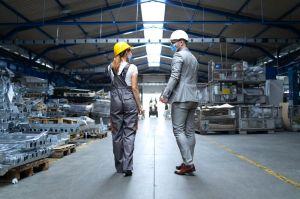
Industry 5.0 Focuses on Human-Machine Collaboration, Advanced Digital Technology, and Decentralized Manufacturing for Mass Customization.
The Industry 5.0 promotes an even deeper integration between humans and machines, creating an industrial environment where product customization meets specific consumer demands. Within this context, digital technology not only complements human work but enhances its capabilities, allowing for a unique and adaptable approach in production processes. It is characterized by the use of intelligent and connected systems that aim to optimize the efficiency and flexibility of business operations.
In this phase of industry, the capacity to decentralize production emerges as a fundamental driving force, redefining how and where products are manufactured. Industry 5.0 redefines the industrial landscape by valuing human creativity alongside machine precision. This new industrial model embraces customized manufacturing as part of its essence, transforming both large factories and small businesses into hubs of innovation and efficiency. The synergy between humans and digital technology continues to drive industrial evolution to new frontiers.
Beginning of the Era of Industry 5.0
Technological innovations in the digital environment currently drive significant transformations in the industrial sector, giving rise to what experts call Industry 5.0. This new industrial model relies heavily on advancements such as nanotechnology, Artificial Intelligence (AI), collaborative robots, the Internet of Things (IoT), and machine learning, which are fundamental to this new phase of industry, as highlighted by the Brazilian Support Service for Micro and Small Enterprises (Sebrae). However, this phase goes beyond mere technological progress; it values the synergy between humans and machines.
-
Bolivian Female Construction Workers Form Association to Combat Discrimination and 38% Pay Gap in the Industry

-
Near Amsterdam, residents buy land and discover they must also build streets, manage drainage, handle waste, and grow food on half their plot.
-
Without a mansion, without high investment, and without a traditional classroom, a teacher living in a 22 m² house taught students to build a 9 m² studio apartment with the equivalent of R$10,000.
-
Without her own home and pressured by rent, a 25-year-old bought a small 15-meter boat, gradually renovated the interior by herself, transformed the interior with paint, new flooring, a larger bathroom, and started living on the canals, paying much less per month.


Differentiators of Industry 5.0
This aspect is what effectively distinguishes Industry 5.0 from its predecessor, Industry 4.0. While the former emphasizes digitization and automation of processes with the aim of increasing productive efficiency, Industry 5.0 is broader, incorporating human and social values into the industrial environment, enabling the creation of personalized and adaptable products to meet consumer demands. According to Serasa Experian, one of the main influences of this new production model is the possibility for industries to adopt decentralized and distributed manufacturing. This approach allows technology to connect remote units while coordinating operations more efficiently.
Impacts on the Supply Chain
With spatially distributed and interconnected factories, decentralized manufacturing improves agility and flexibility within the supply chain. To sustain this complex and highly connected productive structure, leaders can seek the best industrial ERP solution available to assist in management. Enterprise Resource Planning (ERP) systems perform the function of managing information from various sectors and industrial processes in real-time. As Sebrae mentions, this type of software can optimize management in several areas, including production, inventory, project management, and billing.
Integration and Development with Performance Indicators
With the capability to share data instantly, industries can build closer collaborations with partners, suppliers, and customers, promoting complete integration throughout the supply chain. This is yet another impact highlighted by Industry 5.0, according to Serasa Experian. Human contribution in performance analysis is vital in Industry 5.0, even though technologies can optimize repetitive and heavy tasks. Workers are tasked with overseeing the entire process, ensuring quality and performing activities that require critical and cognitive skills. In this scenario, understanding key performance indicators (KPIs) and their application in monitoring organizational performance is an essential strategy for industry leaders aiming to improve their results.
Enhancement with Personalization and KPIs in Industry 5.0
According to Sebrae, KPIs or key performance indicators enable the identification of the least productive stages of a service chain, allowing for the creation of corrective actions at critical points. In an electronics industry, for example, a crucial KPI may be the defect rate per group of produced units. Monitoring this indicator can reveal where in the process quality issues occur, allowing for improvements such as adjustments to machines or operator training. KPIs are also valuable tools in mass customization, a hallmark of Industry 5.0, as pointed out by Serasa Experian, promoting flexible and easily configurable systems. For customized products, leaders may rely on indicators focused on customer experience, such as the customer satisfaction index (CSAT) and the product return rate.
Advanced Technologies in the New Phase of Industry
These KPIs provide insights into how customized products meet consumer expectations, driving improvements in design, manufacturing processes, and delivery logistics. In addition to AI and IoT, the National Confederation of Shopkeepers (CNDL) highlights Collaborative Robotics, Augmented Reality (AR), and Virtual Reality (VR) as promising technologies that will drive Industry 5.0 in Brazil. The use of VR allows for the creation of realistic virtual environments, essential for training, evaluation, and planning, while AR provides real-time data, offering clear guidance to workers by overlaying information onto the real environment.
Collaborative Robotics in Industry 5.0
In the current application of Collaborative Robotics, according to CNDL, the difference from Industry 4.0 is evident: now, machines are designed to work in harmony with employees, optimizing both knowledge and skills. Unlike the previous focus on pure automation, the current scenario is geared towards harmonious collaboration, integrating advanced technology with human and social values.
Source: © ANA BEATRIZ






Be the first to react!