Portuguese
  Spanish


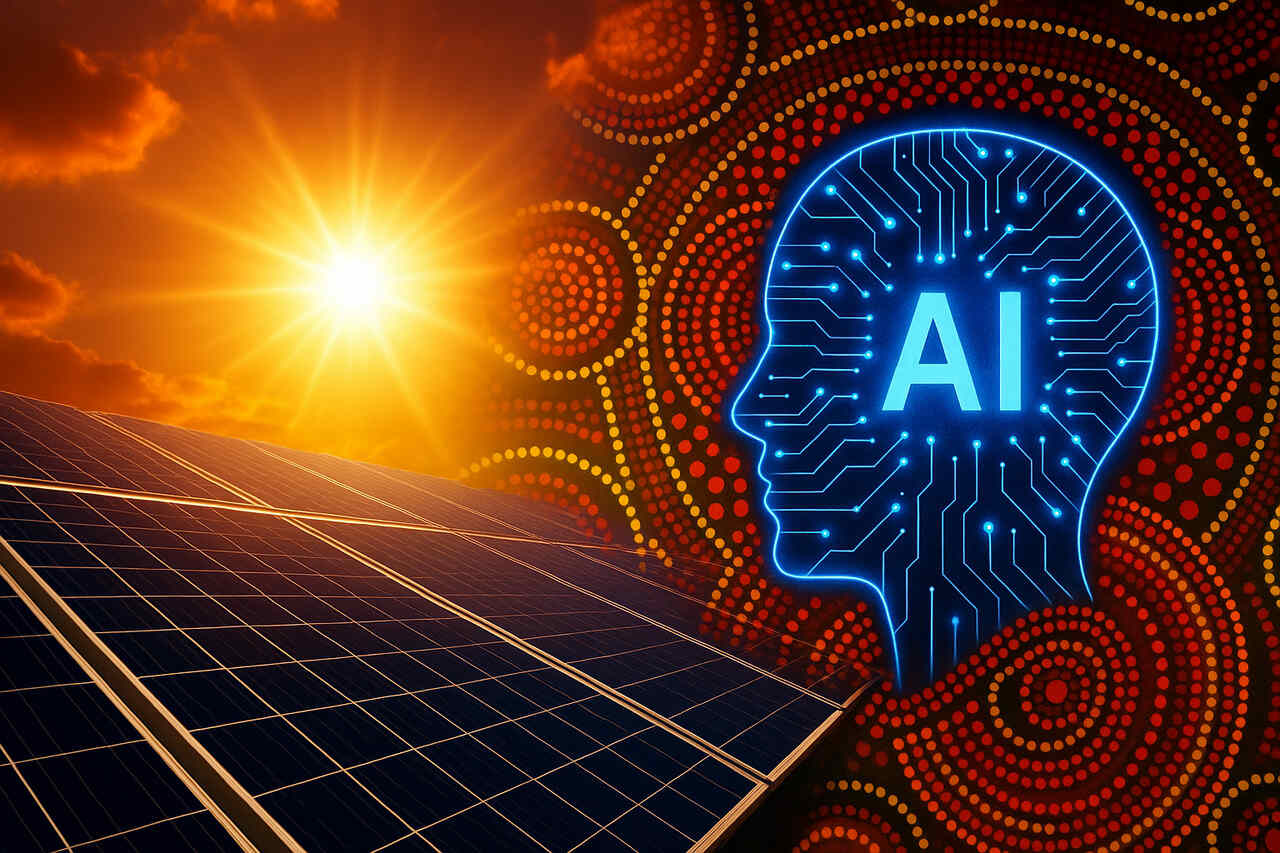

Australian Researchers Combine Artificial Intelligence with Indigenous Knowledge to Predict Solar Energy with Greater Precision and Less Error
A new study from Charles Darwin University (CDU) in Australia has introduced a promising innovation in the solar energy sector. Researchers from the institution combined artificial intelligence with traditional seasonal calendars of the First Nations to improve the prediction of solar energy production.
The idea is simple but powerful: to merge ancestral knowledge with cutting-edge technology to solve a real problem.
Solar energy is considered one of the main bets in renewable sources. However, accurately predicting the amount of energy that will be generated is still a major challenge.
-
Berries, Strawberries, and Blueberries Could Transform Agriculture in Northeastern Brazil, New Tests Reveal

-
Danish Resident Discovers Six Viking Gold Bracelets Weighing 762.5 Grams, Third Largest Gold Treasure in Denmark

-
Over 200 Cities in Southern Brazil on Storm Alert as Cyclone Near Uruguay Brings Heavy Rain, Hail, and Winds Up to 100 km/h

-
Archaeologists Discover 2,300-Year-Old Beer in Sealed Bronze Vessel from Ancient Chinese Tomb



Factors such as weather, clouds, and atmospheric variations directly affect the performance of solar panels, making energy planning difficult in various regions.
AI and Ancestral Wisdom
The study, titled “Conv-Ensemble for Solar Energy Prediction with Seasonal Information from the First Nations”, was published in the IEEE Open Journal of the Computer Society.
In it, the researchers used a deep learning model, a modern artificial intelligence technique, and integrated data based on the traditional calendars of the Tiwi, Gulumoerrgin (Larrakia), Kunwinjku, and Ngurrungurrudjba First Nations.
A contemporary calendar, known as Red Center, was also used.
These traditional calendars are linked to signs from nature, such as the behavior of plants and animals, which indicate changes in the seasons.
According to the study, this information can be more effective than current methods, especially in specific regions of Australia.
Lower Error and More Reliable Results
The tests were carried out with data from the Desert Knowledge Australia Solar Center located in Alice Springs. The results were encouraging.
The proposed model was able to predict solar energy generation with a significantly lower error rate than the models currently used in the industry.
According to the researchers, the error was less than half of what is observed in popular forecasting systems today.
Luke Hamlin, a PhD student at CDU and co-author of the study, highlighted the value of traditional knowledge.
According to him, the calendars of the First Nations provide a deep ecological understanding built over thousands of years of observation of nature.
“These seasonal insights are rooted in local ecological signals, such as the behavior of plants and animals. This is directly linked to changes in sunlight and climate patterns,” explained Hamlin.
“Integrating this knowledge allows for more accurate and culturally tailored predictions for different regions,” he concluded.
AI + Ancestral Wisdom: Future Applications and Research Expansion
Professors Bharanidharan Shanmugam and Thuseethan Selvarajah, also co-authors of the study, stated that the combination of AI and indigenous wisdom could transform the sector.
They note that creating a single universal model for solar forecasting is extremely difficult, and that approaches like this are essential to overcome this challenge.
Finally, the researchers believe that this technology could be applied in other regions and even in other renewable energy sources in the future.
With information from Tech Xplore.