






 Portuguese
  Spanish
  4 min of reading
  0 comments


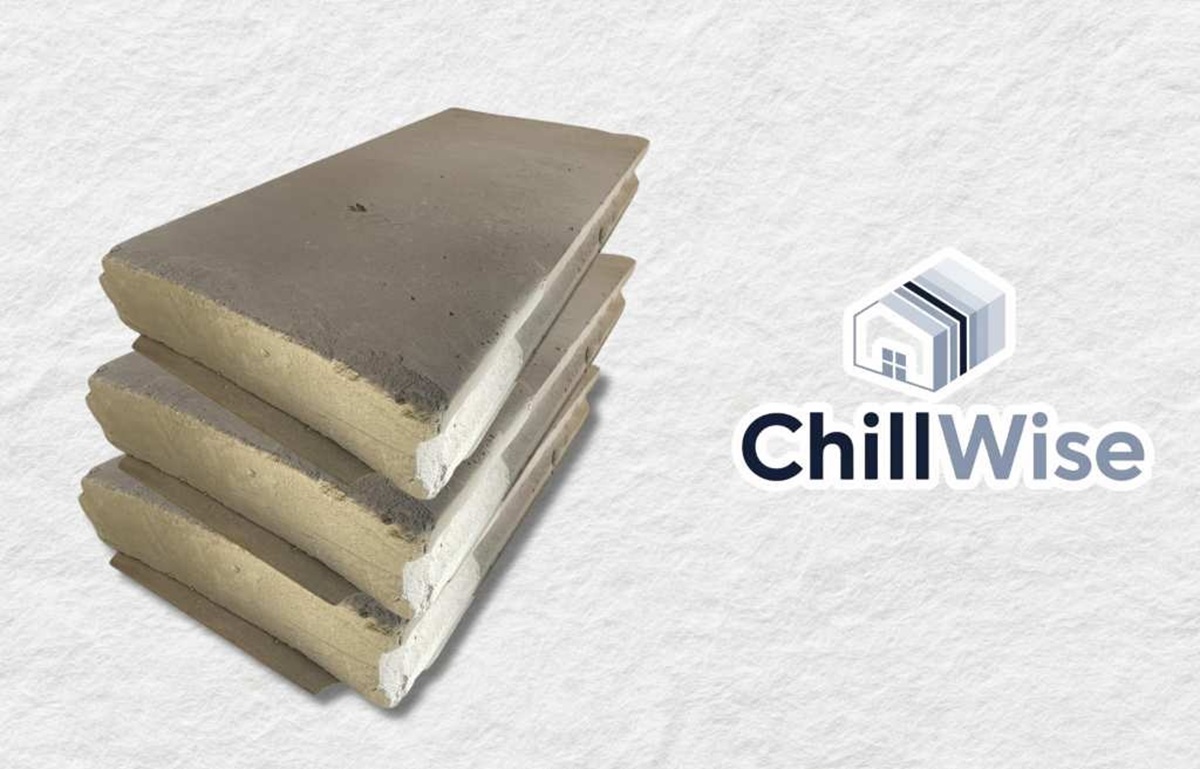
ChillWise™ System Combines Lightweight Cellular Concrete and Thermal Microcapsules to Cool Homes Without Power, Using Only Rice Husk Ash and Agricultural Waste.
Filipino researchers have transformed agro-industrial waste into an innovation that promises to revolutionize thermal comfort in tropical countries. The ChillWise™ system, developed at the Sustainable Resources Engineering Research Center for Construction Technologies (SuRER-CT) of MSU-IIT, uses rice husk ash and fly ash to create passive panels that cool spaces without electricity, achieving up to 95% energy savings.
The project is led by Dr. Maria Sheila K. Ramos and arises as an efficient, eco-friendly, and low-cost alternative to traditional air conditioning.
Passive Technology Made from Agricultural Waste
ChillWise™ combines three core elements that work synergistically. Lightweight cellular concrete (LFC) contains air bubbles that act as natural thermal insulators, reducing heat transfer. Meanwhile, phase change microcapsules (mPCMs) store heat when the internal temperature exceeds 32 °C and release it as the environment cools, maintaining stable temperatures without electrical consumption. Finally, using rice husk ash and fly ash replaces part of the cement and eliminates the use of petroleum-derived plastics, reducing costs and carbon emissions.
-
Florida begins sending robotic rabbits to the Everglades swamps, where they mimic prey, use cameras, AI, and sensors to attract and locate invasive pythons hidden in the mud and vegetation.

-
Engineers in Brazil deploy a robot dog to enter pipelines of a R$ 134.7 million project, facing mud, sand, humidity, and toxic gases, and send data in real-time without exposing workers.
-
Brazilian family creates machine that transforms seawater into fresh water, produces up to 130 liters per hour, facilitates routine on vessels, and boosts family business along the country’s coast.
-
A doctor from Minas Gerais warns that sleeping with the fan pointed at the body all night is not as harmless as you think; it dries out the respiratory tract, causes mucus buildup, spreads dust mites, and can even irritate the cornea of the eyes.



These panels store heat during the day and release it at night, softening thermal variations and decreasing the need for artificial cooling. All this happens without wires, without electricity, and without emissions.
Origin and Development
The system emerged from SuRER-CT’s research, which sought to reuse agro-industrial waste to make the construction industry more sustainable. Three prototype houses were built for comparison: one with conventional concrete, another with LFC, and a third with LFC combined with mPCM. Tests conducted according to ASTM C518 confirmed ChillWise™’s thermal efficiency, achieving a conductivity of only 0.1239 W/m·K — compared to 2.5 W/m·K of traditional concrete — and reducing energy consumption by up to 95.04%.
The team also involved architects, energy engineers, and circular economy specialists to ensure the economic viability and scalability of the product in different construction contexts.
Experimental Results Confirm Efficiency
The experiments confirmed ChillWise™’s superiority. Keeping the parameters of area (72.15 m²), temperature difference (7.4 K), and panel thickness (0.1524 m) constant, conventional concrete showed a heat gain of 3.7148 J/s. The LFC reduced this value to 0.1972 J/s, while ChillWise™ reached only 0.1841 J/s. The difference represents a 95.04% savings compared to common concrete and an additional improvement of 6.63% over standard LFC.
These numbers demonstrate that the combination of thermal insulation, PCM microcapsules, and sustainable materials not only reduces heat but also offers measurable performance in extreme tropical conditions, all without resorting to active cooling systems.
What Sets It Apart from Other Solutions
The innovation of ChillWise™ lies in combining insulation and thermal storage in a single panel. While many systems use synthetic capsules or fossil fuel-based materials, ChillWise™ encapsulates hydrated salt Na₂SO₄·10H₂O in rice husk ash — a widely available waste in agricultural regions. This compound is incorporated into a low-carbon fiber with fly ash and natural pozzolans, resulting in a panel that cools, repurposes waste, and reduces emissions.
Its modular and non-structural design allows for application in existing walls or new constructions, making it ideal for social housing, public schools, and community projects in hot climates. The proposal is accessible, local, and adaptable — a technology made for populations most affected by extreme heat.
Plans for the Future
The development of ChillWise™ follows three main axes: industrial expansion, practical validation, and technical certification. The industrial scaling phase involves creating prefabricated molds and partnerships with rice and energy sectors for large-scale waste collection. Field tests include its installation in popular houses, rural schools, and cold storage warehouses to assess real performance in different conditions.
The approval process seeks to ensure intellectual property protection and compliance with local and international standards. Recognized by the DOST–BPI 2023 and Dyson 2024 awards, the project has gained global visibility and attracts new partnerships for expanding its commercial application.
A Step Toward Climate Justice
ChillWise™ goes beyond energy efficiency: it represents a step forward in adapting human constructions to climate change. In regions where temperatures exceed 50 °C, access to cooling technologies is a matter of survival, yet air conditioning remains inaccessible to millions. The Filipino system proposes a low-cost solution that reduces dependence on electrical equipment, decreases emissions, and improves thermal well-being.
Among its most relevant contributions are:
- Reduction of energy consumption, by eliminating the need for active cooling;
- Utilization of agricultural waste, adding value to previously discarded materials;
- Decrease in carbon footprint, by using less cement and eliminating petroleum-derived plastics;
- Improvement of thermal comfort and health, especially for children and the elderly;
- Support for the circular economy, stimulating local productive chains based on repurposing and sustainability;
- Advancement in climate justice, by bringing real solutions to vulnerable communities.
Conclusion: Innovation That Acts Today
More than just a technology, ChillWise™ is a direct response to the needs of a planet that is getting hotter. Its practical and accessible approach combines material science, sustainability, and social responsibility. By transforming waste into thermal comfort and energy efficiency, this Filipino innovation redefines the role of the construction industry in the fight against global warming.
The project demonstrates that it is possible to adapt human dwellings to the new climate without resorting to expensive and polluting solutions. With it, cooling ceases to be a privilege and becomes a right — a right guaranteed by intelligence, research, and environmental commitment.


-

-

4 people reacted to this.