






 Portuguese
  Spanish
  4 min of reading
  0 comments


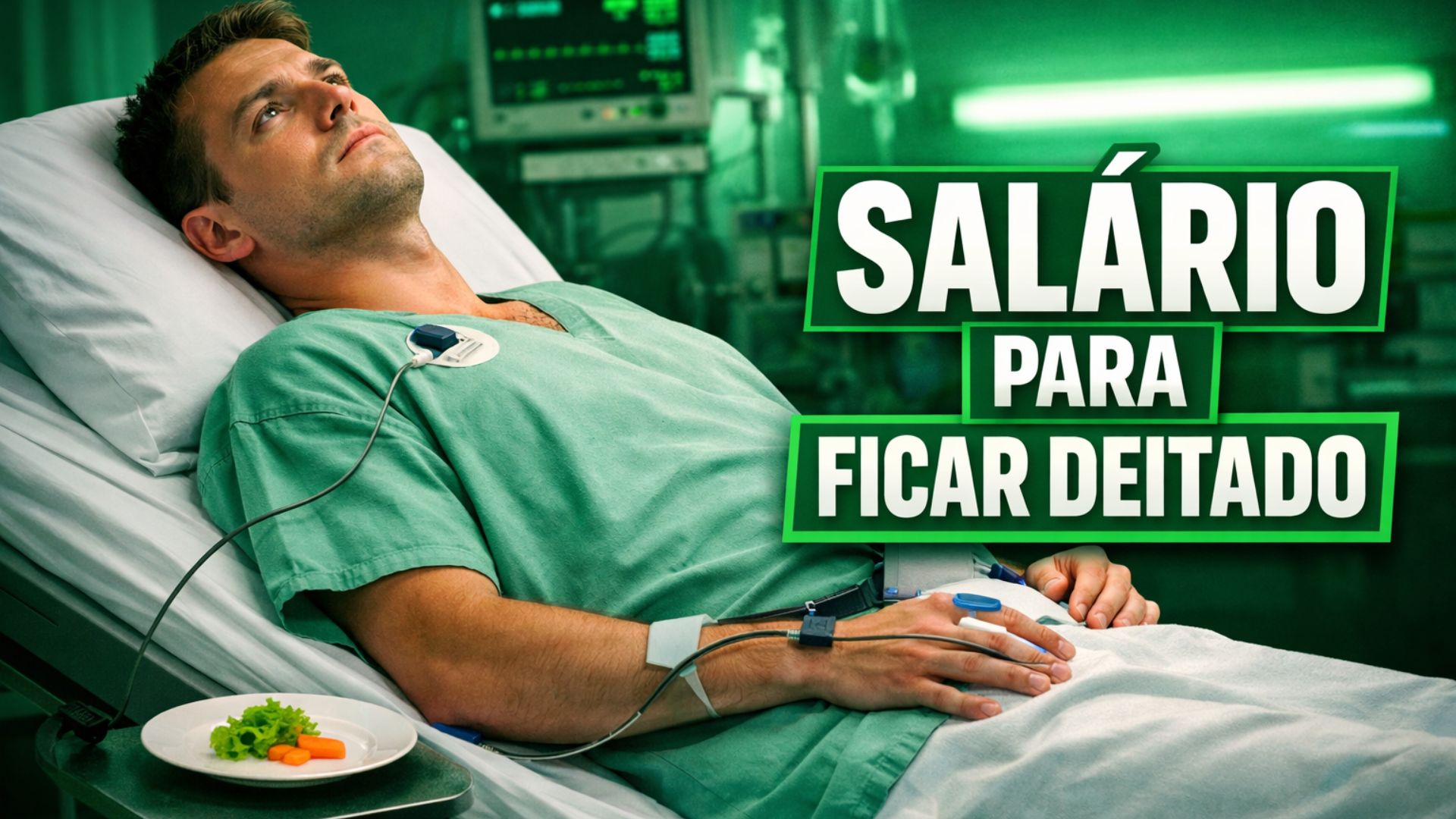
Recruitment in Toulouse Seeks Volunteers for Space Medicine Research That Combines Microgravity Simulation and Severe Food Restriction Under Clinical Supervision, in Study Commissioned by the French Space Agency.
The Medes, a space medicine and physiology institute based in Toulouse, in southern France, is recruiting volunteers for a study that combines microgravity simulation and severe food restriction, with compensation of 5,000 euros, approximately R$ 30,000.
Differently from previous calls focused solely on prolonged rest or “dry” immersion, the newly announced protocol provides for 20 days of hospitalization, of which 10 will be absolute bed rest in a bed tilted at -6°, along with a diet limited to 250 kcal per day.
Medes Study in Toulouse and the Microgravity Simulation
According to the official description from Medes, the research will be conducted in June 2026 and was commissioned by CNES, the French space agency, with the goal of measuring physiological responses when relevant fasting occurs simultaneously while the body is subjected to a condition that mimics the absence of gravity.
-
Survivor of 1966 SS Daniel J. Morrell Shipwreck in Lake Huron Recounts 38-Hour Ordeal in Extreme Cold

-
The Greatest Hoax in World Cup History? The Film That Denied Brazil’s 1958 Victory and Exposed How Fake Evidence Can Seem Convincing on TV
-
Fake South Korean Online Stores Offer Shopping Thrill Without Spending Money or Receiving Products
-
The War of Jenkins’ Ear: How a Severed Ear Sparked One of the 18th Century’s Most Unusual Conflicts


By keeping the volunteer lying down with their head slightly below their feet, the model known as “head-down tilt” causes fluid redistribution and changes in bodily systems that, in space missions, are often affected by microgravity for weeks or months.
In this scenario, the restriction of 250 kcal per day serves as an additional stressor, intended to evaluate how metabolism, body composition, and physiological functions react when energy availability becomes minimal during a period in which the body also loses normal stimulus for support and movement.
Selection Criteria for Healthy Volunteers

The selection foresees ten healthy men, aged 20 to 40 years, non-smokers, with a body mass index between 20 and 26 kg/m², height between 1.65 m and 1.85 m, and stable weight for at least three months, in addition to regular physical activity.
Criteria also include the absence of allergies or dietary restrictions, affiliation with a social security system, as well as interviews and medical evaluation at the Medes space clinic in Toulouse, before the final confirmation of participants.
Recruitment is done through applications sent via email, and the institution informs that screening occurs in stages, with verification of requirements, clarification of the protocol, and medical selection visits, a procedure compatible with clinical studies that impose severe restrictions and continuous monitoring.
Hospitalization Routine, Bed Tilted at -6° and 250 kcal Restriction
During the 10 days of bed rest, the rule is not to leave the bed and to maintain the defined tilt, a model used to reproduce effects related to microgravity, such as cardiovascular changes, loss of muscle mass and strength, and changes in sensory, motor, and cognitive parameters described by the institute itself.
In parallel, the daily intake of 250 kcal imposes an extremely limited diet, described by the French press as consisting of minimal items throughout the day, which raises the protocol’s demands and reinforces that it is a simulation of food contingency under clinical supervision.
Although the study is promoted as a paid opportunity, Medes frames participation as medical research, with examinations and evaluations throughout the period, along with follow-up to check for persistent effects after returning to routine.
Why CNES Wants Data on Fasting in Space Missions
The justification presented by the institute is based on the understanding that nutrition is a central theme in prolonged space missions, as resupply failures, problems in life support systems, or unforeseen extensions of flight time can reduce food availability.
By testing the association between head-down tilt at -6° and significant caloric restriction in healthy men, the study aims to create a baseline to compare the combined effect of stressors, allowing to distinguish what is a consequence of the microgravity model from what intensifies when available energy drops drastically.
This type of information, once validated, tends to guide decisions on safety protocols and monitoring strategies in crewed missions, as microgravity can affect different systems simultaneously and, in emergencies, food is often one of the most sensitive resources.
Exams and Scientific Monitoring During the Protocol
The Medes call indicates that several scientific teams will monitor participants, with exams and tests in different areas, such as neurological, muscular, skeletal, cardiovascular, metabolic, and cognitive systems, along with biological samples and regular clinical evaluations during hospitalization.
With this, researchers aim to map changes over time and reduce risks, as the combination of immobility and low caloric intake requires strict medical control, both to ensure safety and to obtain comparable, standardized, and useful measurements for later analyses.
In addition to measurements during confinement, the protocol provides for a follow-up return for a longer period, a strategy mentioned in the official disclosure as a way to verify if part of the alterations normalizes spontaneously or if some effects require additional clinical observation.
With selection expected to begin early in the year and the study scheduled for June, the proposal draws attention for the compensation offered and the strictness of the regimen, but maintains the classification of clinical research, with strict rules and criteria designed to minimize variables outside of control.





-

-

-

-

-

10 people reacted to this.