






 Portuguese
  Spanish


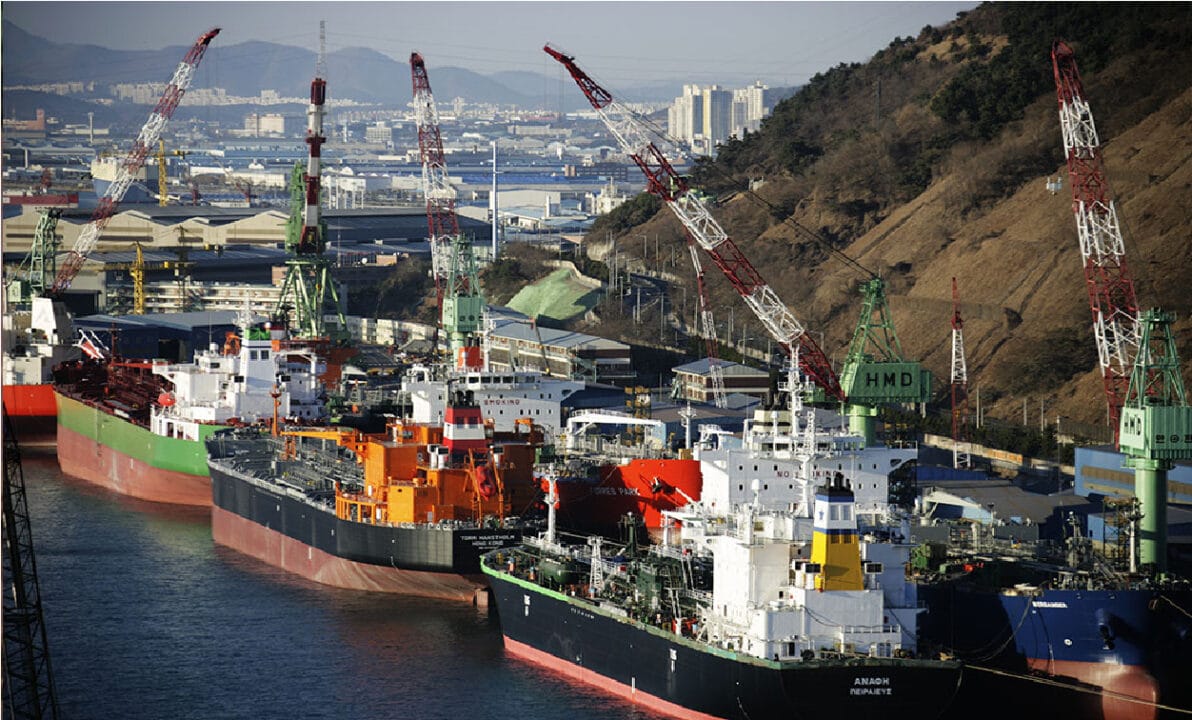

The Million-Dollar Investment Made By South Korea Aims To Take The Country To An Advanced Level In The Shipbuilding Industry, Implementing Technologies And Other Favorable Alternatives
The South Korean government is laying the groundwork for a significant leap in the shipbuilding industry by announcing a robust investment of US$ 534 million over five years. This strategic move aims to enhance the country’s position in the development of the next generation of maritime transport.
The investment plan for South Korea’s shipbuilding industry encompasses a comprehensive approach, from promoting new technologies and alternative fuels to strengthening production capabilities.
Competing And Leading High-Value Shipbuilding
In a fierce competition with Chinese shipbuilders, South Korea has already led in sectors considered high-value ships, particularly in the construction of gas carriers, including LNG ships. The intention is to capitalize on this experience in new areas such as ammonia, hydrogen, and battery energy. Additionally, there is a significant focus on emerging technologies, including smart navigation systems and artificial intelligence.
-
Eni Acquires 25% Stake in Chilean Lithium Project, Plans to Invest Up to $225 Million in Eco-Friendly Extraction Method

-
French Brand Transforms 6 Million Brazilian PET Bottles into Sustainable Sneakers for Global Fashion Market
-
Abandoned Factory in Rio’s North Zone Becomes Urban Hazard with Standing Water and Debris

-
The U.S. Navy Conducts Submarine Tests in Idaho Lake to Detect Underwater Noises Hidden by the Ocean


Youngjin Jang, Deputy Minister of the Ministry of Trade, Industry and Energy of South Korea, expressed optimism about the growth outlook: “With the recovery of the global shipbuilding industry adding favorable winds to South Korea’s shipbuilding industry, we expect to see great opportunities for recovery and a new leap.”
Dominance Strategy And Investment In The Next Generation
On November 15, the “K Shipbuilding Strategy for Next Generation Market Dominance” was presented during a ministerial meeting focused on exports and investment promotion. The ambitious goal of the Ministry of Trade, Industry, and Energy of South Korea is to capture more than 80% of the next-generation shipbuilding market.
The plan includes launching technological development and demonstration projects, prioritizing carbon-free fuel sources such as LNG, ammonia, and hydrogen. Furthermore, there is a pursuit of early negotiations for independent and autonomous vessels.
Challenges And Solutions: Labor And Smart Shipyards
The current labor shortage in South Korean shipyards is being addressed with measures to allow more foreign workers. The government is also committed to implementing new policies to support training and apprenticeship programs. As part of the strategy, over 3,000 individuals will be trained as essential technological talents, with planned technological collaborations with foreign partners.
To establish an innovative and more productive production system, the investment encompasses the construction of smart shipyards, where robotics will play a crucial role in the industry’s digital transformation.
Support Beyond The “Big Three”
While the “big three,” HD Hyundai, Samsung, and Hanwha Ocean, lead the shipbuilding industry, the South Korean government aims to go beyond, supporting entry into foreign markets and technological development. The focus is on the sustainability of small and medium-sized shipbuilders, as well as the materials and equipment industry.
In addition to support for specific sectors, the government is committed to improving financial support infrastructure, strengthening cooperation with large companies and promoting collaboration across the industry. Legislation projects for the “Promotion of Industrialization and Technological Innovation of Next Generation Shipbuilding” are being explored, aiming to expand exports and increase the competitiveness of South Korean shipbuilders in international tenders. This robust investment aims to establish South Korea as a powerhouse in future shipbuilding.


