Portuguese
  Spanish



Strategic movements reveal silent race to recover underground arsenal while tension remains even after temporary agreement
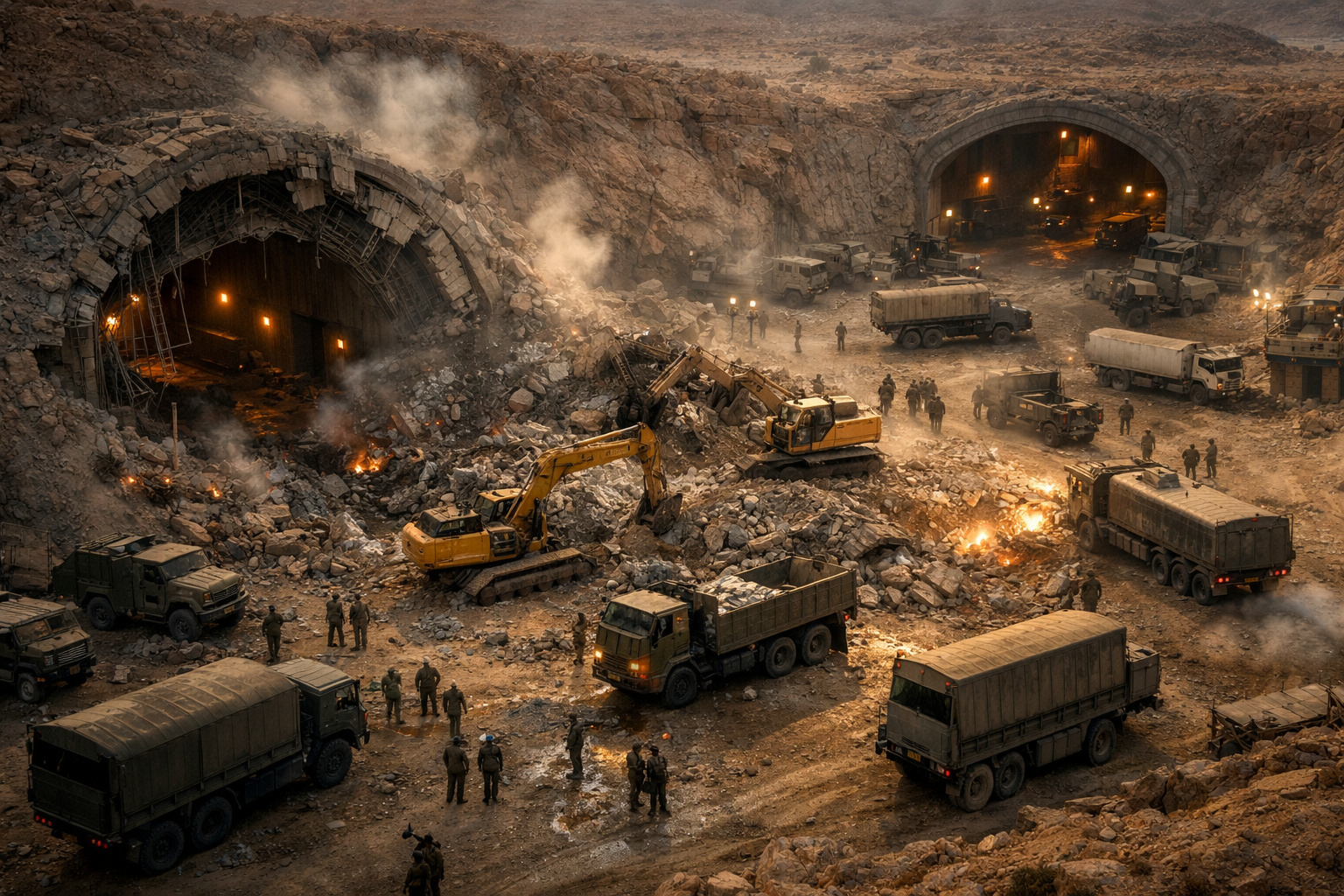
Amid a global landscape still fraught with uncertainties, Iran has initiated an intense and strategic operation to recover missile launchers that became trapped underground following recent attacks by the United States and Israel. Although a ceasefire is officially in effect, the movement on the ground indicates that the conflict may be far from a definitive conclusion.
The information was disclosed by the CNN, which analyzed recent satellite images showing unusual activities in areas known to house Iranian underground bases. According to the survey, heavy machinery, such as front loaders, is seen removing large volumes of debris blocking the entrance to strategic tunnels.
Furthermore, records show that the debris is being transported to trucks positioned nearby, highlighting an organized and ongoing logistical operation. This effort reinforces the importance of these structures for the country’s military capability, especially at a time of geopolitical instability.
-
U.S. Dismisses Brazilian Foreign Ministry’s Military Risk Warning as “Absurd,” Cites Brazilian Criminal Gangs Operating in the U.S. Since May 2026

-
Ukraine War Impacts Brazilian Fuel Supply: Russian Diesel Imports Drop 65% in June, Brazil Turns to US and India Amid Market Concerns

-
Chinese Nuclear Submarine Launches Simulated Warhead Missile in Pacific, Heightening Regional Tensions Amid Naval Drills with Russia Near Qingdao; New Zealand and Papua New Guinea Warn of Persistent Chinese Military Presence
-
Ayatollah Ali Khamenei’s Funeral Draws 15 to 20 Million in Tehran, Calls for Revenge Against Trump After Joint Israel-U.S. Attack



Targeted attacks buried strategic arsenal and changed the dynamics of the conflict
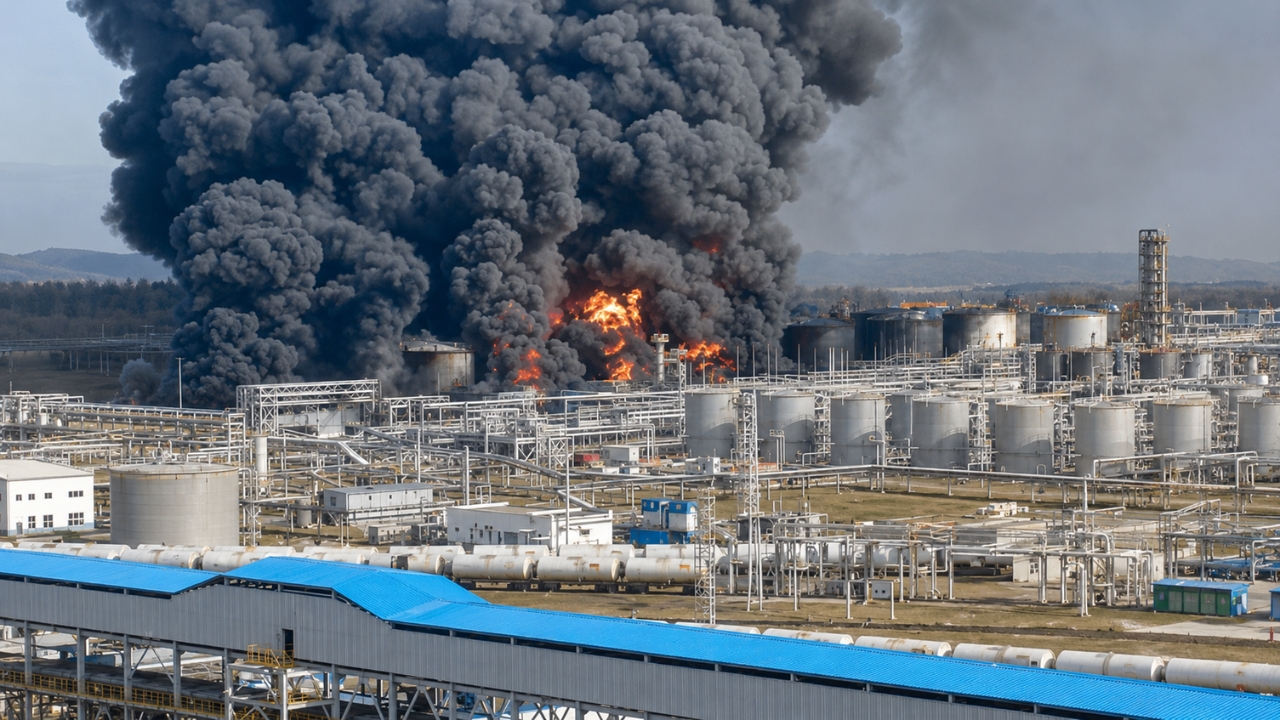
Previously, investigations indicated that the United States and Israel adopted a precise strategy: directly attacking the entrances of the underground bases, known as “missile cities.” The goal was not only to destroy weaponry but also to prevent access to the launchers.
Consequently, this tactic had a significant impact. According to sources from U.S. intelligence, about half of Iran’s missile launchers remained intact after approximately a month of fighting. However, many of these assets ended up buried due to the collapse of the tunnel entrances.
Thus, although they were not completely destroyed, these military assets became temporarily unusable — a critical factor in the balance of power during the confrontation. Still, the current excavation effort indicates a clear attempt to reverse this scenario.
Experts warn that recovery is part of Iran’s military strategy
According to Sam Lair, associate researcher at the James Martin Center for Nonproliferation Studies, this movement was widely anticipated within the Iranian strategic context. He stated that a ceasefire does not mean inactivity, but rather a phase of military reorganization.


In this sense, Lair emphasizes that accepting a ceasefire inevitably means allowing the adversary to rebuild part of their military capability. In other words, even after significant investments in attacks, there is a natural resurgence of forces.
Moreover, the expert explains that this dynamic is directly aligned with the operational concept of the so-called “missile cities.” These bases were designed precisely to withstand initial attacks and subsequently allow for the recovery and re-launching of armaments.
In other words, the strategy functions as a cycle: the country absorbs the initial impact, digs up the missiles, and restores its offensive capability. Therefore, what is currently observed is not an improvised reaction, but rather the execution of a previously structured plan.
Global scenario remains unstable and raises doubts about new escalation
Meanwhile, the international context remains delicate. Despite the ceasefire, movements on the ground suggest that the truce may only be temporary. After all, the recovery of strategic armaments tends to rebalance military power, which could reignite tensions.
On the other hand, this race to restore the arsenal also raises questions about the effectiveness of the attacks carried out. Although they caused significant damage, they were not sufficient to completely eliminate Iran’s military capability.
Thus, experts warn that the world may be facing a strategic pause — and not a definitive resolution. In this scenario, any new movement could trigger an even more intense escalation, with global impacts.