






 Portuguese
  Spanish




Japan Develops New Technology That Promises to Revolutionize Global Mobility. Studies Indicate That Regular Cars Could Soon Transform Into Flying Cars.
Researchers at a laboratory in Japan are working on the impossible with a notable technology that challenges everything we know about force and movement. This breakthrough could one day transform ordinary vehicles into flying cars and allow trains to travel without touching the ground, ideas that we can only see in science fiction movies.
Understand How Japan’s Technology Could Revolutionize Urban Mobility with the Arrival of Flying Cars


Researchers from the Okinawa Institute of Science and Technology in Japan have achieved a remarkable feat by making a small piece of graphite levitate almost perfectly over a magnetic grid. This experiment is an intriguing demonstration of magnetic levitation that, crucially, does not require external sources of energy.
Published in the journal Applied Physics Letters, the technology is a levitation system comprised of graphite spheres coated with chemical powder suspended above an arrangement of magnets. The lack of need for external energy and the minimization of graphite movement enhances sensor accuracy, allowing the detection of tiny gravitational variations at the atomic level.
-
Toyota to Open New Factory in Brazil by November 2026 with $2.2 Billion Investment, Creating 2,000 Jobs, and Ending Corolla Production in Indaiatuba

-
Brazilian Factory Restores Truck Engines and Parts, Reducing Raw Material Use by Up to 85% After 80 Years in Business

-
British Marines Set Record by Changing Ford Escort Engine in 42 Seconds, Unbroken for 40 Years

-
BYD Owners in Brazil Raise Concerns Over Warranty After 87,000 km, Two Repairs in Three Days, and Over $500 in Costs





Researcher Jason Twamley, a leader in theoretical physics of science and quantum technology, explains that by continuously monitoring and adjusting the system, they can reduce unwanted movement by cooling the system and lowering kinetic energy, thereby improving instrument sensitivity.
This study from Japan is a fascinating proof of how we can advance our measurement and observation capabilities using physical concepts innovatively.
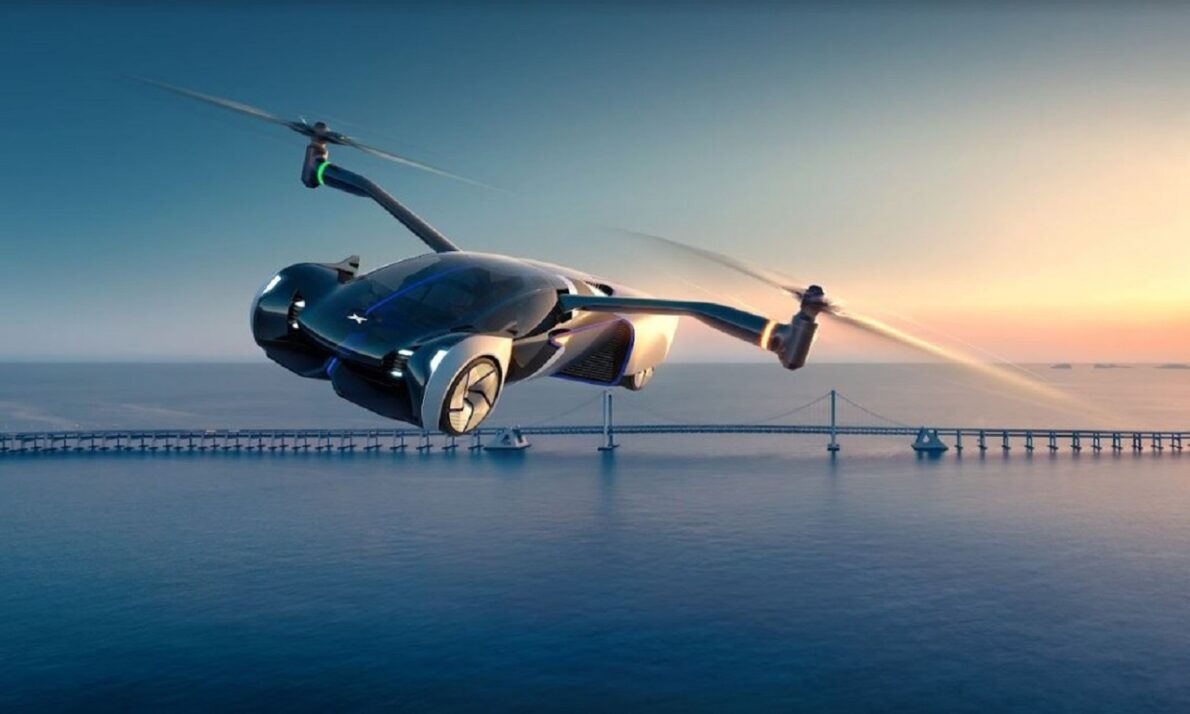
This progress could have significant practical applications, ranging from improving mechanical devices to enhancing technologies across various scientific and industrial fields. Among these innovations is the transformation of ordinary cars into flying cars, as seen in many science fiction films.
Some Companies Are Already Working on Magnetic Levitation Projects
At this moment, research in Japan is still in development, and this material could eventually be used in technologies like flying cars. Some companies are presenting alternative possibilities for cars that can fly, while anti-gravity graphite is not yet being commercialized in the technology market.
Among the projects being developed worldwide are those by Alf Aeronautics, called the Alf Model, and the eVTOLs from EVE, a subsidiary of Embraer.
In addition to flying cars, Japan’s technology could also popularize Maglev trains (in English, Magnetic Levitation Transport). These are an impressive demonstration of the application of magnetic levitation in transportation technology.
Using superconducting magnets or electromagnets, these vehicles can levitate above the tracks, eliminating the friction that normally exists between the train and the track, along with the speed of magnetic levitation. This also contributes to a smoother and quieter ride with less mechanical wear, resulting in reduced maintenance compared to conventional trains.
Benefits of the New Technology Discovered by Japan
These innovations are at the forefront of the transportation revolution, potentially altering our way of traveling and conceiving mobility in the near future. These technologies open doors to the imaginable, and flying cars in cities would transform human life and bring many benefits, one of which is traffic reduction.
Flying cars have the potential to revolutionize urban transportation by shifting some vehicle traffic from congested roads to airspace. This shift could drastically reduce travel times and alleviate congestion in large cities.
By operating above traditional roadways, these vehicles could provide a faster and more efficient alternative, especially during peak hours.
Another benefit would be their energy efficiency, as current eVTOLs are designed to be more efficient than many ground transportation modes, primarily due to advancements in battery technologies. These vehicles use electric energy that can be generated from renewable sources, contributing to cleaner and more sustainable transportation with a lower environmental impact.





Como freia esse trem?