






 Portuguese
  Spanish


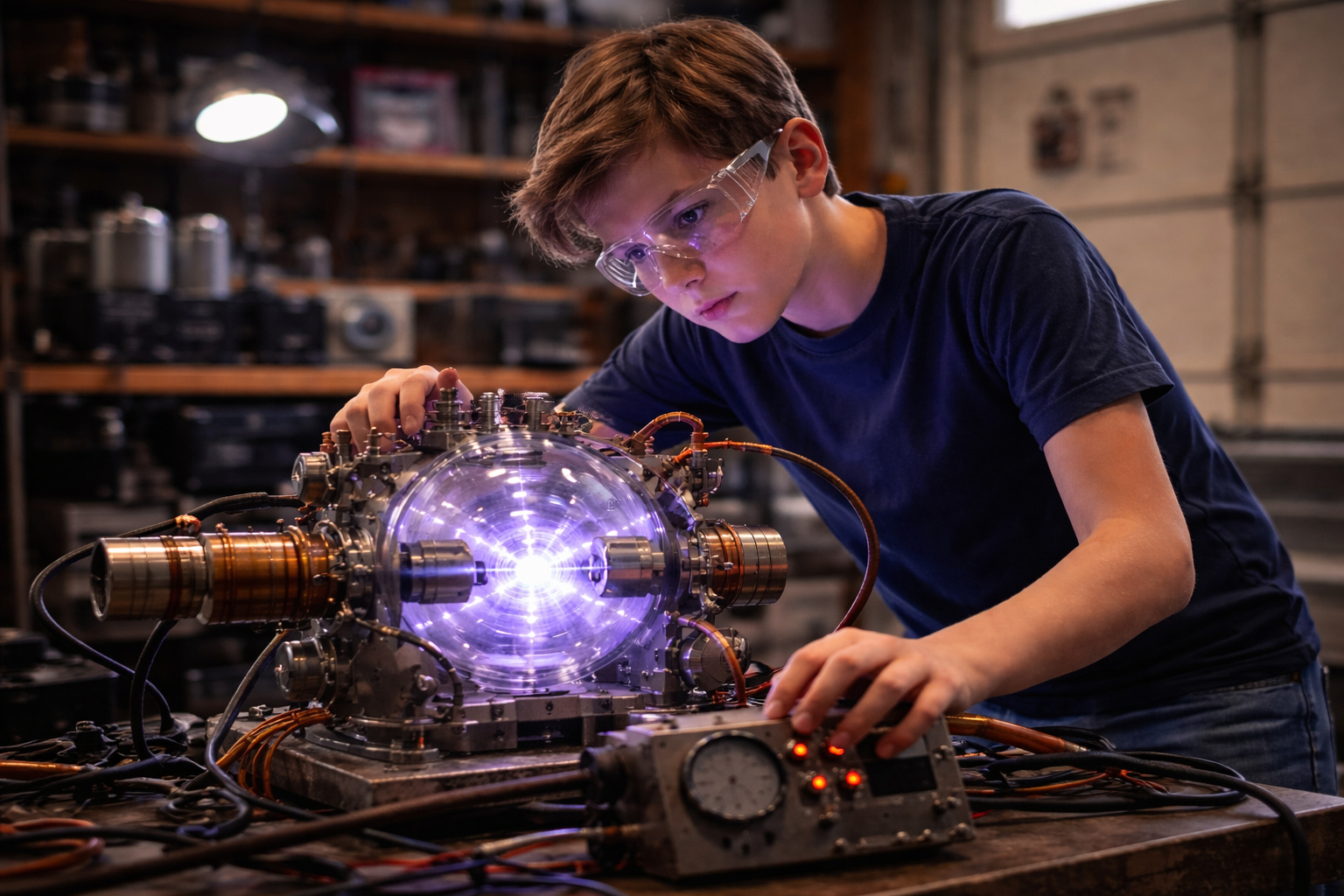


Scientific Project Started at Age 8 Results in Controlled Nuclear Fusion, Draws International Attention and Could Earn a World Record for American Student
An unusual scientific feat recently captured attention in the United States, especially in Texas, revealing the outcome of an experimental project conducted by a 12-year-old student.
The protagonist is Aiden McMillan, a seventh grader in Dallas, who completed a four-year project focused on nuclear fusion and reported the details in an interview with NBC DFW.

Aiden started working at age 8, when he began studying nuclear physics theoretically to build a solid foundation before practical tests.
-
Workers renovating a playground in northern England uncover 176 World War II bombs buried underground; training artifacts still contained explosives.

-
Brazilian Architect Transforms Waste into Sustainable Homes with Solar Power and Rainwater Systems for 40 Years

-
Security Guard Becomes Doctor at Louisiana Hospital Where He Once Worked, Studied Chemistry Between Shifts

-
Woman Rescued from Luxury Complex in Brazil Worked Without Pay for 55 Years, May Be Entitled to Over $300,000




In the following years, he developed experimental prototypes, adjusted structures, and tested concepts until achieving the expected results.
Long Project Required Persistence and Technical Adaptation
Throughout the process, Aiden faced technical failures, recalculated, and corrected errors, which required resilience and a constant ability to adapt.
He described the experience as intense, having experienced moments of excitement as well as frustration during the experiment.
“I loved the project, but I also kind of hated it,” he stated, making it clear that scientific curiosity always guided his decisions.
The student emphasized that he did not seek financial gains and kept his focus solely on learning and the scientific experience.
Family Followed Progress and Safety Precautions
As the project progressed, the family monitored each step and demanded clarifications about safety.
According to Aiden, his mother requested detailed explanations about the risks, possible failures, and prevention methods before allowing the continuity of the tests.
This dialogue strengthened responsibility in the experiment’s development and ensured greater control over each phase.
Nuclear Fusion Achieved After Four Years
After four years of studies, adjustments, and tests, Aiden achieved nuclear fusion and confirmed the detection of neutrons, a key indicator of this type of reaction.
“We got neutrons,” he declared, highlighting that the moment marked the end of a long and challenging journey.
Search for World Record Comes into Play
With the result in hand, Aiden decided to seek official recognition from Guinness World Records.
Currently, the record belongs to Jackson Oswalt from Tennessee, who achieved nuclear fusion in 2018 just hours before turning 13.
If Guinness validates the new feat, Aiden could become the youngest person in history to documentably achieve nuclear fusion.
The Feat in Scientific Perspective
Media outlets like NBC DFW have published the case and expanded the reach of the story, while Guinness analyzes the potential recognition.
The episode reinforces the importance of early encouragement of science and demonstrates how discipline, curiosity, and scientific method can yield concrete results.
In light of this scenario, an inevitable reflection arises: how far can scientific dedication in childhood lead the next generation of researchers?


