Portuguese
  Spanish


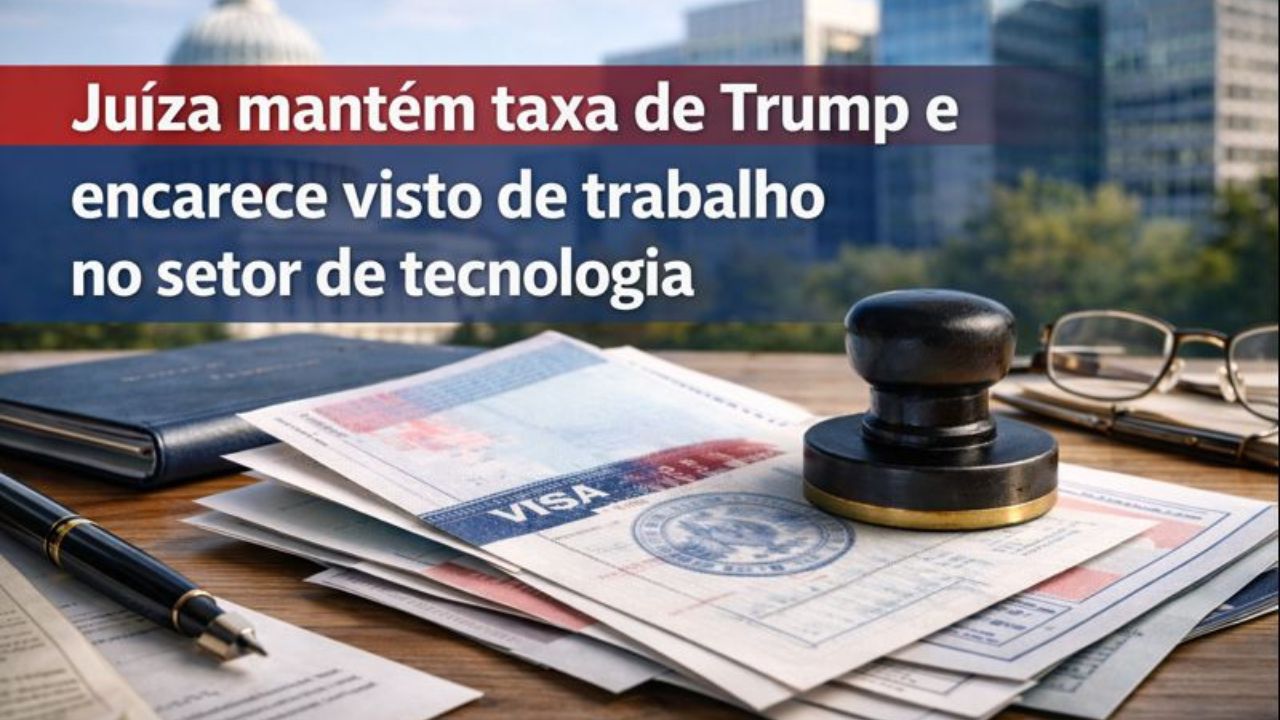

Judge’s Decision Authorizes Trump to Maintain US$ 100,000 Fee on Technology Visas, Affecting Companies and Foreign Labor.
A federal judge in the United States decided to uphold the US$ 100,000 fee for certain technology visas, authorized by the Trump administration, reinforcing an immigration policy that directly affects the work of foreign professionals in the country.
The decision was issued on Tuesday (12/24/2025), in Washington, and involves the H-1B visas, widely used by companies in the technology sector.
The measure, announced in September, aims, according to the government, to protect the economic and national security of the United States.
-
The Arctic is no longer just a frozen region and is becoming a new military board with the opening of maritime routes, expansion of bases, nuclear icebreakers, and competition among Russia, NATO, the United States, and China.

-
U.S. Dismisses Brazilian Foreign Ministry’s Military Risk Warning as “Absurd,” Cites Brazilian Criminal Gangs Operating in the U.S. Since May 2026
-
Ukraine War Impacts Brazilian Fuel Supply: Russian Diesel Imports Drop 65% in June, Brazil Turns to US and India Amid Market Concerns

-
Chinese Nuclear Submarine Launches Simulated Warhead Missile in Pacific, Heightening Regional Tensions Amid Naval Drills with Russia Near Qingdao; New Zealand and Papua New Guinea Warn of Persistent Chinese Military Presence




The judge responsible for the decision was Beryl Howell, who concluded that former president Donald Trump has the legal authority to impose the fee, even in light of the economic impacts it creates for companies and universities.
Judge Points to President’s Legal Authority
In a 56-page decision, the judge stated that the president has “broad legal authority” to address immigration issues when he sees them as a strategic matter.
According to the magistrate’s understanding, the policy complies with the limits of the law and does not violate existing administrative regulations.
“The decision and its application are legal and, therefore, withstand the petitioners’ appeals,” added the magistrate.
Nevertheless, Howell acknowledged that the measure could generate significant collateral effects.
She emphasized that the high fee could “inflict significant harm on American companies and higher education institutions,” especially those that rely on highly skilled labor.
Fee Surprised Companies and Created Uncertainty
When the Trump administration announced the new fee for technology visas, companies had only 36 hours notice before the measure went into effect.
As a result, there was widespread confusion about who would be affected, how the payment should occur, and which contracts would be impacted.
This short adaptation period increased legal insecurity, especially in Silicon Valley, a region heavily reliant on foreign professionals specialized in technology, science, and engineering.
Measure Is Part of Broader Immigration Offensive
The US$ 100,000 fee for the H-1B visa is part of a broader immigration offensive adopted by Trump since his return to the White House.
The Republican president has intensified his rhetoric against immigration and advocated for structural changes in the work visa system.
Trump has publicly stated that the H-1B system was being abused by companies to replace American workers with foreigners willing to accept lower wages, which, according to him, would harm the domestic market.
How the H-1B Work Visa Works
The United States government currently issues 85,000 H-1B visas per year, distributed through a lottery system.
India accounts for approximately 75% of beneficiaries, which reinforces the presence of Indian professionals in the American technology sector.
The visa is initially granted for three years and can be extended for up to six years. It allows companies to hire foreign professionals with specific qualifications, such as scientists, engineers, and programmers, considered essential for strategic areas of the economy.
Technology Sector Warns of Labor Shortage
Business owners and representatives of the technology industry reacted with concern to the maintenance of the fee.
For them, the United States currently lacks enough local talent to fill all the highly skilled positions available in the sector.
Additionally, the significant increase in the cost of the visa may deter foreign professionals and make American companies less competitive in the global scenario.
Meanwhile, universities also fear negative impacts on research, innovation, and the training of new professionals.
Debate Remains Open in the Labor Market
Although the judge upheld the fee, the debate regarding technology visas, foreign labor, and the effects of Trump’s immigration policy remains prominent.
Companies, educational institutions, and experts are closely monitoring the government’s next steps and potential new legal challenges.
The decision reinforces the complexity of the topic and highlights the challenge of balancing protection for the domestic market with the need for innovation and global competitiveness.