





 Portuguese
  English
  Spanish
  4 min of reading
  0 comments


Kenya has resumed the construction of a railway that promises to give Uganda, a landlocked country in Africa with no access to the sea, a rail path to the Indian Ocean, unlocking trade for an entire region.
There is a geographical problem that haunts several African countries, not having access to the sea. Landlocked within the continent, these nations depend on their coastal neighbors to import and export everything they consume and produce. It is precisely this bottleneck that a new railway from Kenya promises to tackle, offering Uganda a rail path to the ocean.
Kenya is advancing in the construction of a new section of its modern railway, connecting the interior to the border with Uganda. The idea is to give the neighboring country, which has no coastline, an efficient connection to the port of Mombasa on the Indian Ocean. It is about opening a door to the sea where there were only precarious and long roads before, changing the logistics of an entire part of East Africa.
The drama of not having access to the sea
It may seem like a detail, but not having a coastline is a huge burden on a country’s economy. Without its own port, Uganda needs everything it buys and sells to the world to pass through the territory of a neighbor, usually via long, slow, and expensive roads. Every product that enters or leaves carries this extra cost, making life more expensive and hindering the growth of nations that already face many challenges.
-
An Australian company has unveiled the world’s first 3D tower crane printer, capable of erecting concrete structures up to 100 meters high by printing buildings directly from digital designs and transforming the crane itself into a robot.

-
Vietnam begins construction of the Ma Da bridge, a piece that will connect the mountainous interior to the country’s largest airport and deep-water port.

-
End of the house built brick by brick? Tech giant LG teams up with an Australian construction company to create modular homes with solar energy and battery that can save up to 35% on the electricity bill.
-
Young billionaire builds and donates 100 houses in 4 countries, moves families who lived in extreme situations, and shows how a million-dollar project has forever transformed entire communities in Latin America.


I confess that I often forget how much access to the sea is something many people take for granted. For a landlocked country, obtaining an efficient route to the ocean can be the difference between prospering or falling behind. That is why a railway connecting Uganda to the port of Mombasa is not just a transportation project but a true economic lifeline for the country.
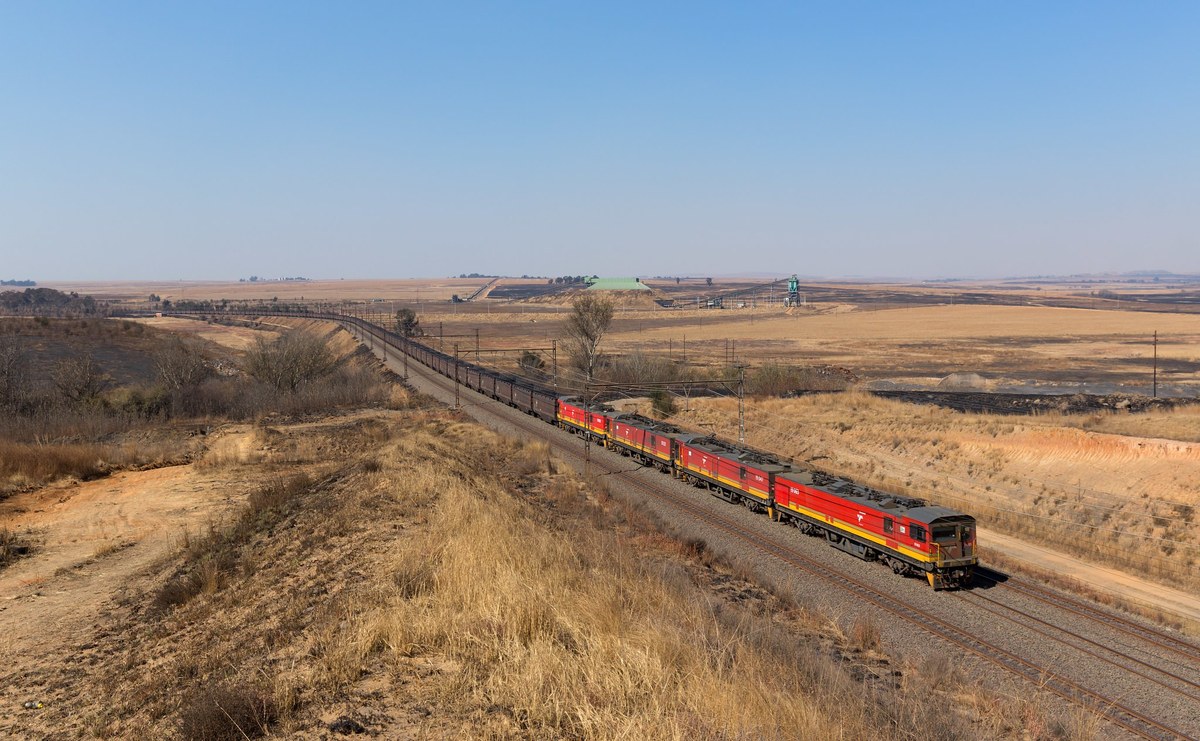
Rails worth an ocean outlet
A railway completely changes the transportation equation. Where previously cargo traveled by truck, taking days on poor roads, a train carries much more weight at once, with lower cost and more predictability. For heavy and large-volume goods, such as minerals and agricultural products, rails are unbeatable. Taking Uganda to the port by train means reducing costs and speeding up all its foreign trade.
The destination of this railway, the port of Mombasa, on the Indian Ocean, is one of the most important in East Africa, the main gateway for goods in the region. Connecting the interior to this port via a modern line creates a logistical backbone capable of serving several countries. It is the kind of project that not only benefits Uganda but integrates an entire part of Africa into global trade.
It is worth understanding the history of this railway connection to grasp its significance. Kenya has been building, over the past few years, a modern railway from Mombasa toward the interior, but the project advanced in fits and starts, hindered by high costs and financing discussions. Extending the tracks to the border with Uganda has always been the ultimate goal because it gives economic sense to the entire investment: without reaching the landlocked neighboring country, the line would lose much of its purpose. Resuming this construction is, therefore, unlocking the missing piece for the railway to truly fulfill its promise of stitching the region together and connecting the heart of Africa to the ocean.
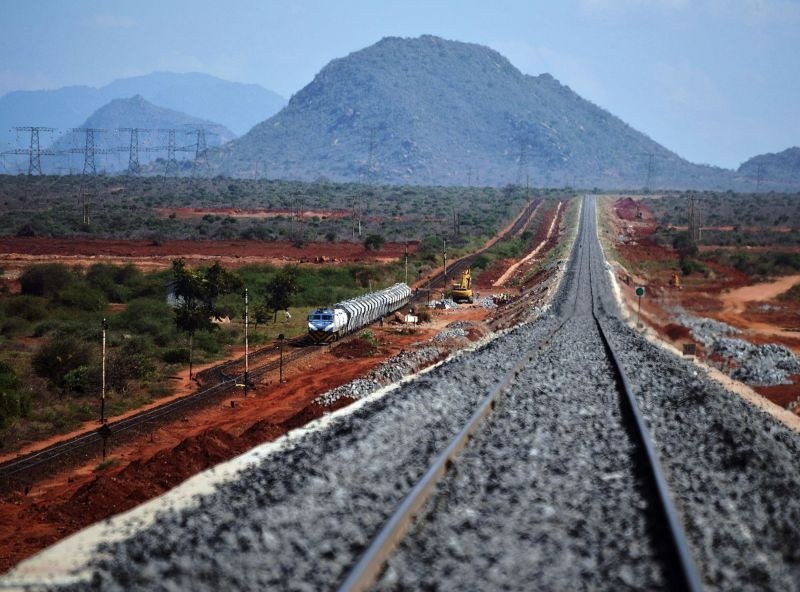
The race for Africa’s routes
Behind this railway, there is an interesting geopolitical game. Major powers compete for influence in Africa by helping to build and finance infrastructure like this, gaining access to resources and markets in return. Railways, ports, and roads have become pieces on a board where countries like China, the United States, and European powers seek to position themselves on the continent that is growing the fastest in the world.
For Kenya and Uganda, this competition can be an opportunity, provided they know how to negotiate well. The interest of powers in financing the routes gives African countries a card to bargain for better conditions and attract investment. The railway, in this sense, is much more than tracks; it is a development tool and also a strategic asset in a global competition for influence over Africa.
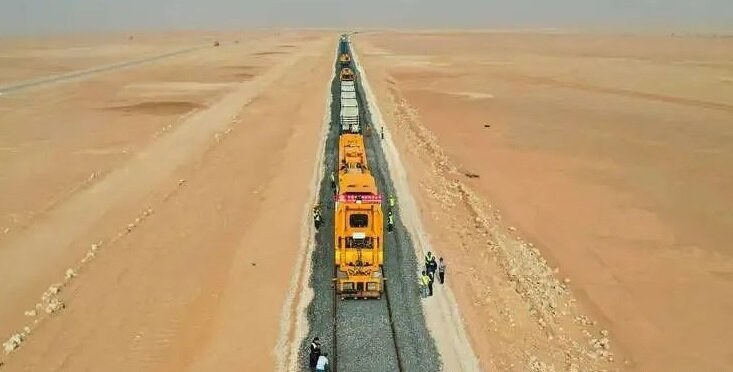
The rails that open Africa to the world
I imagine the impact that such a railway can have on the lives of millions of people in Uganda, a country that has long struggled to export what it produces due to the lack of a sea outlet. Suddenly, with a rail path to the port, the possibility of trading with the world more cheaply and quickly opens up, boosting the economy of an entire region.
This project is a symbol of an Africa trying to overcome its geographical obstacles with engineering and integration. By connecting the landlocked interior to the Indian Ocean, Kenya helps transform the fate of its neighbor and the entire region. Track by track, it is the continent stitching together routes that can finally connect it more fairly and efficiently to the rest of the planet, overcoming geographical barriers that for centuries have kept entire regions isolated from global trade.
Did you imagine that not having a sea outlet could weigh so heavily on the economy of an entire country?




Be the first to react!