Portuguese
  Spanish


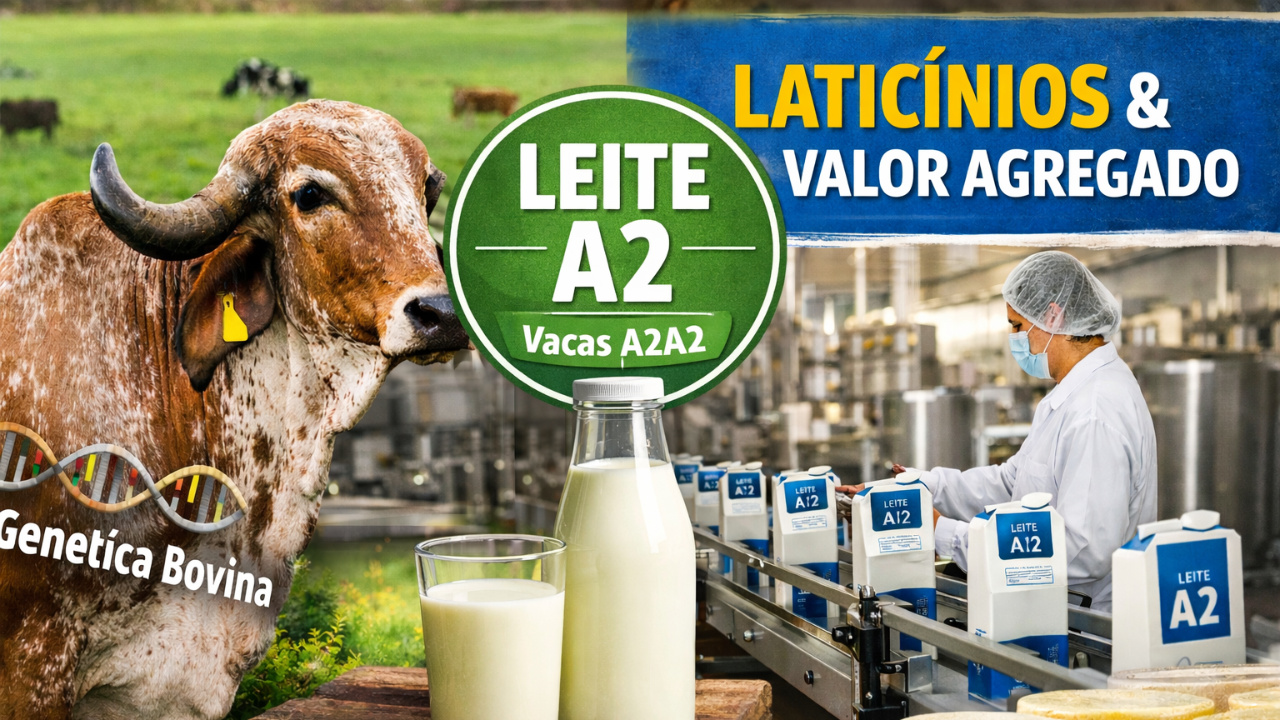

With Easy Digestion and A2A2 Cattle Genetics, A2 Milk Gains Market Share, Adds Value, and Attracts Interest from Major Dairies.
The A2 Milk, known for its easy digestion and for not causing intestinal discomfort, is beginning to carve out a space in the Brazilian market and is already attracting the attention of major dairies, even with production still amounting to less than 1% of the national total.
The expansion is primarily occurring in Minas Gerais, where companies, researchers, and producers are betting on cattle genetics as a way to add value to the product and meet the growing demand for more digestible foods.
Interest in A2 Milk has been increasing in recent years as consumers seek alternatives to traditional milk, especially those who report inflammation or digestive discomfort.
-
At 35, Lawyer Leaves Corporate Career to Turn 1-Hectare Farm into Organic Supplier for Schools in Southern Brazil

-
Solar-powered agricultural robots operate 24/7, remove weeds with 8mm precision, and aim to cut herbicide use without fuel consumption in the fields.

-
Brazilian Farmer Invents Low-Cost Tractor Using Motorcycle Parts, Efficiently Working 2 Acres on 1 Liter of Diesel

-
Regenerative Farmers Use Keyline Plow to Improve Pasture Hydration, Storing 1 Gallon of Water Every 30 Centimeters





The difference lies in the beta-casein protein: while regular milk can contain the A1 variant, A2 Milk exclusively contains the A2 variant, which is considered easier to digest.
Major Dairies Are Betting on A2 Milk
The advancement of A2 Milk is already reflected in the industry. Companies like Piracanjuba and Muai, located in the Serra da Mantiqueira, have developed specific lines with this type of milk.
The bet shows that, even being a niche, the product has commercial potential due to its added value.
For milk to be classified as A2, it needs to be obtained from cows with the A2A2 genotype.
Animals with the A1A1 genetics produce only A1 milk, while A1A2 animals produce both. Therefore, genetic selection is a central point in the expansion of this market.
Cattle Genetics Defines Productive Potential
Cattle genetics is the main factor that differentiates A2 Milk from conventional milk.
According to veterinarian and researcher at Epamig, Débora Gomide, some breeds have a higher frequency of the A2A2 genotype, which facilitates production.
“The Holstein breed, which produces the largest amount of liters of milk, is more commonly found with A1 genetics.
Hardier animals, such as the Gir Leiteiro breed, have a prevalence of A2A2 genetic animals.
High-producing animals, which have undergone greater genetic improvement, tend to have a higher prevalence of A1 genetics,” she stated.
Additionally, other ruminants less subjected to intensive genetic improvement programs, such as buffaloes, also tend to naturally produce A2-type milk.
Research Drives New Uses for A2 Milk
As the industry advances, scientific research keeps pace.
The Agricultural Research Company of Minas Gerais (Epamig) is conducting studies to map the frequency of A2A2 animals in dairy herds.
Simultaneously, at the Cândido Tostes Dairy Institute (ILCT), researchers are assessing the use of A2 Milk in the production of derivatives, such as Minas cheese.
These studies are strategic, as they expand the possibilities for applying the product and strengthen the chain of dairies focused on functional foods.
Certification Ensures Traceability and Trust
To ensure that the product reaching consumers is genuinely A2 Milk, the “A2A2 Cows” certification was created.
The seal validates both production and processing and facilitates traceability of the milk and its derivatives throughout the chain.
According to experts, the process requires an initial investment, particularly for genetic testing and animal certification.
However, the financial return tends to be compensatory.
“The producer wanting to start this production must first conduct genetic testing on the animals in their herd to identify which have the A2A2 genotype.
There are all these costs for genetic assessment of the animals and certification, but it is also possible to achieve a higher profit because it is a milk of higher added value,” she emphasizes.
Technical Support and Growth Expectations
Epamig also provides direct support to producers interested in entering this market. According to Débora Gomide, the institution offers technical guidance from genetic selection to productive management.
“Epamig is always open to advise on how to produce A2 milk, how to enter the business, or even for any assistance,” she stated.
Currently, A2 Milk production in Brazil is still less than 1%, but growth is expected as demand for easy digestion products increases.
Added Value Is Already Perceived in the Field
In practice, the economic differential is already beginning to appear. Producers confirm that A2 Milk fetches higher prices than conventional milk.
“In the market, it does have a somewhat higher value,” says Anna Pinto, dairy manager at Bom Retiro Agronegócios.
The company, located in Pouso Alto in the Serra da Mantiqueira, supplies A2 Milk to Muai. Although values have not been disclosed, the recognition of added value reinforces the product’s potential as a profitable alternative for the Brazilian dairy sector.
See more at: Easy Digestion Milk Is Gaining Ground in the Market