






 Portuguese
  Spanish


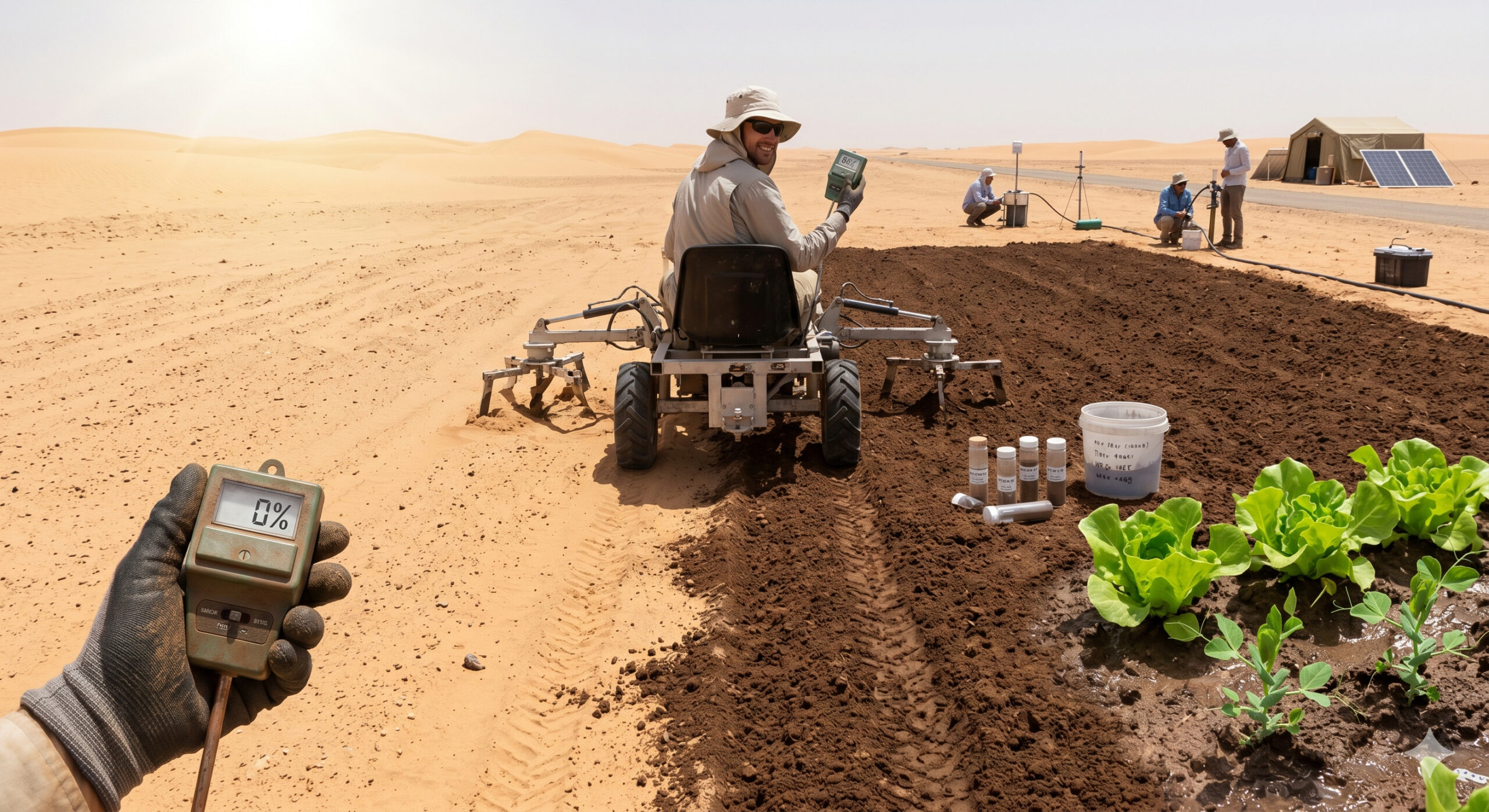

Norwegian technology transforms sand into soil capable of retaining water in hours and could revolutionize agriculture in arid regions.
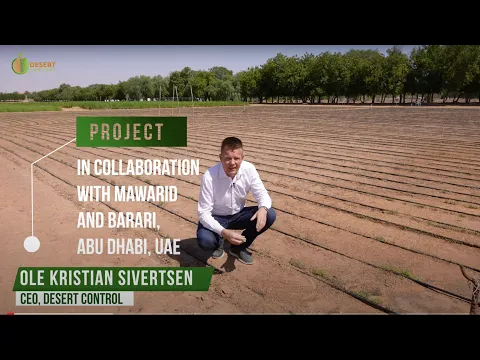
In 2023, the Norwegian Desert Control, specialized in solutions for agriculture in arid regions, drew attention again with the Liquid Natural Clay (LNC) technology, applied to sandy soils in the United Arab Emirates. On August 31, 2023, a study published by Springer Nature evaluated tests in areas of Al Rawdah, in Al Ain, and in Khalifa Public Park, in Abu Dhabi, comparing treated and untreated soils to measure water retention capacity. According to the company itself and institutional materials released in March 2023, LNC is a liquid natural clay solution developed to help sandy soils retain water and nutrients better, with application described as capable of making the soil ready for planting in about seven hours.
The safer formulation, however, is that the technology does not “create fully fertile soil instantly”: it modifies the physical structure of the sand so that the treated soil behaves more favorably for cultivation, while long-term fertility still depends on continuous agricultural management, adequate irrigation, and nutrient replenishment.
What makes the technology relevant is the speed of application and the immediate impact on water retention capacity, something critical in regions where irrigation is limited.
-
Producer receives news and had to cull almost the entire herd, bounced back with the help of compensation, and is now producing 450 liters of milk per day in SC.

-
Quail Eggs Reveal a “Secret Code” on Their Shells Explaining Unique Patterns and Colors

-
Rare Tropical Fruit Canistel, with Egg Yolk Color and Caramel Flavor, Gains Interest from Researchers and Small Producers in Brazil
-
Brazilian Farmers Develop Wheeled Metal Lever to Ease Cassava Harvesting Without Heavy Machinery


The structural problem of agriculture in sandy soils
Desert and semi-arid regions face a central challenge for agriculture: the low capacity of the soil to retain water and nutrients. Sand has large and loosely packed particles, which allows water to quickly drain to deeper layers, out of reach of the roots.
This behavior makes irrigation inefficient, as much of the applied water is lost before being absorbed by the plants. Additionally, essential nutrients are also carried away with the water, further reducing fertility.
This set of factors turns large areas of the planet into unproductive regions from an agricultural point of view, even when there is water available for irrigation.
Traditionally, solutions to this problem involve adding organic matter, clay, or other soil conditioners, processes that can take months or years to show consistent results.
How Liquid Natural Clay technology works in practice
The LNC technology uses a suspension of natural clay particles in water, applied directly to the sandy soil. When this mixture penetrates the sand, the clay particles attach around the sand grains, creating a more cohesive structure.

This process alters the physical properties of the soil, reducing the speed at which water infiltrates and increasing its retention capacity.
In practice, sand begins to behave more like agricultural soil, allowing water to remain available for longer for plants. The process can be carried out with conventional irrigation equipment or spraying systems, making its application on a large scale easier.
Reduced application time contrasts with traditional soil improvement methods
One of the main differentiators of the technology is the time required for application. According to Desert Control, the treatment can be completed in a few hours, depending on the terrain conditions and the area to be covered.

This time is significantly shorter than traditional methods, which require:
- transport of large volumes of material
- mechanical incorporation into the soil
- prolonged adaptation periods
The ability to quickly modify soil properties represents an important change in how agricultural projects can be planned in arid regions.
However, it is important to highlight that the initial structural improvement does not replace ongoing agricultural practices, such as fertilization and proper management.
Initial results from the Norwegian technology Liquid Natural Clay indicate a significant reduction in water consumption
According to data released by the company itself and pilot projects conducted in the United Arab Emirates, the application of LNC can reduce water consumption by up to about 50% under certain conditions. This result is directly linked to the greater water retention in the soil, which decreases the need for frequent irrigation.

In regions where water is a scarce and expensive resource, this reduction can have a direct impact on the economic viability of agriculture. Furthermore, the lower water loss contributes to the sustainability of agricultural projects, reducing pressure on local water resources.
The tests conducted with LNC technology have been concentrated in regions with desert-like characteristics, where traditional agriculture faces greater difficulties.
In the United Arab Emirates, for example, treated areas have shown improved performance in plant cultivation, with greater moisture retention and more consistent development.
These results indicate that areas previously considered unproductive can become viable for cultivation, provided there is proper management. The expansion of this type of technology can help increase food production in regions that currently rely on imports.
Limitations and precautions necessary in interpreting the results
Despite the promising results, it is important to maintain a critical analysis based on verifiable evidence.
Desert Control itself emphasizes that LNC does not instantly transform sand into fully fertile soil. The treatment improves the physical structure of the soil, but fertility depends on additional factors such as organic matter, nutrients, and agricultural management.

Additionally, the available data largely comes from pilot projects and reports from the company itself, which requires caution in generalizing the results.
Independent research and long-term evaluations are necessary to fully validate the effectiveness of the technology in different contexts.
Comparison with other solutions for agriculture in arid regions
Over the past few decades, various technologies have been developed to enable agriculture in desert environments, including:
- drip irrigation systems
- use of controlled greenhouses
- desalination of water
LNC technology stands out by acting directly on the soil structure, rather than just optimizing water use.
This complementary approach can be combined with other solutions, creating more efficient and resilient systems. The integration of different technologies may be the way to expand agricultural production in adverse regions.
Global impact on food security with the use of Liquid Natural Clay technology
The possibility of transforming sandy areas into more suitable soils for cultivation has direct implications for global food security.
Regions with large expanses of arid land could expand their agricultural production, reducing dependence on imports and increasing food autonomy.

In a scenario of population growth and climate change, technologies that increase the efficiency of land and water use gain strategic importance. However, large-scale adoption will depend on economic, regulatory, and environmental factors.
Liquid Natural Clay can redefine geographical limits of agriculture
Historically, agriculture has always been limited by natural factors such as soil type, climate, and water availability. With the advancement of technologies like LNC, these limits can be partially overcome, allowing cultivation in regions previously considered unviable.
This does not eliminate natural restrictions but expands the possibilities for land use in a controlled and planned manner. The redefinition of these limits could have significant impacts on the geography of global agricultural production.
Do you believe that technologies like this can transform deserts into productive areas on a large scale?
The proposal to transform sand into more productive soil in a few hours draws attention for its potential impact, but also raises questions about feasibility, cost, and scale.
With the advancement of research and the expansion of field tests, new answers are expected to emerge in the coming years.
In light of this, the reflection remains: to what extent can technology overcome natural limitations and what will be the next steps to make this type of solution viable on a global scale?







