Portuguese
  Spanish


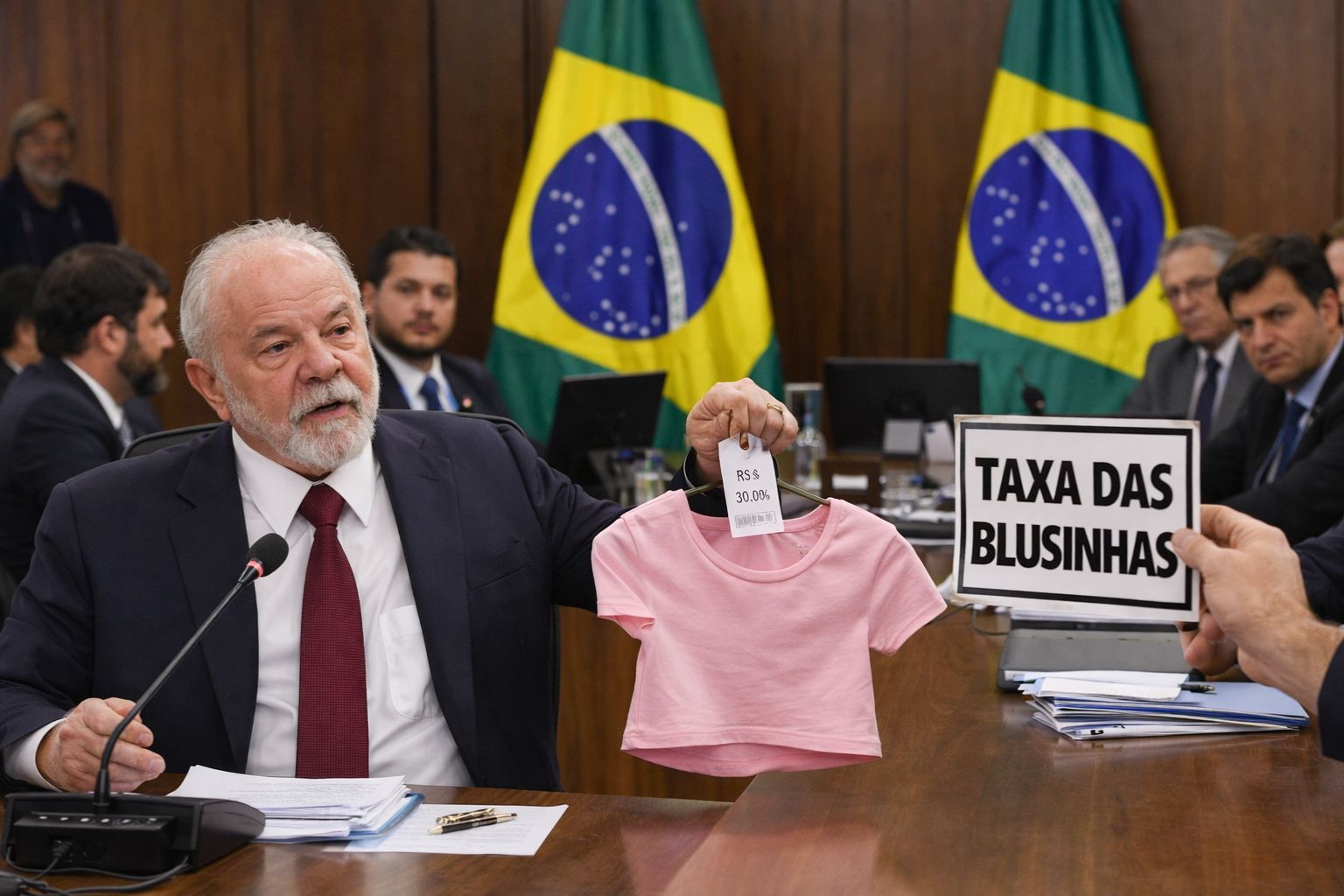

The blusinhas tax collected R$ 1.28 billion in the first quarter of 2026, an increase of 21.8% compared to the same period in 2025. Less than six months before the elections, the political wing of the government advocates for repealing the tax, while the Finance and Development ministries are against it. Entrepreneurs from 67 associations sent a letter to Lula requesting the maintenance of the blusinhas tax.
The blusinhas tax has returned to the center of political debate in Brazil at a time that is not coincidental. Less than six months before the elections, representatives of the political wing of the federal government began to advocate for the repeal of the tax on international purchases of up to $50, the same tax that President Lula called “irrational” before sanctioning it and which collected R$ 1.28 billion for the public coffers from January to March 2026. The figure represents a 21.8% increase compared to the first quarter of 2025, when the collection from the blusinhas tax totaled R$ 1.05 billion, according to data from the Federal Revenue. The question dividing the government is simple to formulate and difficult to answer: is it better to maintain revenue and protect the national industry or gain popularity by repealing an unpopular tax among consumers?
The scenario is one of open division within the government itself. The Minister of the Secretariat for Institutional Relations, José Guimarães, said he thought it was “a good idea” to repeal the blusinhas tax, signaling the position of the political wing looking toward the elections. In the opposite direction, the Finance and Development, Industry, and Commerce ministries are against ending the taxation, and Geraldo Alckmin, who until last month headed the Mdic, publicly defended the tax and stated that there is no government decision on repealing the blusinhas tax. Meanwhile, entrepreneurs and workers from 67 associations sent a letter to Lula requesting the maintenance of the taxation.
The turbulent history of the blusinhas tax since its approval
According to information from the G1 portal, the trajectory of the blusinhas tax is marked by contradictions that are now resurfacing. The tax on international purchases of up to $50 was approved by the National Congress in June 2024 after intense debate and retreats, responding to a request from the national industry that sought equal conditions in foreign trade. Until then, these purchases were exempt, allowing Brazilian consumers to buy products on platforms like Shein, Shopee, and AliExpress without paying import tax.
-
China wants to impress the world once again with a mega canal featuring giant locks, deep waters, and space for the largest ships, in a project aimed at shortening journeys, reducing queues, and rivaling the Panama Canal in global trade.

-
Brazil saved US$ 32.4 billion in 2025 by switching from fossil to renewable energy and only ranked behind China and the United States on the IRENA global podium.

-
A company from SC that moves R$ 125 billion in agribusiness is integrated into an international group, maintains its headquarters and jobs in Chapecó, and is preparing to expand software for cooperatives, grain companies, and industries while targeting new markets without leaving the western region of Santa Catarina.
-
Portugal “hides” gold reserves of 382 tons valued at 47 billion euros in an armored building, and the story involves gold from colonial Brazil, Nazi Germany, and a fortune that once amounted to 866 tons.




President Lula publicly declared that taxing international purchases was “irrational,” but ended up signing the law anyway. The then Minister of Finance, Fernando Haddad, repeatedly stated that the tax on blouses would not have significant impacts on consumers, an argument that was contested by consumer advocacy organizations and by millions of Brazilians who saw the prices of international purchases rise immediately after the tax came into effect. The contradiction between Lula’s speech and the signing of the law created a political wound that never fully healed.
How much the blouse tax has raised for the federal government
The revenue figures show that the blouse tax has become a significant source of income for the federal government. In the first quarter of 2026, the Federal Revenue Service recorded R$ 1.28 billion in revenue from the import tax on international orders, a growth of 21.8% over the R$ 1.05 billion from the same period in 2025. If the pace continues, the annual revenue from the blouse tax could exceed R$ 5 billion in 2026.
For the Ministries of Finance and Development, forgoing this revenue in an election year would be doubly negative. In addition to losing billions in revenue, revoking the blouse tax would eliminate the tariff protection that the national industry has gained and that business owners consider essential to compete with subsidized imported products from their countries of origin, especially from China. Fernando Pimentel, president of the Brazilian Textile Industry Association (Abit), was direct: “It makes no sense to encourage the import of products that are already heavily subsidized in their countries of origin and harm production, investments, and job creation in Brazil.”
Why the political wing of the government wants to revoke the blouse tax
The motivation is electoral, and there is no shame in admitting it. With the elections in October approaching, the political wing of the federal government sees the revocation of the blouse tax as an opportunity to regain the sympathy of millions of consumers who use international shopping platforms and who felt harmed by the taxation. Minister José Guimarães, in saying that he thought it was “a good idea” to revoke the measure, verbalized the calculation that circulates behind the scenes: the number of voters who shop on Chinese platforms is much greater than the number of voters who work in the textile industry.
The problem is that revoking the blouse tax would have consequences that go beyond short-term political gain. The national industry has mobilized 67 associations to pressure for the maintenance of the tax, warning that ending the taxation would destroy jobs, close factories, and increase Brazil’s dependence on imported products. For the government, the decision is a classic dilemma between immediate popularity and long-term industrial policy, and the proximity of the elections makes the temptation to revoke almost irresistible.
What the national industry defends about the blouse tax
For Brazilian entrepreneurs, the blouse tax is not an abusive tax; it is a correction of a distortion. Until the approval of the tax, imported products worth up to $50 entered Brazil without paying import tax, while domestically manufactured products carried a tax burden that could exceed 40% of the final price, creating an unequal competition that favored foreign companies and harmed Brazilian factories.
The letter sent by 67 associations to Lula argues that the blouse tax is a matter of “tax and regulatory equality.” The industry’s position is that revoking the blouse tax to gain votes would sacrifice Brazilian jobs in exchange for cheaper products made with labor and subsidies from other countries, especially China. For workers in sectors such as textiles, footwear, and accessories, the repeal of the blouse tax could mean mass layoffs at a time when the Brazilian job market needs protection.
What could happen with the blouse tax in the coming months
The final decision on the blouse tax depends on Lula, who has not yet officially stated his position on the repeal. The division between the political and economic wings of the government makes the outcome unpredictable, and it is possible that the solution will be a reduction of the rate instead of a complete repeal, a middle ground that would allow the government to say it eased the tax burden without completely abandoning protection for the national industry.
If the blouse tax is maintained, revenue will continue to grow, and the industry will have arguments to invest. If it is repealed, consumers will pay less for international purchases, but the government will lose billions in revenue, and the national industry will once again face the unequal competition that motivated the creation of the tax. The irony is that Lula, who called the blouse tax irrational before signing it, now needs to decide whether it was more rational to create it or if it would be more rational to abolish it. The answer depends on who is asking: the consumer, the industrialist, or the voter.
The government is debating the repeal of the blouse tax months before the elections. Are you for or against the tax? Do you shop on international platforms? Do you think the national industry needs this protection? Leave your opinion in the comments.