Portuguese
  Spanish



European Study Shows That Front Brake Lights Can Prevent Up to 17% of Collisions at Intersections and Reduce Severity of Injuries in 25% of Cases.
Imagine driving down a street and not knowing that the car in front of you is braking. By the time you realize, it’s too late. This situation, common at intersections, can be avoided with a simple change in vehicles: the installation of front brake lights.
A new European study indicates that this feature could prevent accidents and reduce injuries in collisions.
Clear Signage Can Prevent Collisions
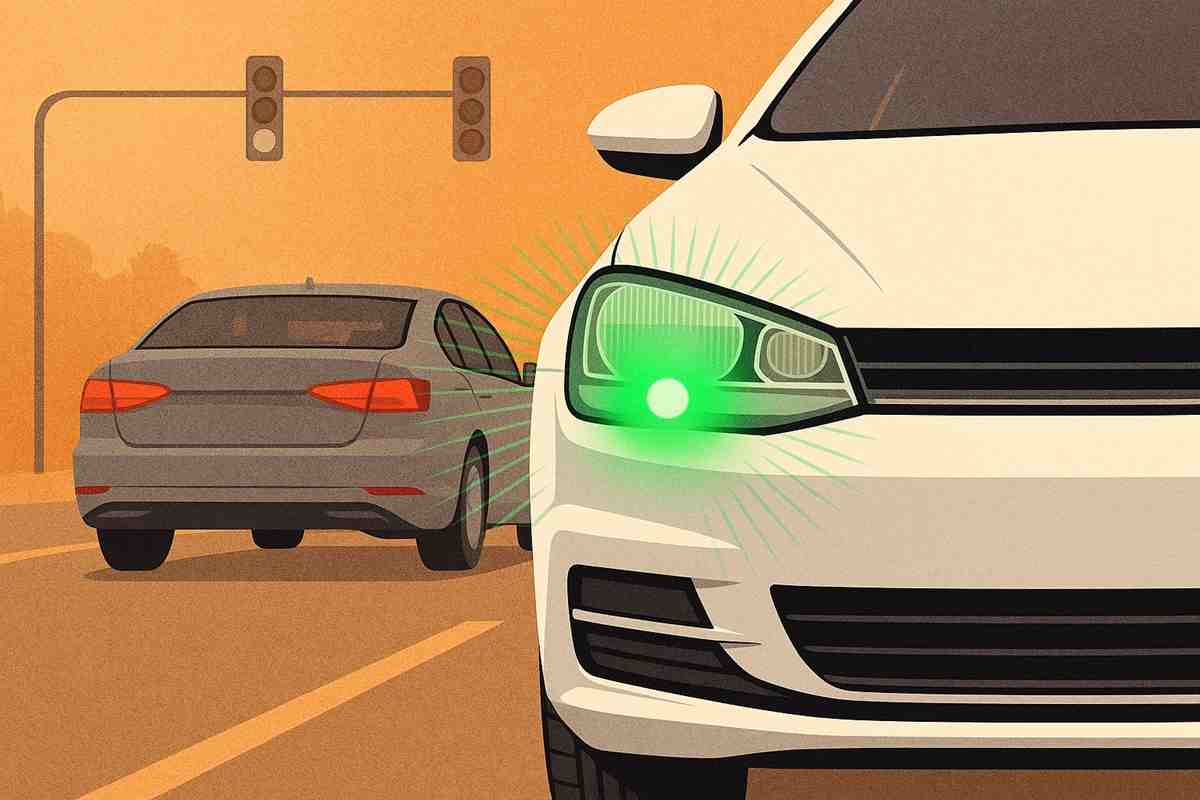
The proposal is simple: add brake lights to the front of cars. This idea was tested by researchers at the Graz University of Technology in Austria, who found promising results.
-
Chevrolet’s Parent Company to Invest Billions in Brazil to Modernize Factories, Update Cars, and Accelerate Hybrid Launch by 2028

-
Practical Driving Tests in Brazil Surge by 23.5%, Exceeding 2.2 Million by 2026, as New Rules Make the Process Cheaper and Simpler
-
Brazil’s Lula Government Allocates $463 Million Quota for Electric Car Parts, Waives Import Tax Until December, Sparking Competition Among BYD, Automakers, and Unions as Consumers Question Impact on Prices and Local Industry

-
Thinking of Installing LED Headlights? Why Replacing Halogen Bulbs is Still Banned, the Glare Risks Authorities Worry About, and How a New Proposal Could Allow Certified, Safe Installations


According to the study, so-called Front Brake Lights (FBLs) could prevent up to 17% of collisions at intersections. Additionally, in about 25% of cases, they would help reduce the severity of injuries caused.
Despite their effectiveness, no car currently in circulation has this feature. The reason is the lack of concrete studies on its utility.
This changed with recent research that recreated real accidents and simulated the impacts that the lights would have in these cases.
Simulations with Real Data
The researchers analyzed 200 accidents that occurred at Austrian intersections. To do this, they used records from CEDATU, a database specialized in traffic accidents.
The team reconstructed each situation, detailing the movements of the vehicles, the braking moment, and the point of collision.
They then simulated the same accidents but with one change: they assumed that the involved cars had green brake lights in front. These lights would serve to alert drivers coming from other directions that the vehicle was slowing down.
During the simulations, the scientists tested three different reaction times for the drivers: 0.5, 1.0, and 1.5 seconds. The quicker the reaction, the better the result.
Encouraging Results
The numbers are impressive. With the addition of FBLs, between 7.5% and 17% of accidents could have been avoided, depending on the driver’s reaction time. In another 25.5% of cases, accidents would still occur, but with less force, reducing the risk of severe injuries.
One example shows the difference: in collisions that resulted only in light injuries, the average impact speed dropped from 44.8 km/h to 28.8 km/h when drivers reacted 0.5 seconds faster. This reduction can mean the difference between a minor bump and a serious accident.
The authors of the study highlight, “The FBL is a promising driver assistance system. Based on data from the European Commission, about 18% of deaths on the road occur at intersections. With the front lights, up to 220 accidents could be prevented and 650 would have reduced consequences.”
Visibility Is Still a Barrier
Even with the good results, the study identified a significant limitation. In one-third of the analyzed cases, the front lights would not help, not because they were ineffective, but because they simply wouldn’t be seen by other drivers. This would occur due to the angle of the vehicles at intersections.
To overcome this problem, the researchers suggest a complementary solution: also installing brake lights on the sides of cars. This adaptation would increase visibility in different positions and further help prevent accidents.
The idea is to keep the concept simple and inexpensive. Unlike other safety technologies that rely on sensors and complex systems, front brake lights are merely a direct visual warning, easy for any driver to understand.
Next Steps and Challenges
Despite the potential, there are still obstacles to the widespread adoption of the lights. The researchers state that the next step is to test the system in real conditions. A preliminary experiment was conducted in Slovakia, but more tests and data are still needed.
The intention is to convince manufacturers and traffic authorities to incorporate the idea into cars produced in the future. To do this, the team plans to continue the studies and develop a practical model of front brake lights.
Expectations are high. It is believed that the system could become a mandatory safety item in vehicles, just like seat belts or rear brake lights.
Study Could Lead to Changes in the Industry
The article with the results was published in the scientific journal Vehicles and is already drawing the attention of road safety experts. If confirmed effective in practical tests, the idea could lead to significant changes in the design of automobiles.
More than that, it could save lives. The study shows that a simple and low-cost adaptation can have a great impact on road safety, especially at intersections — places responsible for a significant share of deaths on European roads.
There is still no forecast for when, or if, front brake lights will be officially adopted. But the data presented opens the floor for a serious discussion about this new vehicle safety feature.