






 Portuguese
  Spanish


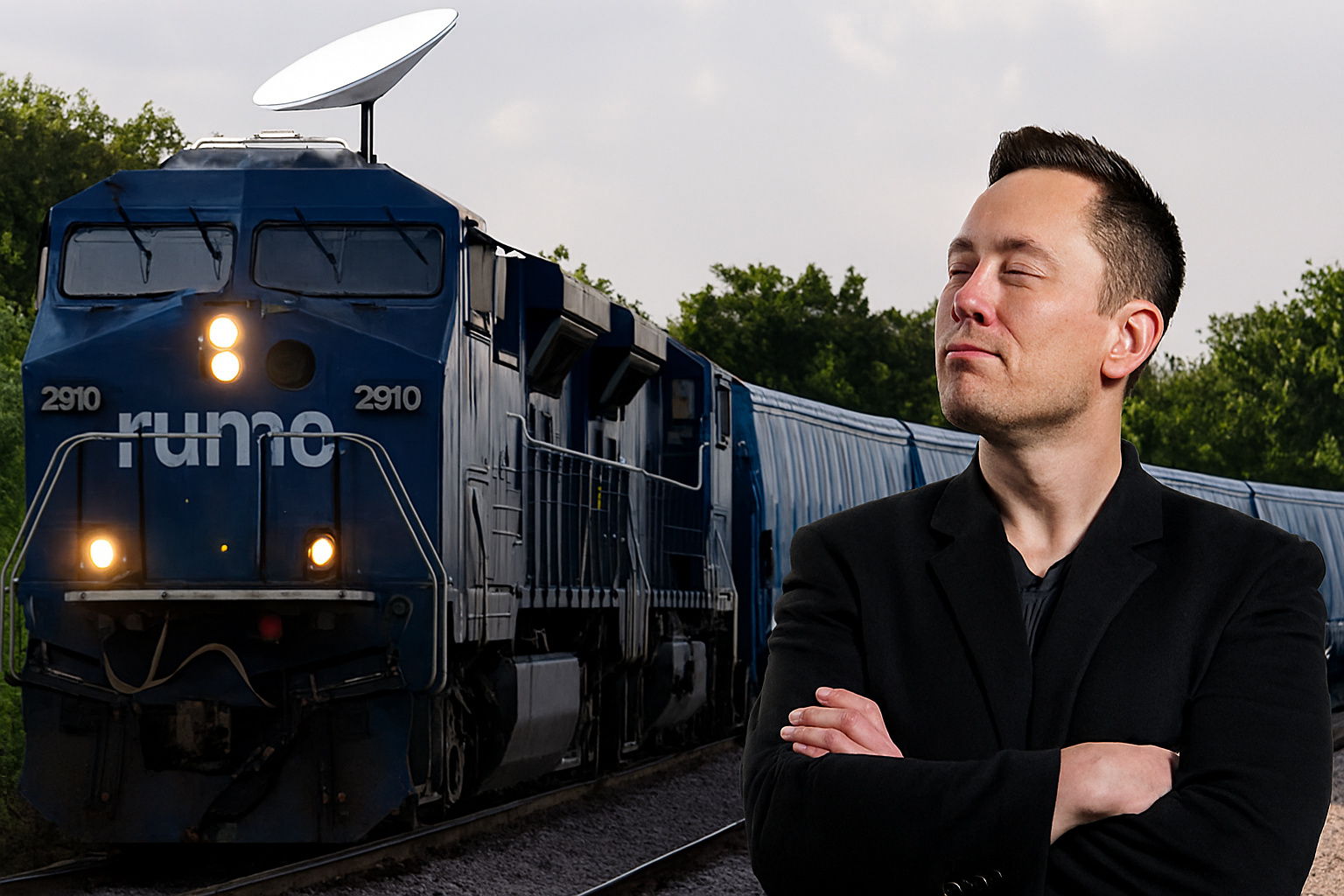


Largest Freight Railroad Operator Installs Starlink on 400 Locomotives to Enable Real-Time Communication Even in the Most Remote Areas of the National Network.
Rumo, considered the largest freight railroad operator in Brazil, has taken a bold step toward the era of full connectivity by announcing the installation of Starlink technology from SpaceX on 400 of its locomotives. The initiative has been underway since February 2025 and promises to modernize entire routes, especially in regions where mobile or conventional satellite coverage is poor.
The project aims to turn each train composition into a “mobile satellite” on tracks, ensuring stable communication between the train and the control center, even in remote sections. According to Rumo, field tests already indicate a signal stability of over 97%, ensuring that operational data, failure alerts, and system updates can flow without interruption.
How the Starlink + Train Integration Works
So far, Rumo operates with conventional communication systems: mobile networks and traditional satellite. Starlink comes in as a third option, complementing data routes, especially in areas without reliable coverage.
-
Railway returns to prominence in Brazil after STF approval: a R$ 25.2 billion project promises to save R$ 9 billion in freight, transport 50 million tons per year, and transform Sinop into a logistics powerhouse for agribusiness.

-
Retired trains leave European tracks and become tons of steel, aluminum, and copper in dismantling yards where recycling exceeds 90%, but batteries, composites, and electronics create a new frontier of railway waste.

-
The strategic railway of Santa Catarina will receive R$ 608 million, will undergo historic modernization, and could transform logistics between Mafra and the Port of São Francisco do Sul.
-
While showcasing bullet trains traveling at over 300 km/h, China maintains about 81 slow train lines that travel at 40 km/h, charge less than R$ 2 for a ticket, and cross remote villages carrying residents, students, and even chickens and vegetables to the market.



Each locomotive will receive a special antenna pointed at low Earth orbit satellites, generating a low-latency, high-bandwidth connection. This ensures that commands and diagnostics arrive almost in real-time, in addition to enabling remote technical support, sending automatic alerts, monitoring onboard systems, and improving operational safety.
The regions already included in the system rollout cover sections in the states of São Paulo, Mato Grosso, Mato Grosso do Sul, Minas Gerais, Goiás, and Tocantins. The expectation is that the service will extend to the entire network under the company’s concession.
Why This Is a Strategic Leap
Uninterrupted Connectivity in Remote Areas
Many sections of the railway network cross regions without mobile network infrastructure. Starlink allows trains to maintain constant communication, reducing the risks of failures and undetected events.
Enhanced Operational Safety
In cases of breakdowns, diversions, or emergencies on the line, the system transmits instant alerts to the control center, enabling quick response and minimizing losses.
Logistical Efficiency and Predictive Maintenance
The continuous transmission of data allows for real-time adjustments, predictive maintenance forecasts, and more accurate technical hours — reducing unexpected stops and operational costs.
Innovation and Competitive Image
The adoption of cutting-edge satellite technology positions Rumo as a pioneer in the Brazilian railroad sector, attracting the attention of investors, freight customers, and technology companies.
Numbers Highlighting Rumo’s Scale
Rumo operates one of the largest freight railroad networks in the country, with over 13,000 kilometers of tracks, 1,200 locomotives, and 33,000 wagons, in addition to dozens of transshipment terminals and connections with port terminals.
The company operates in 9 states, connecting grain, fuel, and commodity-producing regions to the coast and consumption centers.
Challenges and Observations
Although initial tests have shown promising performance, long-term operation will depend on factors such as maintenance of antennas amid vibrations and weather conditions, additional energy consumption, and control of physical obstructions (such as sections in tunnels or under elevated obstacles).
Furthermore, it will be important to integrate Starlink with the company’s legacy systems, maintaining interoperability and data security.
The Connected Train That Redefines Logistics
With this initiative, Rumo is not just installing technology but transforming locomotions into digital nerve centers.
Each locomotive that begins operating under satellite connection becomes an intelligent unit, capable of making informed decisions and communicating its status to the control center without interruption.
In a sector where delays, failures, and lack of visibility are constant enemies, this technological leap can elevate national rail transport to a new level of precision and predictability.





I just could not depart your web site prior to suggesting that I really loved the usual info an individual supply in your visitors Is gonna be back regularly to check up on new posts