Portuguese
  Spanish


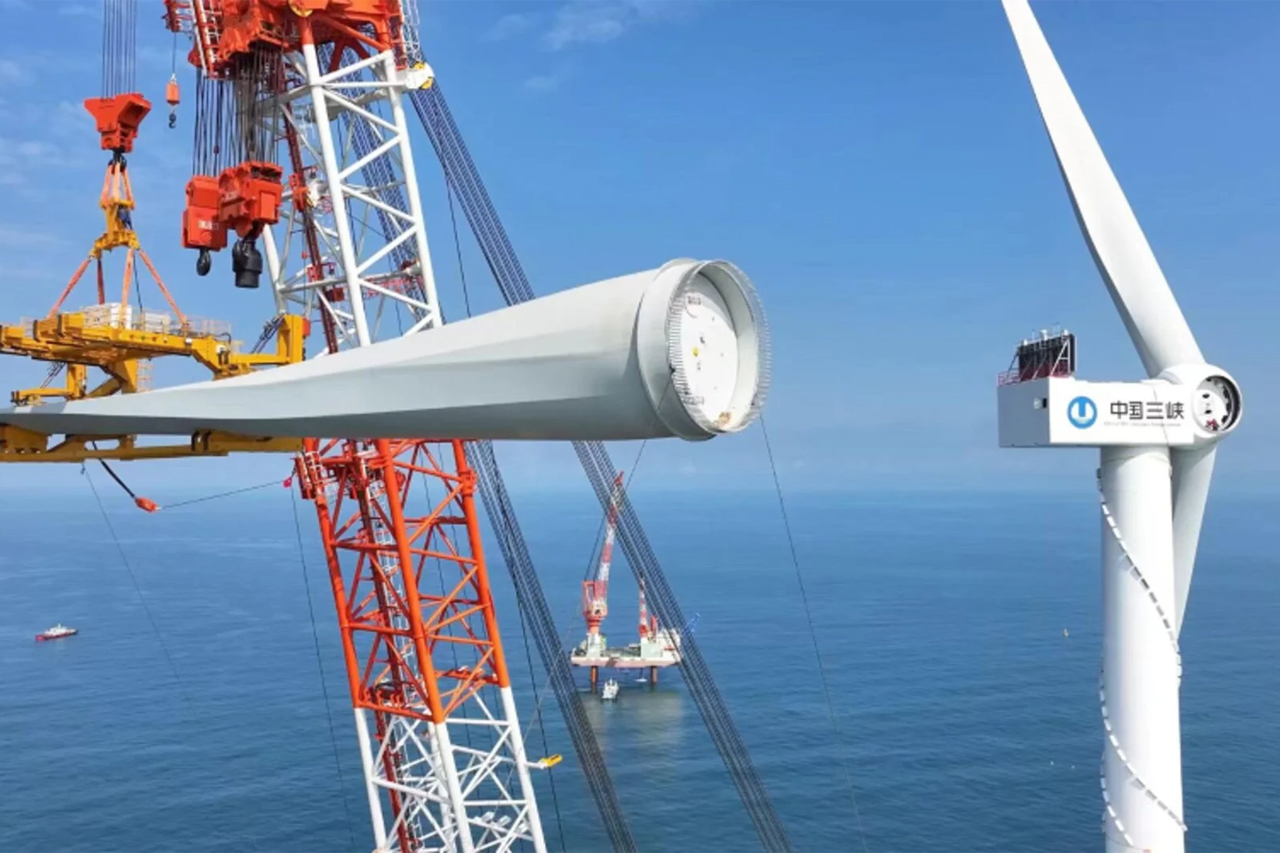

Wind Turbine Capable of Generating Up to 20 MW and Supplying Tens of Thousands of Houses Per Year, Known as Mingyang Smart Energy Generated an Unexpected Climate Effect Around It, Raising Questions About Microclimates Around Large Turbines.
China has connected the world’s largest wind turbine, an offshore unit from Mingyang Smart Energy with a configurable capacity of 18.X to 20 MW and gigantic dimensions: blades of 128 meters and total height of about 242 meters. The activation took place near the coast of Hainan, a region with favorable winds and infrastructure for offshore wind. In reports and technical notes, the manufacturer and specialized vehicles emphasize that the annual production of the system can supply around tens of thousands of residences, with frequently cited estimates of up to 96 thousand houses per year in specific wind scenarios.
Shortly after energization, reports emerged of a kind of “climate bubble” around the structure, a popular term to describe a microclimate detected in the vicinity. This microclimate would involve localized changes in wind, turbulence, humidity, and temperature near the ocean surface. The topic gained traction because microclimatic effects are already known in wind farms, but the unprecedented size of this turbine amplifies public curiosity about the intensity of these effects.
It is important to separate the local impact, which is the subject of measurement and research, from any hasty conclusions about regional climate. So far, scientists are concerned about a small-scale alteration around the equipment, consistent with the literature on wake effects and air mixing in the lower layers of the atmosphere.
-
Brazil filled the Northeast with wind turbines but now faces the side effect of 705 giant blades reaching the end of their lifespan by 2032 just in Rio Grande do Norte, while the world projects 43 million tons of waste by 2050.

-
Brazil has filled the Northeast with wind turbines, but now it faces the side effect of 705 giant blades reaching the end of their useful life by 2032 just in Rio Grande do Norte, while the world projects 43 million tons of waste by 2050.
-
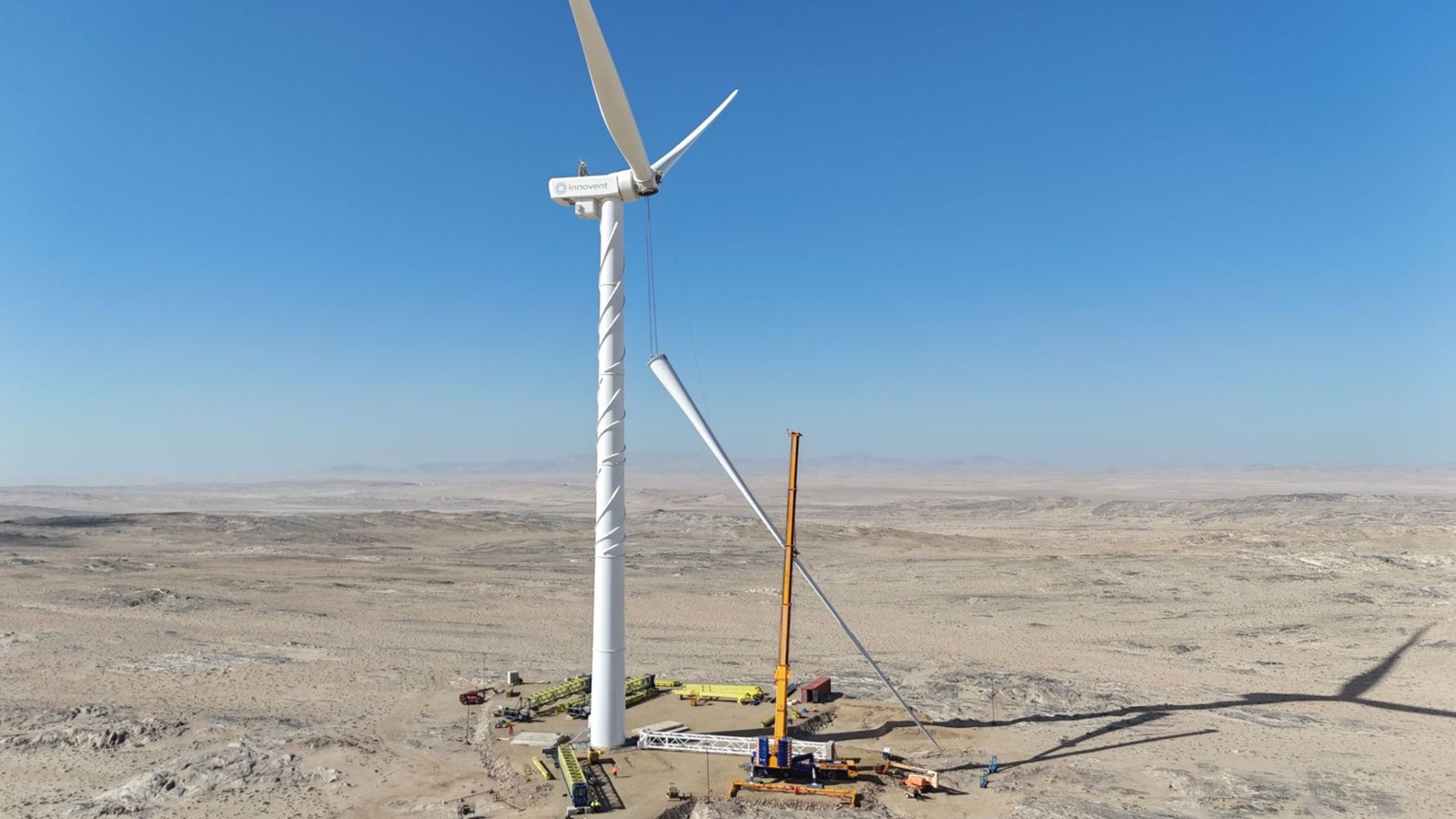
Wind farm in Namibia will have wind turbines assembled without giant cranes and is expected to avoid 200,000 tons of carbon dioxide per year when it becomes operational.

-
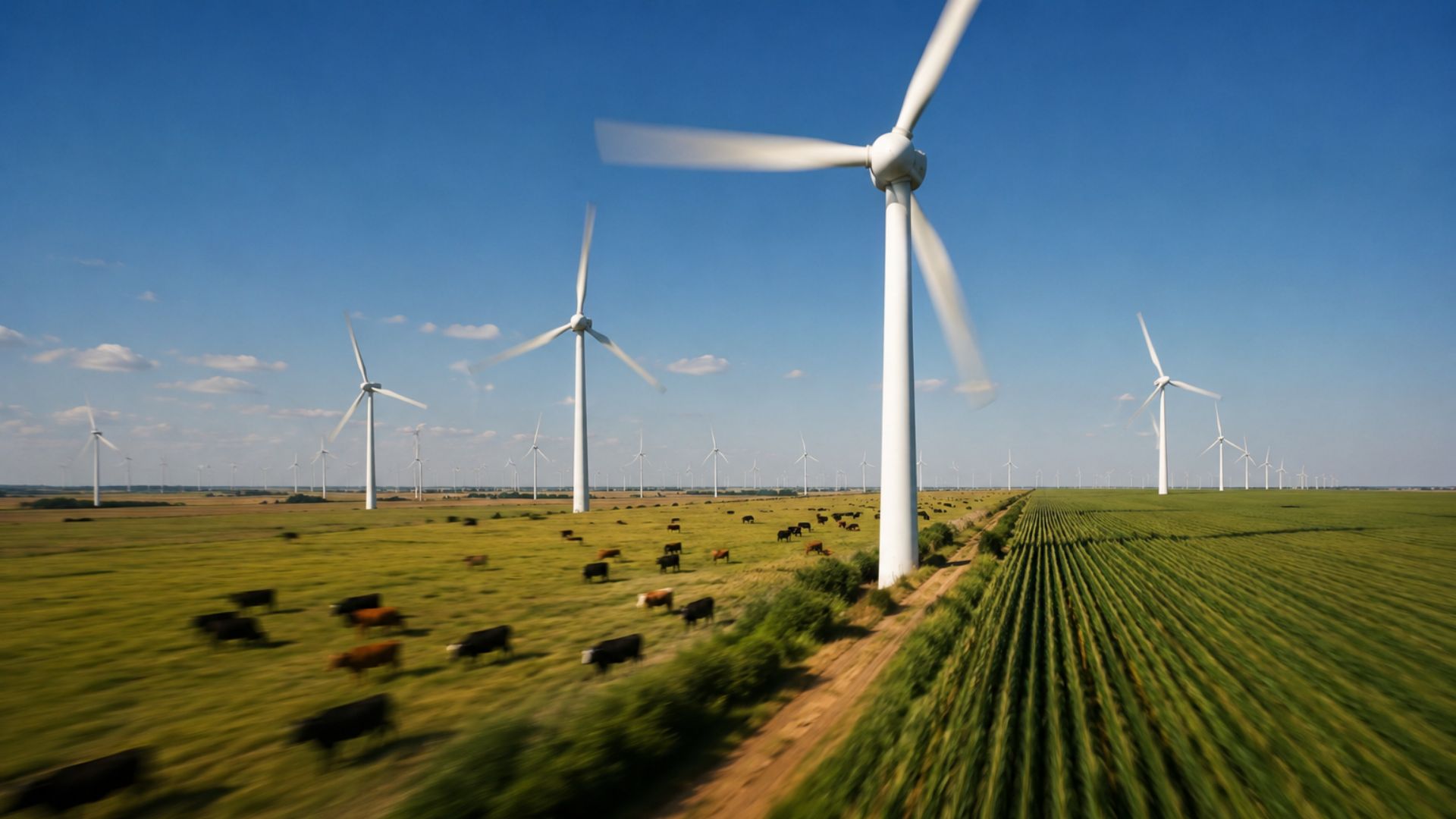
Taller than the Statue of Liberty, thousands of wind turbines are being planted in the middle of U.S. fields, creating two-story farms where corn and soybeans grow below while the wind turns into electricity above.


What is a “Climate Bubble”, Microclimate and Wake Effect Explained
The term “climate bubble” is not technical, but it helps summarize a real phenomenon: the presence of wind turbines creates a flow pattern known as wake effect, an area where wind decreases and turbulence increases downwind. This turbulence can favor vertical mixing of air masses close to the surface, which impacts small temperature and humidity variations over very short distances.
In offshore, the scenario gains nuances. The sea has high thermal inertia, and the marine boundary layer responds to the balance of flows between ocean and atmosphere. When the turbines’ wake alters wind speed and turbulence, there can be subtle changes in air-sea heat flows, in the formation of low clouds, and in the persistence of fog in areas immediately downwind of the farm.
These effects are generally localized and transient. They depend on the wind regime, atmospheric stability, the layout of the turbines, and even the stratification of the ocean just below. Practically, what is observed is a mosaic of situations: days with strong and perceptible wake, days when the signature is minimal, and days of almost total neutrality.
What Science Has Already Measured in Wind Farms
Observational and modeling studies show that wind farms can produce measurable changes in the wind field and in variables near the surface. Reviewed research reports, for example, reduction of average wind speed downwind and slight cooling in the lower atmosphere layer over farm areas, associated with changes in heat flows and a slight increase in low clouds under certain conditions. In specific scenarios, small variations in relative humidity and in vertical mixing have also been observed, which, in terrestrial environments, can even affect agricultural microenvironments over short distances.
The current consensus is that these are local effects, detectable with appropriate instrumentation, but without solid evidence of relevant impact on regional climate from isolated turbines or even from a single medium-sized farm. The Chinese case draws attention for occurring around an exceptionally large turbine, justifying specific measurement campaigns to quantify the magnitude and spatial extent of this signature.
Offshore vs. Onshore, Why Turbines at Sea Behave Differently
In onshore areas, the surface is irregular, with relief, vegetation, and differences in soil moisture. This makes the wake more variable in time and space. In offshore, the surface is more homogeneous, and the sea surface temperature acts as a thermal buffer. Therefore, small adjustments in turbulence induced by the blades can reorganize the marine boundary layer in a more predictable way.
Instrumentation also changes. In offshore parks, it is common to combine fixed and floating LiDAR to profile wind and turbulence, buoys to monitor waves and flows, in addition to satellites to track sea surface temperature and cloud patterns. This combination is essential to differentiate a common weather event from a signal associated with turbine operation.
Finally, the coastal environment includes factors like currents, tides, and marine fronts. They modulate how the wake spreads and interacts with the atmosphere, reinforcing the need for continuous measurements and high-resolution numerical modeling.
Does Size Matter? Why a 20 MW Turbine Changes the Conversation
The Mingyang turbine is part of the MySE 18.X-20 MW family, with rotor diameters between 260 and 292 meters. In most conditions, the larger the swept area of the rotor, the greater the amount of kinetic energy extracted from the wind, which naturally produces a wake that is more extensive and a potentially more intense turbulence signature immediately downwind.
This scale also brings systemic gains. Very powerful units increase the capacity factor of projects, reduce the number of turbines needed to reach a generation target, and compress CAPEX per MW installed in offshore projects. The manufacturer also emphasizes the robustness of the design for regions with typhoons, which is relevant in southern China, where extreme gusts require engineering focused on dynamic loads and active pitch control systems.
In favorable wind scenarios, technical notes cite estimated annual productions that can reach tens of GWh. These numbers always depend on the local wind regime, operational control, and machine availability. In climatic terms, the microclimatic effect that interests scientists is what occurs around and downwind of the turbine, rather than a large-scale alteration in the climate of Hainan.
Is the Big Turbine Still the Largest in the World in 2025?
The title of “largest in the world” changed hands quickly. After the installation and testing of the 20 MW unit from Mingyang, the manufacturer Dongfang Electric (DEC) presented and tested a 26 MW offshore prototype, with a giant rotor and a total height announced of about 340 meters up to the tip. In unit capacity, this prototype surpasses the 20 MW machine.
The practical difference is that while Mingyang made headlines for the connection and operation of a record unit in 2024, DEC has been validating its prototype throughout 2024 and 2025. For the reader, the summary is simple: the Mingyang machine was the operational milestone, and DEC now claims the top in capacity with a more recent prototype.
From an editorial perspective, keeping this update in the text is important for accuracy and for SEO, as many readers search for “largest wind turbine in the world” expecting an updated picture of the record. The recommendation is to make it clear that the record varies according to the criteria used: largest in commercial operation, largest in testing, largest in rotor, largest in nominal power.
Environmental Impacts That Should Be Monitored
Offshore wind farms require robust environmental monitoring routines. The vertical mixing promoted by turbulence near the surface can subtly alter variables such as air temperature and humidity, but it also has implications for air-sea flows that are of interest to oceanography and coastal meteorology.
In the marine environment, attention turns to underwater noise during installation and operation, possible interactions with marine mammals, birds, and fish, as well as the resuspension of sediments in shallower areas. So far, the literature suggests that impacts tend to be local and mitigable with planning, adjusted navigation routes, proper signage, and monitoring programs before and after construction.
Regarding human communities, the presence of fewer very large turbines may reduce visual impact per MW installed and simplify navigation corridors. The public perception of a “climate bubble” should be addressed with clear communication: explain what microclimate is, how it is measured, and why these signals do not mean regional climate change.
What Does This Change for Energy Transition
The operation of a 20 MW turbine marks an important step in the cost reduction of offshore wind projects. The larger the unit, the more energy generated per machine, which can reduce cable infrastructure, foundation, and maintenance per MWh delivered. At the same time, scientific interest in microclimates does not contradict the expansion of wind energy; instead, it qualifies it. By measuring and communicating local effects with transparency, operators, researchers, and regulators strengthen the social license to operate and improve licensing rules for new projects.
For the reader looking for a quick verdict: global climate benefits and emission reductions remain the major advantages of wind energy. What is being debated here is a local signature that deserves continuous monitoring, something natural as technologies reach unprecedented scales.
FAQ About the “Climate Bubble” of the Largest Turbine in the World
Is the “climate bubble” dangerous for nearby cities?
The discussion is about a local microclimatic effect, on scales of hundreds of meters to a few kilometers downwind. There is no evidence of direct impact on urban climate or extreme events in nearby cities. Monitoring is prudent, but alarming is unnecessary.
Can this alter regional rainfall or temperature of an entire province?
Research indicates localized effects on wind, mixing, and air-sea flows. There is no basis for claiming regional climatological changes due to an isolated turbine. Studies of extensive parks show modest signatures and dependencies on wind regime and atmospheric stability.
Why is there talk of an “unexpected effect”?
Because the size of the turbine draws attention. And since public perception first captures the unusual, “climate bubble” became shorthand for a technical phenomenon that science calls wake effect and microclimate.
Is the 20 MW wind turbine still the largest in the world?
In nominal capacity, DEC has presented a 26 MW turbine in tests, claiming the top spot. The Mingyang unit remains iconic for being connected and operated earlier, paving the way for even larger machines.