Portuguese
  Spanish


The Ukrainian Sting Drone Reaches 315 Km/h, Becoming One of the Fastest Drones in the World. This New Drone Is Effective Against Russian Shahed-136 Drones and Promises to Revolutionize Air Defense
Ukrainian military technology gained global prominence with the revelation of the Sting drone, developed by the startup Wild Hornets. This new drone achieved an impressive speed of 315 km/h in stable flight, becoming one of the fastest drones in the world. In addition to its record speed, the Sting has become a strategic tool in intercepting Russian Shahed-136 drones, providing an accessible and efficient solution amid the current conflict.
The Sting’s performance was recorded on video during controlled tests over open areas, with the control interface confirming the achieved speed — equivalent to that of a bullet train. Each unit costs approximately US$ 2,500, reinforcing the cost-benefit relationship of this technological innovation.
Ukrainian Sting Drone: Innovation at High Speed
The Ukrainian drone Sting was designed for rapid and precise air defense operations. With its aerodynamic design and advanced navigation systems, it stands out for reaching 315 km/h, a speed superior to most interceptor drones available on the market.
-
World Cup Ball Chip Uses Technology to Detect Invisible Touches, Confirms Offside, Secures Portugal’s Victory Over Croatia

-
36-Meter Hydrogen-Powered Superyacht Arrives in Brazil to Debut German Engines and Showcase Future of Clean Navigation

-
Indian Students from Jaipur Win Top Prize at World’s Largest Science Fair with EcoFog, an Affordable Mesh to Harvest Fog Water Without Energy

-
Italy Sinks Massive 11-Story Concrete Structures in the Ligurian Sea to Create a 6.2 km Barrier, Clearing the Way for 400-Meter Ships in Genoa



Wild Hornets, the startup responsible for the design, prioritized not only speed but also stability and flight autonomy. This combination allows the Sting to perform rapid maneuvers to intercept and neutralize hostile aerial targets with precision, even in adverse weather conditions.
The drone was developed with high-precision sensors that identify multiple targets and track their movements, reducing the need for human intervention and increasing operational efficiency. Defense experts point out that this agility places the Sting at a technological level superior to conventional drones.
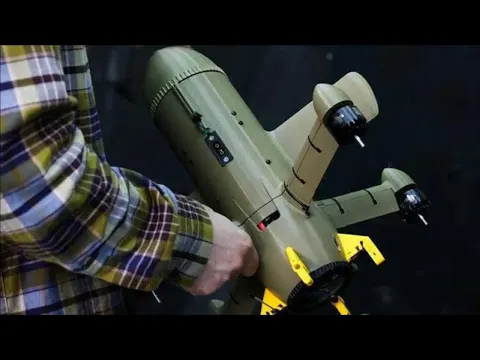

Fast Drone Achieves Speed Similar to That of a Bullet Train: Redefining Defense Against Drones
The speed of the Sting is a critical differentiator. By reaching 315 km/h, it has become a drone similar to the speed of a bullet train, capable of outrunning and intercepting enemy drones in record time. This characteristic is particularly important for neutralizing the Shahed-136 drones used in strategic attacks by Russia.
According to military analyses, interceptor drones with speeds exceeding 300 km/h have a higher success rate against kamikaze attacks. In addition to speed, the Sting features embedded intelligence, calculating trajectories and predicting target movements, ensuring precise interceptions without exposing operators to direct risks.
The tactical impact of this new drone is significant. With low cost and high agility, it can be deployed in multiple units, creating an efficient air defense network capable of protecting strategic areas with a lower investment in infrastructure.
How Does the Sting Drone Work?
The Sting drone combines advanced hardware and state-of-the-art software. It uses optical sensors and high-frequency tracking systems to identify and follow enemy drones. The embedded software calculates the target’s trajectory and adjusts the route in real-time, enabling rapid interceptions even at high speeds.
Operators can control multiple drones simultaneously, maximizing aerial coverage. This creates an integrated system, where each Sting acts in a coordinated manner, increasing the probability of success against enemy aerial attacks.
Moreover, the Sting has enough flight autonomy to cover large areas without the need for frequent recharging. Its modular design facilitates maintenance and upgrades, prolonging its lifespan and reducing operational costs. The combination of speed, autonomy, and navigation intelligence positions the Sting as one of the most advanced drones in the world.
Ukrainian Drone with Accessible Cost and High Efficiency
The new drone Sting stands out not only for its speed but also for its affordable cost. Each unit costs around US$ 2,500, significantly lower than traditional air defense systems, which can exceed tens of thousands of dollars per equipment.
This accessibility allows armed forces and defense startups to implement interceptor networks in a scalable way, increasing aerial coverage without compromising the budget. Simplified maintenance, combined with modular technology, ensures continuous updates and quick replacement of parts, making the drone a strategic and economically viable option.
Experts assert that the cost-effectiveness of the Sting may influence future defense policies, encouraging the development of agile and inexpensive military drones capable of protecting strategic areas and reducing risks in modern conflicts.
Tactical Impact of the Sting Drone in the Conflict
The use of the Sting drone has transformed the dynamics of air combat in Ukraine. Russian Shahed-136 drones, which previously operated with relative freedom, now face a rapid and precise threat. With high-tech tracking sensors, the Sting can neutralize multiple targets simultaneously, reducing the effectiveness of enemy air attacks.
Additionally, its extreme speed allows for interceptions at varying altitudes, covering everything from close attacks to greater distance threats. Military analysts highlight that agile interceptor drones can redefine defense strategies, making kamikaze drone attacks less effective and increasing protection for critical infrastructures.
The success of the Sting demonstrates how technological innovation can compensate for resource limitations in a conflict scenario, providing creative and effective solutions for air protection.
Sting Drone: Innovation that Marks Ukrainian Defense
The Sting drone from Wild Hornets is not only a technological achievement but also a milestone in Ukrainian defense. With a speed of 315 km/h, low cost, and high performance in intercepting Shahed-136 drones, it redefines the concept of air defense in conflict scenarios.
This Ukrainian drone serves as an example of how startups can transform military technology, developing accessible and effective solutions for complex problems. The Sting shows that innovation, speed, and intelligence can create a significant strategic advantage, even against technologically advanced adversaries.
The trajectory of the Sting demonstrates that technological evolution is not limited to large companies or governments. Agile and innovative startups can lead advances, offering solutions that balance performance and cost. The impact of the Sting goes beyond the battlefield, signaling the importance of continuous investment in high-performance drones and embedded intelligence.