Portuguese
  Spanish


New Radar of the Brazilian Navy Features Cutting-Edge Technology and Can Detect Ships 370 Km Away. Country Joins Powers Like the USA, Russia, and China, check out all the details!
The Brazilian company IACIT and the Brazilian Navy recently signed a contract for the supply of data from the Radar Beyond the Horizon – OTH 0100, installed at the site of the Albardão Lighthouse in Rio Grande do Sul. The agreement for the new radar of the Navy, celebrated at the headquarters of the General Directorate of Material of the Brazilian Navy (DGMM) in Rio de Janeiro, represents a strategic technological advancement for the protection and defense of the Blue Amazon.
New Radar of the Brazilian Navy Has the Capacity to Reach 370 Km
The contract was signed by Vice Admiral (EN) Celso Mizutani Koga, Director of Program Management of the Navy (DGePM), and by IACIT’s president, Luiz Teixeira. The ceremony was attended by Admiral Edgar Luiz Siqueira Barbosa, General Director of Material of the Navy (DGMM), Captain of the Sea and War (EN) Josmar Carreiro Freitas, Technical Advisor for Technological and Industrial Compensation, and Vice Admiral Paulo José Rodrigues de Carvalho.
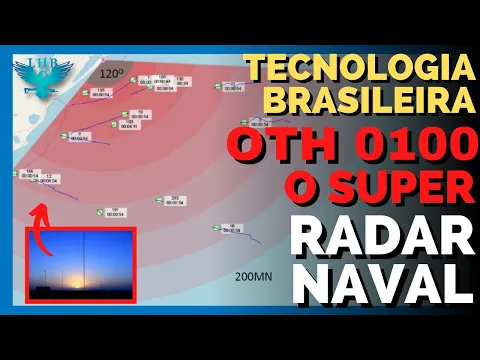

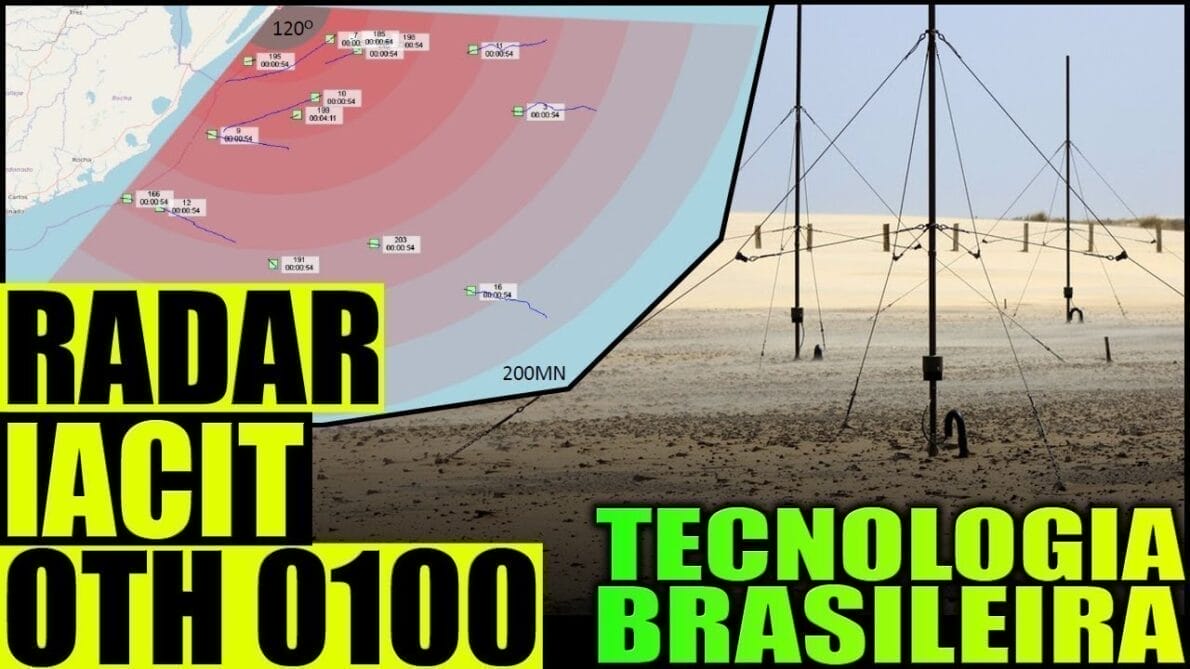
Developed by IACIT, the new radar of the Brazilian Navy is an advanced maritime surveillance system that has the primary characteristic of monitoring large oceanic expanses, reaching up to 200 nautical miles (about 370 km) offshore.
-
Chinese Manager Accused of Whipping Worker Sparks Protest by 1,200 Employees at Major Brazilian Factory

-
The FLIP: A 108-Meter Ocean Laboratory That Stood Vertically for 60 Years, Dismantled in 2023

-
France Revamps 530 Social Housing Units with Large Balconies and Glass Facades Without Demolishing Existing Buildings
-
10-Year-Old Max Makes History with Paris Fashion Show, Launches Own Brand, Hires Staff, and Sets World Record as Youngest Runway Designer





In addition to threats to the country’s sovereignty, the radar also helps combat illegal activities such as human trafficking, smuggling, drug trafficking, predatory fishing, and illegal extraction of natural resources, among other illegal activities.
The data collected by the new radar of the Brazilian Navy goes through complex processing networks, which, through algorithms and artificial intelligence, can indicate the behavior of the monitored target, providing a consistent analysis of the degree of threat for decision-makers.
After All, How Does the New Radar of the Brazilian Navy Work?
The OTH 0100 radar from IACIT has an antenna that emits high-frequency electromagnetic waves, which propagate along the surface of the sea and follow the curvature of the globe. The radar beam is emitted and then reflected off the vessel.
It is captured back by receiving antennas installed in a circular formation. The new radar system of the Brazilian Navy analyzes the signal, suppressing various interferences found in the high-frequency range, and identifies the vessel.
According to IACIT’s president, Luiz Teixeira, the company now contributes to the surveillance of territorial waters through the Brazilian Navy. There is confidence that it will achieve the goal of bringing technological autonomy in this radar segment to Brazil.
Teixeira also states that the company has technologies to, with the support of its forces and PD&I incentives, create a country capable of protecting its sovereignty. Admiral Edgar Luiz Siqueira Barbosa emphasized the strategic importance of national supply and a strengthened Defense Industrial base.
Brazilian Navy Joins Group of Countries That Possess This Technology
The system of the new radar of the Brazilian Navy has an advanced digital processing architecture that suppresses interferences in the high-frequency range, ensuring high precision in detections. With this purchase, Brazil joins a select group of countries that possess this cutting-edge technology, including the United States, Russia, France, England, Canada, Australia, China, and Israel.
According to Teixeira, the new OTH 0100 radar positions Brazil among the countries with the most modern ocean monitoring systems worldwide. For the company, it is a source of pride and responsibility to contribute to the Brazilian Navy in preserving the country’s natural wealth and sovereignty.