






 Portuguese
  Spanish
  3 min of reading
  18 comments


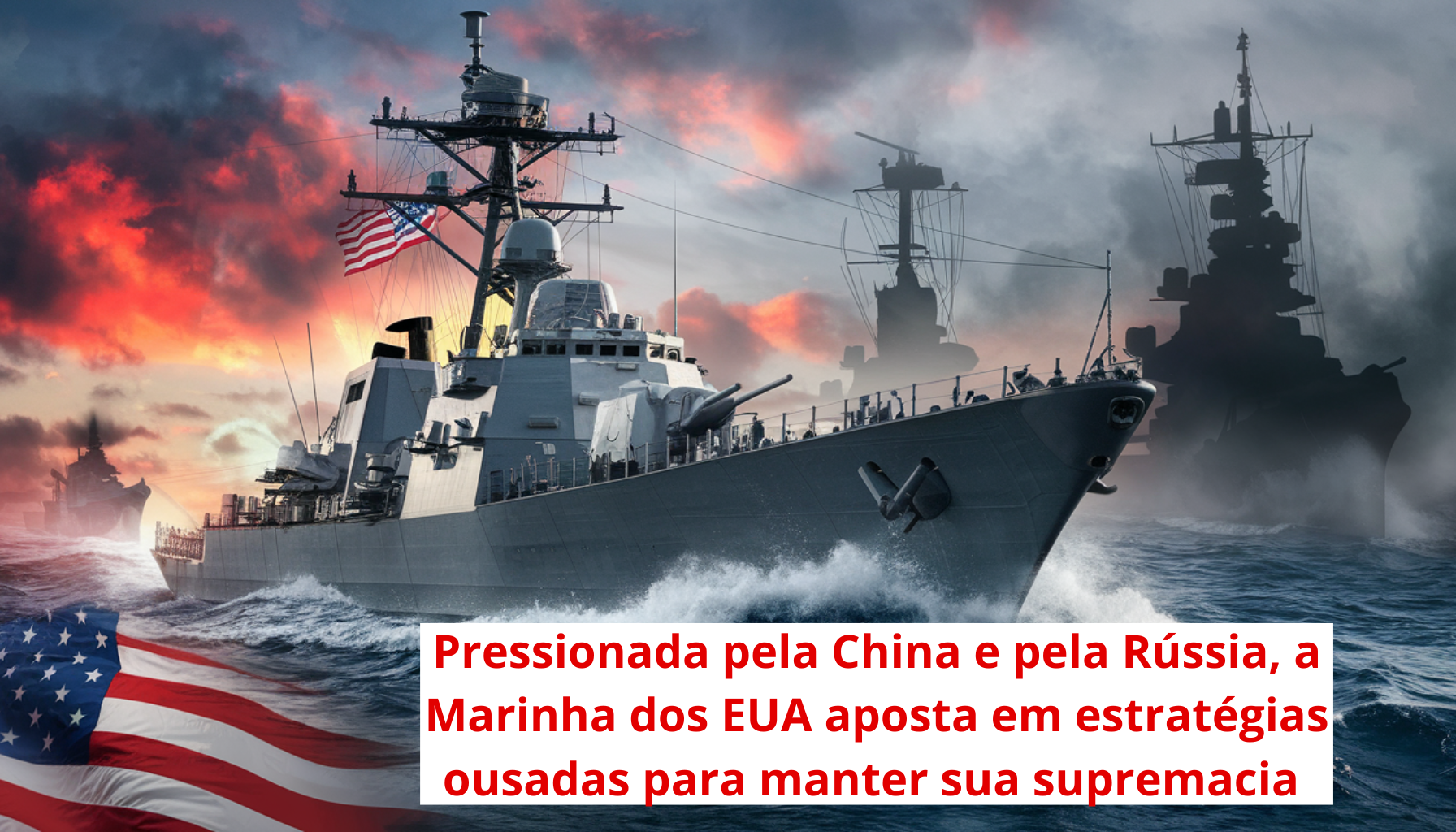


Pressed by China and Russia, the U.S. Navy is betting on bold strategies to maintain its supremacy. Innovative logistics and global alliances ensure a fleet ready for challenges. Will these changes be sufficient to overcome emerging rivals? Find out how the future of maritime security is being shaped today!
Under growing pressure from Chinese naval expansion and Russian aggressive strategy, the United States Navy is taking a bold step to ensure its supremacy.
Deep changes in naval maintenance and logistics promise to reconfigure American military power. But will these actions be enough to balance the global geopolitical landscape?
Recently, during the “America’s Future Fleet: Revitalizing the Maritime Industrial Base” forum, Admiral Lisa Franchetti detailed the ongoing transformations.
-
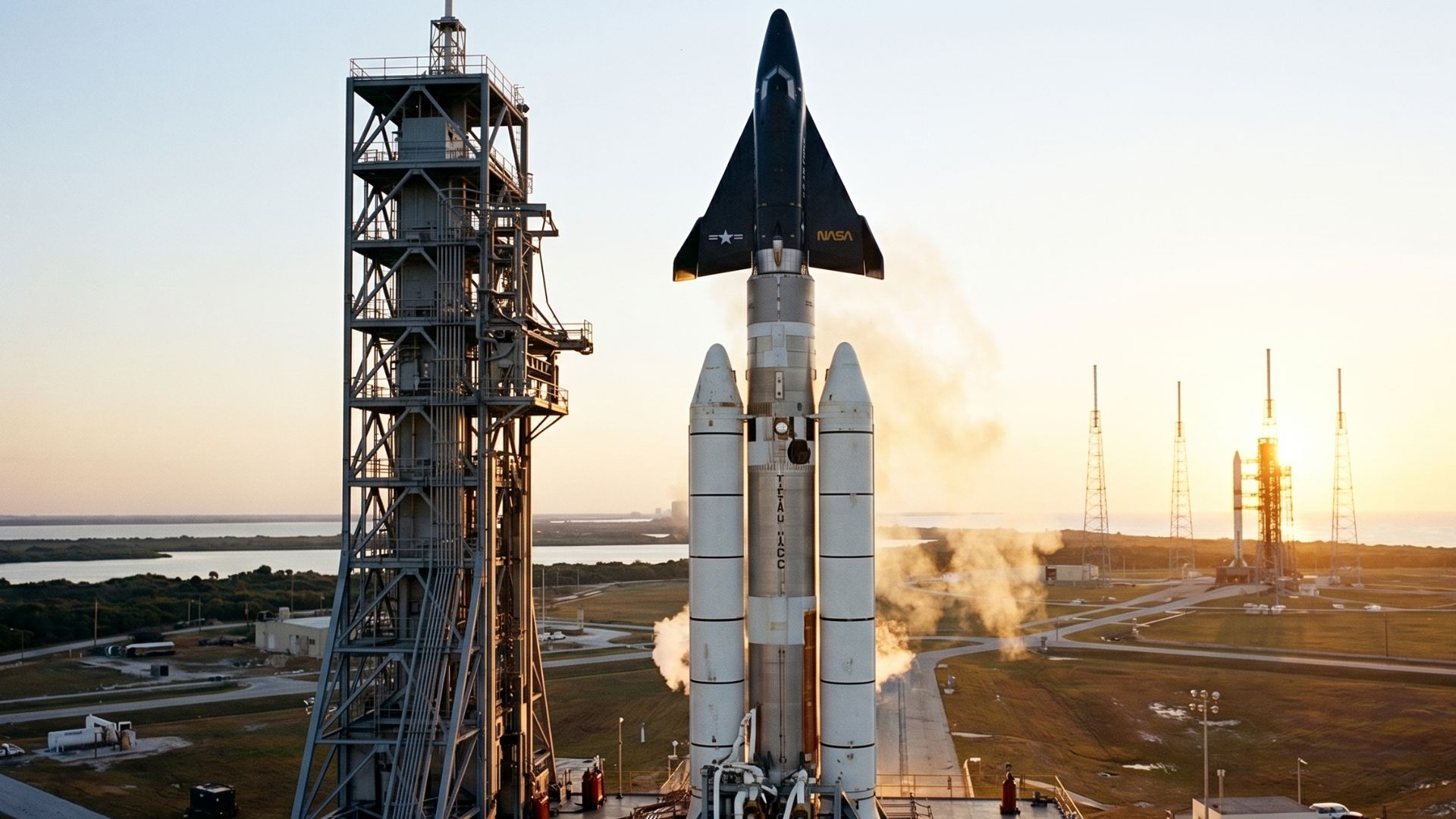
The military spaceplane that almost took the Cold War into orbit: Boeing X-20 Dyna-Soar was designed to re-enter above Mach 20, fly for up to 40 hours, land like a plane, and transform Titan rockets into a gateway to a new era of orbital warfare.

-
FAB bets on national drones and increases investments to strengthen the Brazilian aerospace industry

-
Six times, a luminous crescent the size of the Moon startled the Soviet sky at dusk: it seemed like a wave of UFOs, but it was a secret orbital weapon created to attack the United States via the South Pole and evade Cold War radars.

-
The United States government approved a potential sale of 100 portable Stinger anti-aircraft missiles to the Brazilian Army, in a package estimated at around 330 million dollars that still depends on negotiations between the two countries.



The Navy has adopted an innovative logistics approach known as “just-in-case” to replace the previous “just-in-time” tactic.
The goal is clear: to increase efficiency, avoid delays in maintenance projects, and strengthen fleet readiness. This strategy aims to address the advances of rival powers in the Arctic, Pacific, and other critical regions.
The Challenge of Chinese Naval Ascent
In recent years, the Chinese Navy has surpassed that of the U.S. in the number of vessels, although not yet in tonnage or operational capabilities.
Since 2020, Beijing has been modernizing its fleets with ships like the Type 055 destroyers, which technologically rival the American Arleigh Burke class. At the same time, China is accelerating its naval construction and advancing in technologies that challenge U.S. hegemony.
Additionally, tensions surrounding Taiwan put the U.S. on high alert. Should a naval blockade or Chinese military action occur, the American Navy would be forced to intervene in an unfavorable strategic scenario, given the geographic proximity to China.
Russian Resistance and the North Atlantic
Meanwhile, Russia is expanding its presence in the Arctic and the North Atlantic, where its submarine fleet remains one of the most threatening in the world.
The conflict in Ukraine has intensified the need for naval preparedness, forcing the U.S. to redistribute resources to contain Russian threats and ensure the security of NATO allies.
Innovation in Naval Maintenance
The new approach of the U.S. Navy prioritizes the availability of materials in advance. Franchetti explained that maintenance planning is now conducted 120 days ahead, ensuring that all materials are ready to begin repairs immediately.
This change eliminates delays caused by a lack of parts and reduces the need for ship cannibalization.
“We need to have all the materials on hand to start the work on time,” emphasized Franchetti. For this reason, strategic stockpiles have been created to ensure the availability of critical components in case of emergencies.
Fleet Expansion and Modernization
Another essential measure is extending the lifespan of 12 Arleigh Burke class destroyers. These ships remain critical for defense operations against drones and missiles.
Additionally, new projects like the Zumwalt class destroyers are being developed, incorporating advanced technologies to address future challenges.
The revitalization of the maritime industrial base is also a priority. Investments in infrastructure and training aim to increase production capacity and reduce the construction time of new ships.
However, experts point out that the U.S. shipbuilding industry still faces significant challenges in competing with China’s rapid pace.
Strategic Partnerships
To strengthen its global position, the U.S. is forging alliances with countries in NATO and the Indo-Pacific. These partnerships ensure access to military bases and promote joint training, enhancing responsiveness in critical regions.
A recent example was the AUKUS agreement among the U.S., the UK, and Australia, which includes the construction of nuclear submarines to reinforce presence in the Pacific.
With a mix of technological innovations, logistical changes, and global alliances, the U.S. Navy seeks to maintain its hegemony.
However, the rise of rival powers and the increasing geopolitical complexity challenge the American ability to sustain its dominant position.
Do you believe these changes will be sufficient to preserve U.S. naval leadership?





Rapaz mese caso é melhor ce prevenir do que remedia fica preparado todo momento
OS E.U.A TEM MEU RESPEITO, AI CONTRÁRIO DOS **** **** QUE USAM A MÁXIMA,”O AMOR VENCEU”E O FUMO SÓ ENTRANDO! VIVEMOS UMA ****, ACORDEM! A IMPRENSA ESTÁ TOTALMENTE CORROMPIDA! AS ESCOLAS E FACULDADES TODAS APARELHADAS ASSIM COMO AS DEMAIS INSTITUIÇÕES! SÓ NÃO ENXERGA QUEM NÃO QUER!
O ocidente cometeu os piores crimes contra a humanidade, estupro em nada que o ocidente falsamente acusa a Rússia é uma realidade que ia americanos ficaram no Iraque, Afeganistão. Cassia de soldados norte americanos canibais, estupro der crianças. A pior raça da humanidade são os imperialistas. O Brasil e os brasileiros devem enxergar a realidade como ela é. Julian assange não mostrou ao mundo soldados ocidentais atravessando fora da faixa de pedestre no Iraque não.
Pura verdade!