






 Portuguese
  Spanish


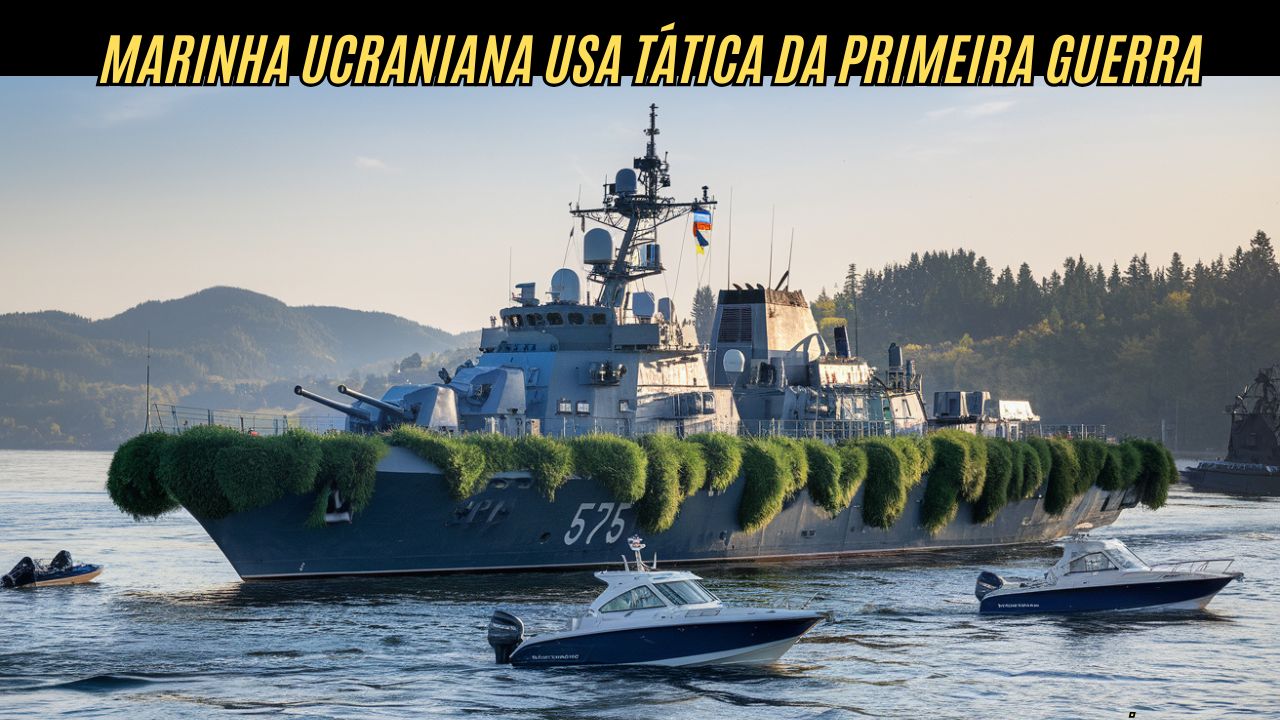


The Ukrainian Navy Has Drawn Attention by Adopting a Historical Technique to Confuse Its Adversaries. Inspired by Tactics from World War I, Ukraine is Applying the Maritime “Optical Illusion” Known as Dazzle Camouflage, a Visual Strategy Created to Make It Difficult to Identify Ships by Enemies.
The concept of dazzle camouflage dates back to the early 20th century when irregular and eye-catching patterns were painted on ships to confuse enemy submarines. The idea was simple: to confuse the perception of speed and direction of the vessels. Now, the Ukrainian navy has brought the tactic back, as shown by recent images of its armored ships and Island-class patrol boats.
These demonstrations, conducted for Danish experts, highlight how the use of optical illusion can disrupt Russian optical sensors, such as surveillance drones. Although its effectiveness against modern technologies like advanced radars is limited, the strategy reinforces the spirit of adaptation in an extremely challenging war scenario.
Historical Cases and Inspiration

The use of optical illusion at sea is not new. One of the most famous cases occurred during World War II when the Dutch minesweeper HNLMS Abraham Crijnssen escaped Japanese capture by disguising itself as a floating island. Covered in foliage and moving carefully near the coast, the ship managed to avoid detection and became a legendary example of naval camouflage.
-
NASA’s Plan to Dump ISS Debris in Ocean Sparks Environmental Concerns Among Scientists

-
14-Year-Old Invents Eco-Friendly Water Pump Using Recycled Materials to Aid Communities Without Water Access
-
Pigeons Trained to Detect Cancerous Changes in Medical Images Astonish Scientific Community

-
Plastic Waste from Beaches and Poor Communities in Kenya Transformed into School Desks, Replacing Wood in Classrooms and Turning Marine Litter into Durable Study Tables


The Ukrainian navy seems to follow this historical inspiration, adjusting tactics to its needs in the Black Sea, where it faces a superior Russian fleet. The goal is clear: to complicate visual identification and increase the chances of defensive success.

An Adapted Fleet and Danish Support
With limited resources, the Ukrainian navy relies on small vessels and creative adaptations to level the playing field. International assistance, such as the recent $340 million package announced by Denmark, has been crucial. This support includes armaments, port protection equipment, grain corridor security, and demining, essential measures to modernize and strengthen Ukraine’s naval capabilities.

Strategic Impact
Although the dazzle camouflage of the Ukrainian navy has yet to demonstrate its full effectiveness in modern warfare, the tactic symbolizes the country’s determination to overcome adversity. In an ever-evolving scenario in the Black Sea, every innovation matters to bolster maritime defense and maintain strategic balance.
With this combination of historical creativity and contemporary adaptation, Ukraine continues to show that, even with limited resources, it is possible to face a powerful adversary and seek ingenious alternatives on the battlefield.


não importam o que façam, a derrota é definitiva para a Ucrânia, todo esse investimento da OTAN e UE é uma tentativa de enfraquecer a Rússia
Vi dois filmes sobre a primeira invasão russa em 2014 e agora essa, a Rússia é muito fominha e egoísta .
Notícia muito duvidosa. A marinha ucraniana afundou seus próprios navios no início da guerra para evitar que fossem utilizados pela Russia
E deu certo!! Ultimamente eles andam afundando todos da russia tambem!