Portuguese
  Spanish



Discover How Nanotechnology and Structural Materials Technology Can Transform Works with Unprecedented Strength and Lightness.
Engineering has sought over the years to improve the construction of works that meet high criteria for strength and durability. Traditionally, the materials used are specialized for enormous efforts, but the introduction of new technologies is evolving this scenario.
Nanotechnology, with its focus on manipulating materials at the nanoscale, emerges as a promising alternative.
Thanks to this technology, it is now possible to develop materials that possess the strength properties of steel and the lightweight nature of materials like Styrofoam, expanding the possibilities for engineering and works that require increasingly efficient and sustainable materials.
-
Ship Returns from Brazilian Coast with Thirty Newly Discovered Life Forms

-
Nigerian Professor Invents Electricity-Free Refrigerator Using Clay Pots and Wet Sand, Extending Shelf Life of Vegetables to 27 Days; 7,000 Units Distributed in Energy-Deprived Villages

-
Flower Farms Supplying London and Amsterdam Face Backlash for Environmental Impact on African Lake, Threatening Jobs for 50,000 Workers

-
World’s Largest Container Ship Departs Shanghai with 24,000 Containers, Set to Debut in Europe in July




The Challenge of Nanotechnology and the Potential for Structural Materials
The construction of traditional structural works, such as bridges and buildings, relies on robust but heavy materials.
With the arrival of nanotechnology, engineers have developed new ways to create materials that, despite being very light, exhibit superior strength.
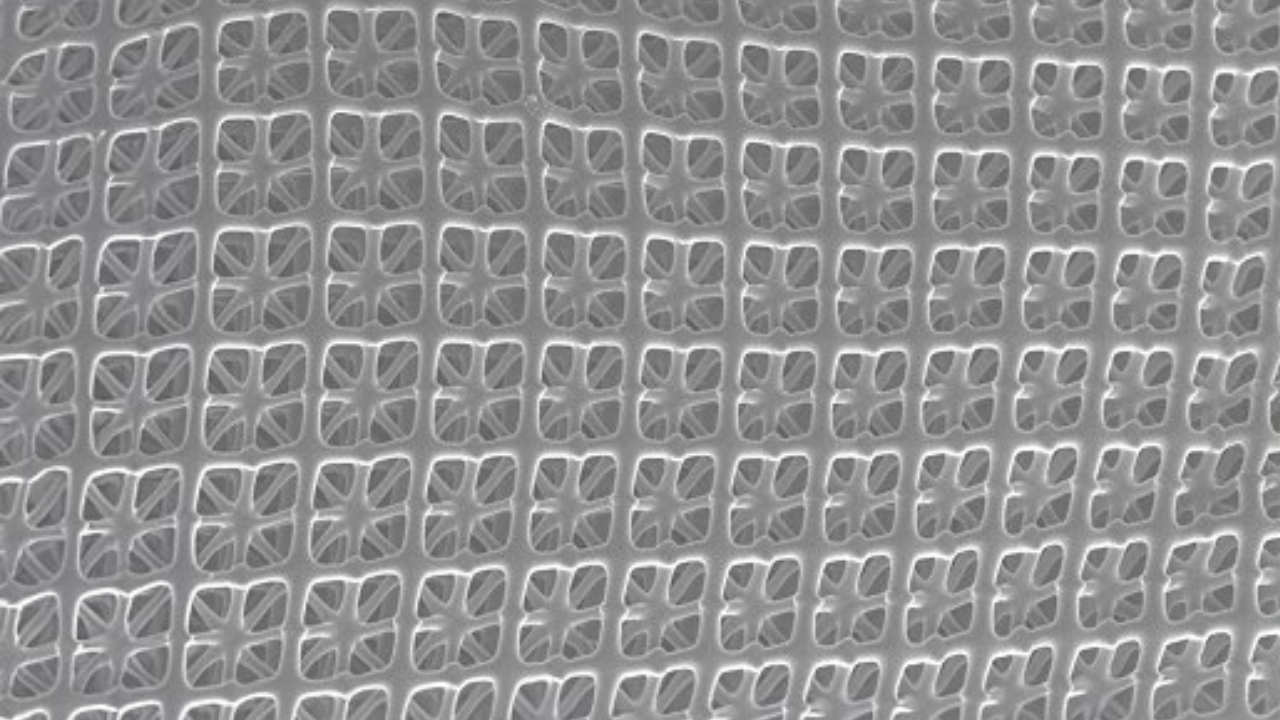
The use of nanoscale, with elements of infinitesimal size, has allowed the development of structures called “nanolattices,” formed by blocks of carbon organized in 3D networks.
The great innovation is not just the fact that, with the help of artificial intelligence, it was possible to optimize these materials to be stronger and lighter, solving limitations present in traditional materials used in construction engineering.
The Impact of Technology on Engineering and the Development of New Materials
One of the main innovations that emerged from the development of nano-architected materials was the application of machine learning algorithms.
These algorithms helped researchers simulate various geometries of structures to predict which could offer the best strength-to-weight ratio.
The tests conducted demonstrated that the new geometries developed were significantly stronger than the previous ones, showing an impressive strength—about five times greater than titanium, one of the strongest known materials.
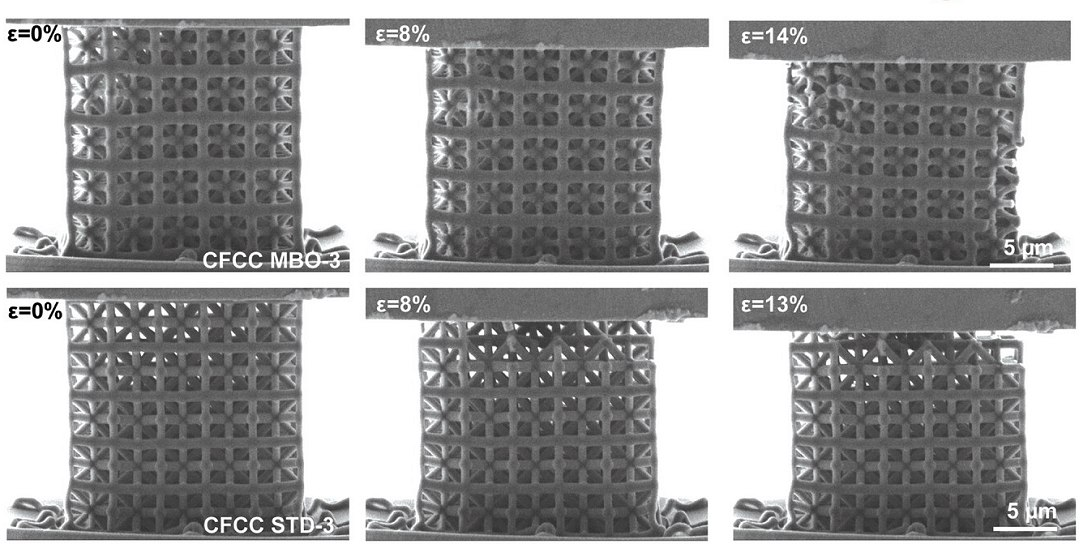
With this discovery, nanotechnology has opened a field of possibilities for the creation of materials that can be applied in various areas of engineering, from construction to the aerospace industry.
The flexibility and scalability of this technology have the potential to transform not only construction engineering but also other sectors that rely on materials with high strength and low weight.
Nano-Architected Materials Revolutionizing Construction
The advancements provided by nanotechnology are creating new opportunities for the use of materials in works and components that were previously unthinkable.
The application of these technologies in structural engineering can lead to the creation of lighter parts for airplanes and spacecraft, for example, which would directly impact the efficiency and fuel consumption of these sectors.
By replacing heavy materials like titanium with these innovations, it would be possible to save a specific amount of fuel, which would also contribute to reducing the carbon footprint of air travel.
Moreover, these new structures can be applied in works, reducing costs and increasing safety and sustainability.
The future of construction and engineering materials will undoubtedly be profoundly impacted by the continuous evolution of nanotechnology and its numerous applications in the development of more efficient materials.
The article was prepared with information from the article “Ultrahigh Specific Strength by Bayesian Optimization of Carbon Nanolattices”, and can be found in full at this link: https://advanced.onlinelibrary.wiley.com/doi/10.1002/adma.202410651
SOURCE: Technological Innovation