Portuguese
  Spanish


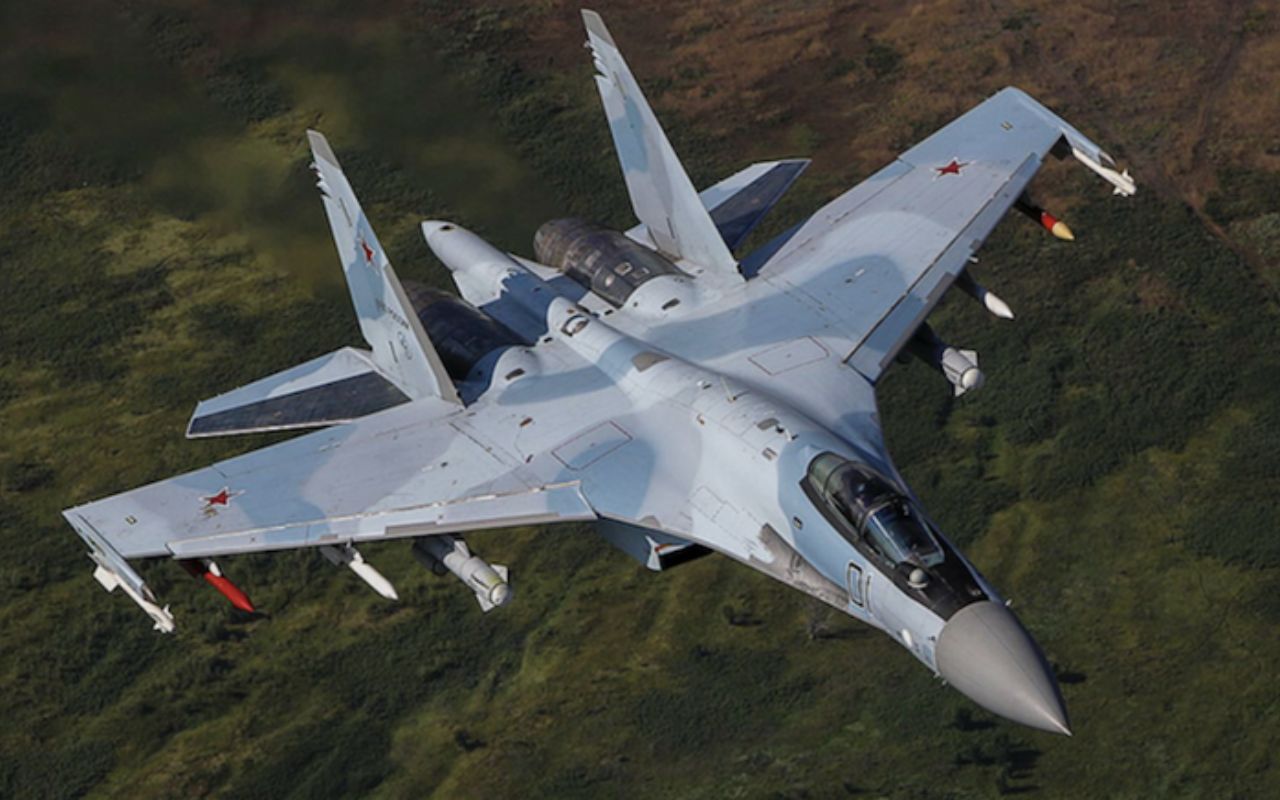

The Russian fighter Sukhoi Su-35 stands out for its super maneuverability, high technology, and ability to reach 2,400 km/h, redefining modern aerial combat.
The Russian fighter Sukhoi Su-35 has returned to the spotlight in the military scene by demonstrating, in recent analyses and air shows, a rare combination of speed, power, and extreme control.
Developed by Sukhoi, the 34-ton jet can reach speeds of around 2,400 km/h and perform maneuvers that challenge the limits of aerodynamics.
These capabilities explain why the aircraft is considered strategic for Russia and how it directly influences the balance of power in modern aerial combat.
-
Tokyo Scientists Create First 18cm Biohybrid Hand Using Human Muscle, Capable of Scissor Gesture and Holding a Pipette

-
Brazil Faces Norway in World Cup at Stadium Linked to Jimmy Hoffa’s Mysterious Disappearance

-
Retired Woman Leaves French Public Housing Due to Fear, Lives in Van for Weeks, Prompting Response from Local Authorities and a Priest
-
9-Year-Old Fabio Isaac Wins Gold at Copernicus Math Olympiad in Singapore, Representing Peru Against Global Young Talents




Speed and power place the Russian fighter Sukhoi Su-35 among the most feared
Even before analyzing its maneuvers, the raw performance of the Russian fighter Sukhoi Su-35 is already impressive.
Equipped with Saturn AL-41F1S engines, the jet reaches speeds close to 2,400 km/h with relative ease.
Moreover, the aircraft has supercruise capability. This allows it to fly above the speed of sound without the continuous use of afterburners, increasing efficiency on long missions.
Meanwhile, its robust structure allows it to carry various armaments, enhancing its offensive power.
Advanced sensors elevate the level of the Russian fighter Sukhoi Su-35
Another decisive factor lies in the onboard systems. The Russian fighter Sukhoi Su-35 features the Irbis-E radar, capable of detecting targets at great distances, even under intense electronic interference.
Additionally, the infrared system allows for locating aircraft by the heat of their engines, including those with low radar visibility.
On the other hand, the digital cockpit reduces the pilot’s cognitive load. Thus, critical decisions can be made more quickly during combat.

Maneuvers that change the course of aerial combat
After understanding its power and sensors, the major highlight of the Russian fighter Sukhoi Su-35 appears: super maneuverability. This capability is made possible by the thrust vectoring system.
In practice, the engines direct the gas flow at different angles. This allows the jet to perform movements that go beyond what traditional aerodynamics would permit.
As a result, the pilot can maintain total control even in extreme situations. Among the most well-known maneuvers of the Russian fighter Sukhoi Su-35 is “Pugachev’s Cobra.”
In this action, the jet abruptly decelerates and raises its nose, surprising any aircraft that is behind.
Although it may seem like just a demonstration, this technique has direct application in combat. It can force the enemy to overshoot the aircraft, quickly reversing positions.
Moreover, the ability to perform tight turns and abrupt direction changes significantly increases its chances of survival.
Comparison: where the Russian fighter Sukhoi Su-35 stands out
On the international stage, the Russian fighter Sukhoi Su-35 competes with models such as the F-15EX Eagle II and the Eurofighter Typhoon.
The F-15EX stands out for its payload capacity and superior speed. Meanwhile, the Typhoon offers excellent aerodynamic efficiency and modern sensors.
However, the Su-35 gains an advantage when it comes to extreme maneuverability, especially in close-range combat.
Why is the Russian fighter Sukhoi Su-35 still decisive today?
Even with the evolution of long-range missiles, close combat remains a reality. In this context, agility becomes a critical factor.
The Russian fighter Sukhoi Su-35 uses its maneuverability to escape threats and reposition quickly. Thus, it transforms defensive situations into offensive ones in a matter of seconds.
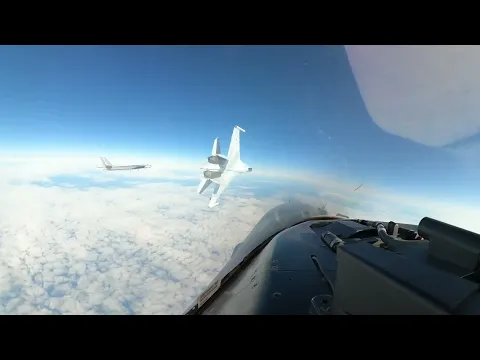

Additionally, its unpredictability makes it difficult for the enemy to act, increasing its effectiveness on the battlefield.
Within Russia’s military strategy, the Russian fighter Sukhoi Su-35 serves as a key component. It bridges the gap between older aircraft and fifth-generation fighters.
Furthermore, its presence in international exercises and demonstrations reinforces the country’s technological power.
Source: BM&C News