Portuguese
  Spanish


Egypt Announces Mega Project That Promises to Completely Change Africa. Project Receives Billions in Investments to Use Green Hydrogen, the Fuel of the Future.
Egypt has been constructing a new mega project for its administrative capital on the outskirts of Cairo for eight years. This ambitious, sustainable, and costly project is estimated to cost around US$ 58 billion, equivalent to about R$ 327 billion, and there is no forecast for when the works will be completed.
Understand How the Mega Project in Africa Will Work with Fuel of the Future
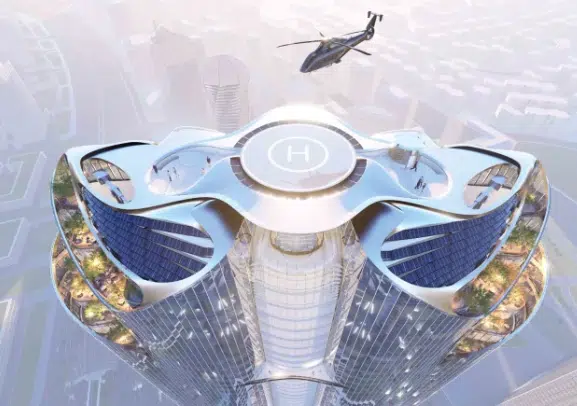
The jewel of the mega project in Africa is a technological skyscraper that aims to be the first building of its kind to receive the “zero carbon” certification in the world. The Forbes International Tower, which will have 42 floors and nearly 240 meters in height, is designed to produce clean energy, such as green hydrogen, and reduce carbon emissions in its operation.
Its energy supply is planned to occur in the following proportion: 25% from photovoltaic energy and 75% with green hydrogen, also known as the fuel of the future, whose extraction does not emit carbon dioxide.
-
France Revamps 530 Social Housing Units with Large Balconies and Glass Facades Without Demolishing Existing Buildings

-
10-Year-Old Max Makes History with Paris Fashion Show, Launches Own Brand, Hires Staff, and Sets World Record as Youngest Runway Designer

-
Bolivian Female Construction Workers Form Association to Combat Discrimination and 38% Pay Gap in the Industry
-
Near Amsterdam, residents buy land and discover they must also build streets, manage drainage, handle waste, and grow food on half their plot.




The mega project in Africa will feature biophilic spaces, meaning those that incorporate nature, and solar panels. To control the internal temperature, the tower will use natural ventilation techniques. Tanks will collect rainwater for non-potable uses, and efficient sanitary fixtures will reduce water demand.
Instead of traditional alternatives, specific machines known as chillers, using air cooling, will be employed for water cooling. In addition to the renewable energy supply generated by solar panels and the fuel of the future, its structure will be built with low embodied carbon materials, which have a minimized carbon footprint considering their manufacture, use, and disposal.
Who Is Behind the Mega Project in Africa?
The architecture firm Adrian Smith + Gordon Gill is responsible for the design of the Forbes International Tower, which will be powered by green hydrogen.
The studio’s portfolio includes other projects that follow the same philosophy of luxury and sustainability, such as Central Park Tower in New York and Jeddah Tower currently under construction in Saudi Arabia.
The plan to relocate the capital was first announced in 2015, and the construction of the mega project in Africa began two years later. Nicknamed New Administrative Capital, the city still does not have an official name but will cover an area of approximately 700 square kilometers and will be only 45 kilometers from Cairo.
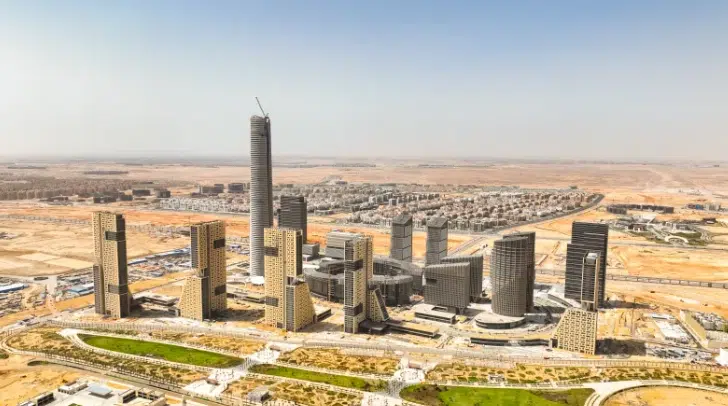
The first satellite images released by NASA showed the still modest works in 2017. Now, however, it is possible to see much more. The new capital of Egypt will feature a huge space for pedestrians and cyclists, with lakes and part of Egypt’s native flora. In total, there will be 10 kilometers in length, larger than Central Park in New York, USA.
Understand Why Egypt Plans to Change Its Capital
The city will also house several government buildings, the most notable being the new Ministry of Defense center nicknamed the “octagon.”
The replacement of Cairo as the capital of Egypt occurred after pressure from the population itself. In 1950, there were just under 2.5 million inhabitants. Now, the city has about 22.6 million.
This population explosion has caused major problems, and the authorities admit that the city’s infrastructure cannot support so many people. The result is huge traffic jams in the African country. The new capital can accommodate just over 6 million people and is expected to relieve some pressure on the historic city of Cairo.