Portuguese
  Spanish


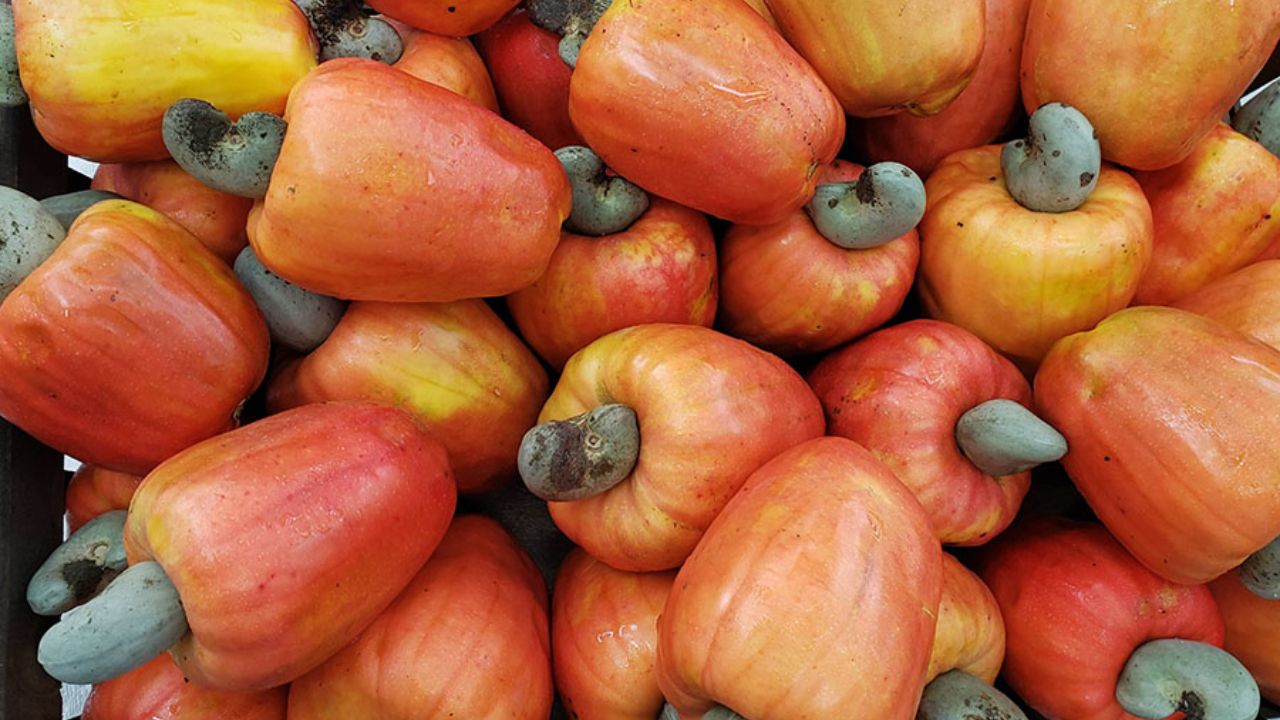


Discover how the deep root system of the early dwarf cashew tree, created by Embrapa, ensures survival during drought and rapid production in pots.
A deep root system, designed to seek water in the lower layers of the underground soil, is the secret behind the high resistance of the new early dwarf cashew tree. Developed by researchers at the Brazilian Agricultural Research Corporation (Embrapa), this biological technology was structured so that the plant clones maintain excellent productivity even under extreme heat and chronic water scarcity.
This innovation allows the tree — popularly nicknamed “honey of the Northeast” due to the success of its products — to survive severe droughts in the Semi-arid region and begin fruiting as early as the first or second year after planting, breaking the cycle of the traditional species that requires about five years to repay the investment.
The plant that thrives when the backlands dry up: Embrapa’s dwarf cashew tree
When drought destroys crops in the Northeast, one crop does the opposite: the dwarf cashew tree developed by Embrapa Tropical Agroindustry (CE) not only survives the drought but also fruits precisely during this period.
-
Astronauts Returning from Space Show Altered Gut Bacteria and Loss of Protective Microbes, Highlighting Potential Risks for Mars Missions

-
Electrolux Unveils Smart Washing Machine Line with 12kg Capacity, 45-Minute Cycle, Automatic Dosing, Dirt Sensors, Sanitizing Steam, App Control, and User-Guiding Display
-
Realme Launches Affordable 16x 5G Phone with Military Certification, 6,600 mAh Battery, 50 MP Camera, and 6.8-Inch Screen Starting at $320

-
Amazonian Fruit Bacuri: A Nutrient Powerhouse with Antioxidants, Vitamins, and Bioactive Compounds, Ideal for Sweets and Beverages



Capable of producing more than 1,000 kilograms of nuts per hectare — more than double the national average — the technology is becoming one of the main sustainable income alternatives for family farmers in the northeastern Semi-arid region.
Why the cashew tree can produce in the driest period of the year
The resistance of the cashew tree to lack of rain is no coincidence — it is the result of specific biological mechanisms. While many plants lose their leaves to reduce water loss, the cashew tree keeps its foliage green and reduces transpiration without interrupting photosynthesis. Additionally, the plant has the ability to optimize the absorption of available water in the soil and take advantage of nighttime moisture, common on the milder nights of the backlands.
Researcher Marlos Bezerra, from Embrapa Tropical Agroindustry, highlights what makes this plant unique among fruit-bearing plants: “Few fruit species can produce in the full dry period. The peak of cashew production happens in the second half of the year, precisely when most plants in the Caatinga are in low metabolic activity due to the lack of rain. It is at this moment that the cashew becomes a strategic source of income.”
Bezerra also compares the cashew tree with other native species: “Species like the juazeiro, for example, have much deeper roots, which ensures them another survival strategy. Yet the cashew tree, even with less deep roots, manages to produce in the dry period. It’s truly amazing.”
The internal anatomy and utilization of the cashew fruit
The ability to extract deep water resources ensures that the plant fully develops its two main food riches: the nut and the peduncle (the fleshy and juicy part of the cashew).
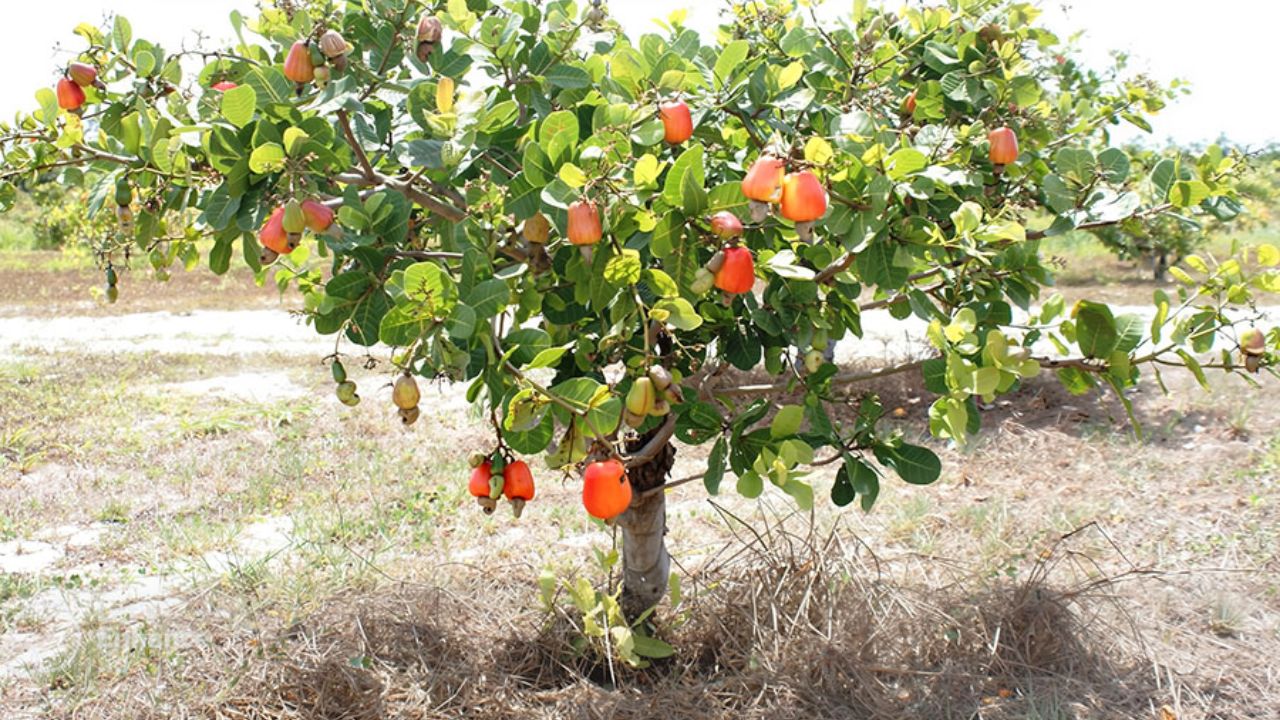
This juicy and fleshy part has great commercial appeal for its versatility in the kitchen, offering excellent yield in the production of:
- Frozen fruit pulps;
- Sweets in syrup or artisanal doughs;
- Natural and concentrated juices.
Furthermore, the physical structure of the plant has been modified to occupy significantly less space in the field.
While the common cashew tree requires a mandatory spacing of 7 meters between each tree and its rows, the dwarf clone accepts much shorter intervals.
This drastic reduction in size facilitates management and harvesting for small farmers, allowing optimized use of properties with limited measurements.
How to cultivate the clone in large pots?
This structural flexibility has had a direct impact on the urban gardening market. The early dwarf cashew tree can be kept healthy in large pots, provided the containers have a volumetric capacity between 40 and 60 liters.
Even confined to this space, the plant retains its ability to produce cashews and nuts, although in a smaller quantity compared to free cultivation in the ground.
For pot cultivation, the resident must meet some basic requirements:
- Sunlight: Ensure the pot receives a minimum of six hours of full sun daily.
- Nutrition and water: Increase the frequency of watering and fertilizer replenishment, as the roots cannot seek nutrients on their own in the subsoil.
- Location: Prefer balconies, terraces, or well-lit outdoor areas.

The guide for correct planting of the cashew tree in the soil
For those who have space in backyards, farms, or ranches, the plant’s development tends to be even more vigorous, as the roots gain full freedom to expand.
The technical process for introducing the plant into the ground requires purchasing a grafted seedling, which ensures the authenticity and speed of the Embrapa variety.
The procedure for direct planting in the soil should follow four fundamental steps:
- Square hole: Open a cradle in the ground with exact dimensions of 40 x 40 x 40 centimeters.
- Base fertilization: Mix a portion of good quality organic compost with the topsoil before placing the plant.
- Fixation: Center the seedling in the hole, cover with soil, and lightly press the soil around the stem.
- Wind protection: Attach a wooden stake next to the trunk in the first months, preventing growth deformations caused by strong winds.


Maintenance routine and annual care
After fixing the seedling, maintaining the orchard is simple but requires consistency. The soil around the trunk of the cashew tree should always be kept clean and free of weeds to cut down on water competition.
Applying a layer of mulch — using straw, dry leaves, or grass — at the base of the stem is an essential management practice to retain soil moisture and reduce water evaporation on hot days.
Finally, cleaning pruning removes dry branches or overly tangled branches, improving sunlight penetration and the shape of the canopy. Nutrient replenishment through fertilization should be done once a year.
The ideal time to apply fertilizer is at the beginning of the rainy season, a phase in which the tree has an accelerated metabolism and can absorb the minerals from the soil with maximum efficiency.
Dwarf Cashew and Biodiversity: A Cultivation That Benefits the Surroundings
Beyond financial gains, researcher Marlos Bezerra points out that the dwarf cashew has the potential to strengthen local biodiversity, especially when cultivated in integrated systems, such as Crop-Livestock-Forest Integration (ILPF).
The orchards attract bees, favor the presence of small animals, and contribute to moisture retention in the soil around the plants.
This set of benefits also helps families remain in the countryside by offering a viable economic alternative even in years of severe drought.
The Embrapa Genetic Improvement Program has already developed 13 clones aimed at the market, 11 of which are dwarf cashew.

Each one was selected to combine higher productivity, resistance to diseases such as the whitefly, and adaptation to the specific climate and soil conditions of the Semi-arid region.
Among all the available clones, the CCP 76 is the most cultivated in the Northeast.
Recommended for Ceará, Piauí, Rio Grande do Norte, and regions with similar characteristics, it stands out for the flavor and quality of the peduncle — making it the main choice for table cashew production. Its productivity rates are impressive:
- 9,600 kg of peduncle per hectare
- 1,200 kg of nuts per hectare
With information from Gazeta de SP and Embrapa