Portuguese
  Spanish


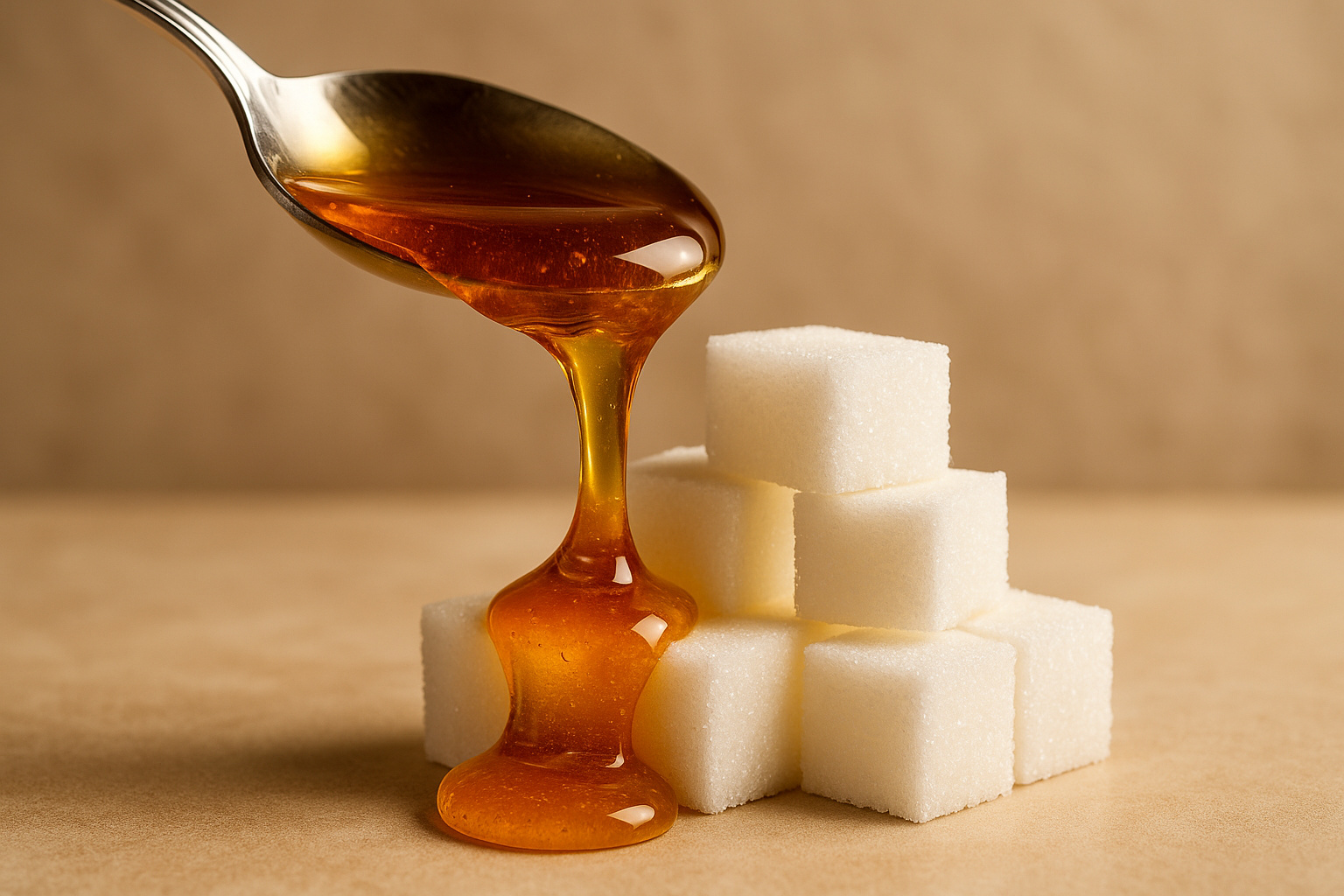


Honey or Sugar: Find Out Which Is Healthier, the Impact on Glycemic Index, and What Nutritionists Warn About Risks and Curiosities.
Honey vs. Sugar: What Really Is Better for Health?
What to choose to sweeten your coffee: honey or sugar? This is a common doubt — and according to experts, the answer is not that simple.
Although honey is seen as natural and has a slightly lower glycemic index, nutritionists warn that its metabolic effects are practically the same as refined sugar. The recommendation is clear: moderation is key to protecting your health.
According to nutritionists Marcela Arena and Marina Yazigi, and endocrinologist Samille Coelho, honey may seem like a healthier alternative, but in practice, the difference is minimal. “Honey may generate a milder glycemic response, but that does not make it metabolically safer,” emphasizes Yazigi.
-
Company Develops World’s Thinnest Chocolate at 0.03 Millimeters Using Exclusive Machine Designed in Japan

-
Brothers Build Sustainable Bamboo and Earth House in Brazil, Sharing Secrets of Eco-Friendly Living

-
At 22, Andréia left law school to become a truck driver; six years later, she travels across Brazil transporting grains with 130,000 followers.
-
81-Year-Old Brazilian Farmer Preserves Working Sugarcane Mill and Centuries-Old Tools, Showcasing Rural Heritage




Why Does Honey Seem Healthier?
The perception that honey is healthier comes from the fact that it is a natural product, made by bees from flower nectar.
It contains glucose, fructose, water, and small amounts of bioactive compounds, such as polyphenols and vitamins. On the other hand, sugar is basically sucrose extracted from sugarcane, without these micronutrients.
However, nutritionist Marina Yazigi highlights that the amounts of vitamins and minerals present in honey are very small and “rarely bring relevant benefits in practice.” In other words, despite being natural, honey is not a significant nutritional source.
Composition and Calories: Which Causes More Weight Gain?
Honey contains free glucose and fructose, while refined sugar is composed of sucrose — a type of carbohydrate that needs to be broken down before absorption. This allows honey to be absorbed a bit faster, but the nutrient utilization is identical.
The caloric difference is also small:
- 50 g of honey has about 162 kcal
- 50 g of refined sugar has 197 kcal
However, since a spoonful of honey is heavier, one tablespoon (21 g) has 64 kcal, while one tablespoon of sugar (12.5 g) has 48 kcal. In practice, those who use honey often consume more calories without realizing it.
Glycemic Index: Honey Has an Advantage, but It’s Small
The glycemic index (GI) measures how quickly a food raises blood glucose levels.
- Pure glucose (found in sugar) has a high GI, quickly raising blood sugar levels.
- Fructose (found in honey) has a lower GI but can overload the liver in excess.
- Sucrose (from refined sugar) has an intermediate effect.
Thus, honey tends to have a lower glycemic index, which causes a more gradual rise in glucose. However, Samille Coelho emphasizes that this varies according to the type of honey and individual sensitivity. In summary: there is no significant advantage for metabolism.
Vitamins, Minerals, and Bioactive Compounds
Despite containing small doses of vitamin C, B complex, potassium, and manganese, honey does not offer relevant amounts to support the body.
“Foods like fruits, vegetables, and nuts provide much more nutrients,” explains Marcela Arena.
Therefore, even with antioxidant compounds, honey does not neutralize the negative effects of excessive consumption.
The Danger of Excess: Honey and Sugar Have the Same Risks
High consumption of honey or sugar increases body fat, triglycerides, and risk of cardiovascular diseases. According to the WHO, ideally, “free sugars” — including honey — should account for less than 10% of daily calories, with preferably staying below 5%.
In a 2,000 kcal diet, this means no more than 25 g per day. “There is no different recommendation for honey or sugar. Both should count towards the total of free sugars,” reinforces Yazigi.
When Honey Should Be Avoided
Despite being natural, honey can cause problems in certain situations:
- ❌ Uncontrolled diabetes – rapidly raises blood sugar;
- ❌ Children under 1 year old – risk of infant botulism;
- ❌ Strict glucose control diets.
People with prediabetes, fatty liver, overweight, or insulin resistance should also exercise caution.
Curiosities: The Role of Sweet Taste
It is possible to train your taste to consume less sugar and honey.
Arena explains that “when we gradually reduce consumption, the taste receptors become more sensitive, and the natural sweet flavor of foods stands out.”
Strategies include:
- using ripe fruits or spices like cinnamon and vanilla;
- gradually reducing the use of sugar or honey in recipes;
- avoiding sweetened beverages and ultra-processed foods.
Over time, the very sweet taste becomes less pleasant — and the body gets used to a more balanced diet.
Conclusion: Honey or Sugar?
Ultimately, honey and sugar are not entirely healthy; both provide quick energy, and maintaining balance makes all the difference.
Using small amounts, preferably with natural foods like fruits and grains, is the best strategy. As Arena summarizes:
“The focus should not be just on changing the type of sweetener, but on sweetening less.”