Portuguese
  Spanish


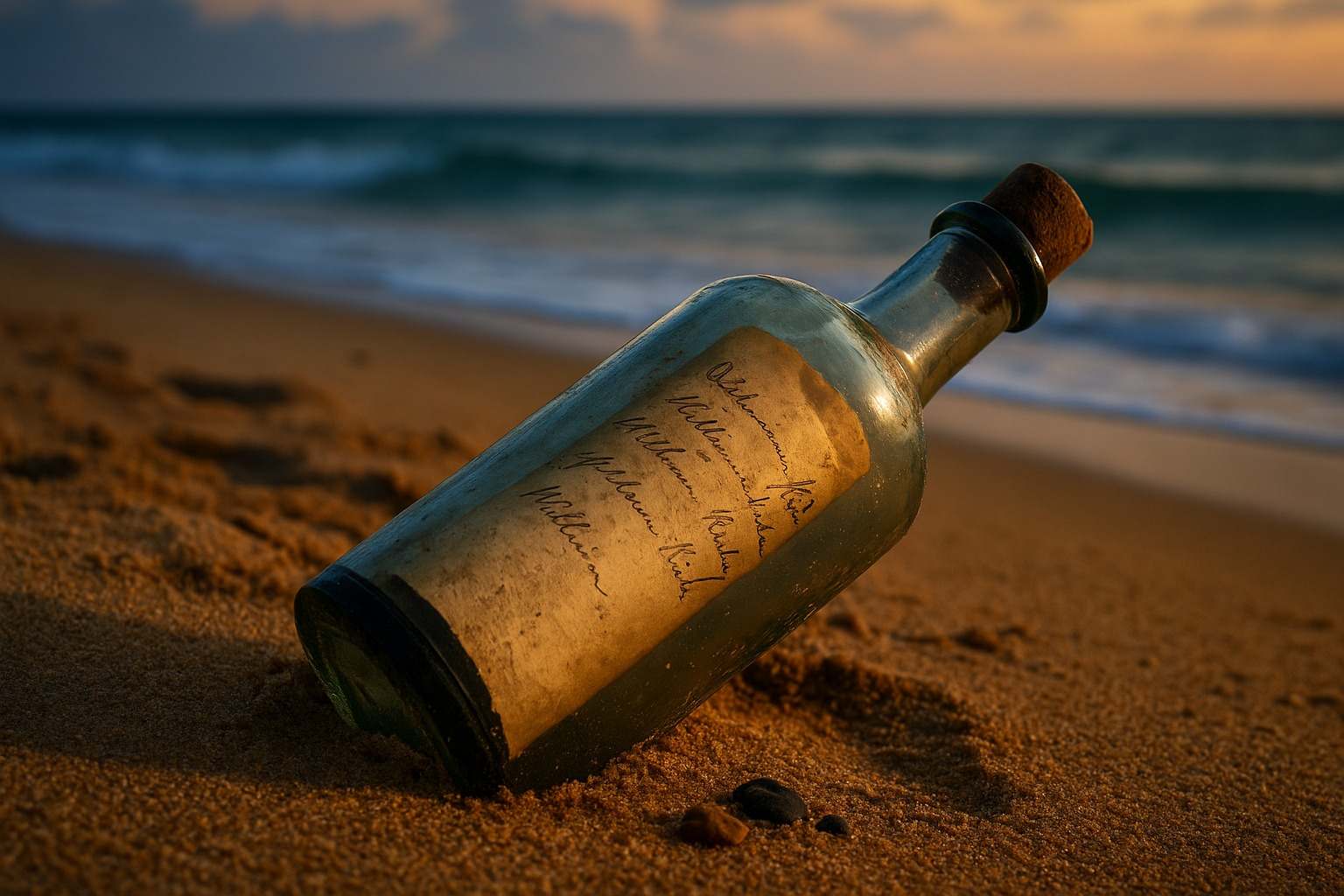


During a Cleanup on an Australian Beach, a Family Found a Bottle from 1916 with Messages Written by Two Soldiers. The Discovery Connected Descendants and Rekindled Memories of World War One
During a cleanup on Wharton Beach in Australia, a surprising discovery interrupted a family’s routine work. Debra Brown and her relatives found a bottle containing messages written by two Australian soldiers from World War One, thrown into the sea exactly 109 years ago.
The letters, dated 1916, were written by Malcolm Alexander Neville and William Kirk Harley, both soldiers in the Australian army. Neville’s letter revealed that he was originally from Wilkawatt in the south of the country. With the help of social media, Brown managed to locate Herbie Neville, the soldier’s great-nephew, and share the thrilling discovery.
The patriarch of the Neville family was 28 years old when he died in combat in France, just months after throwing the bottle. “It has been amazing how much has come to light in his short time in World War One,” Herbie said in an interview with the Australian Broadcasting Corp. He also mentioned that he knew his great-uncle through stories told by his aunt, who is now 101 years old.
-
Salvador’s Acarajé Vendors Turn Used Frying Oil into Income by Selling it for Biodiesel Production

-
Volunteer Revives Dead Lake in Bengaluru Overnight, Doubling Water Capacity and Attracting Kingfishers and Herons
-
1909 Train Car Once Destined for Abandonment Transformed into Luxury Accommodation in the U.S. After $3,000 Restoration

-
86-Year-Old Brazilian Man Starts Homemade Bread Business After Learning from TV Recipe


Brown also reached out to descendants of William Harley, who survived the conflict and returned to Australia. His granddaughter, Ann Turner, reported the impact the discovery had on family members. “We are all absolutely stunned. We have five living grandchildren.
We have been in constant contact since it happened, and we just can’t believe it. We strongly feel that our grandfather reached out to us from beyond,” she said, emotional.
Mystery of Time and the Sea
The coastal oceanography professor at the University of Western Australia, Charitha Pattiaratchi, analyzed the find and explained that it is possible that the bottle may have floated for only a few weeks after being thrown into the Great Australian Bay. “It probably would have taken a few weeks, perhaps even a month, to reach Wharton Beach,” she explained. According to her, after reaching the shore, the object may have been buried in the sand for a century before being rediscovered.
Similar Discovery in Scotland
The case recalls another rare discovery that occurred the previous year. During an inspection at the Corsewall Lighthouse in Scotland, engineer Ross Russell found a bottle hidden within the wall of the 209-year-old building.
Inside, there was a note dated September 4, 1892, signed by three engineers and three lighthouse keepers responsible for installing a new light at the top of the 30-meter lighthouse.