Portuguese
  Spanish


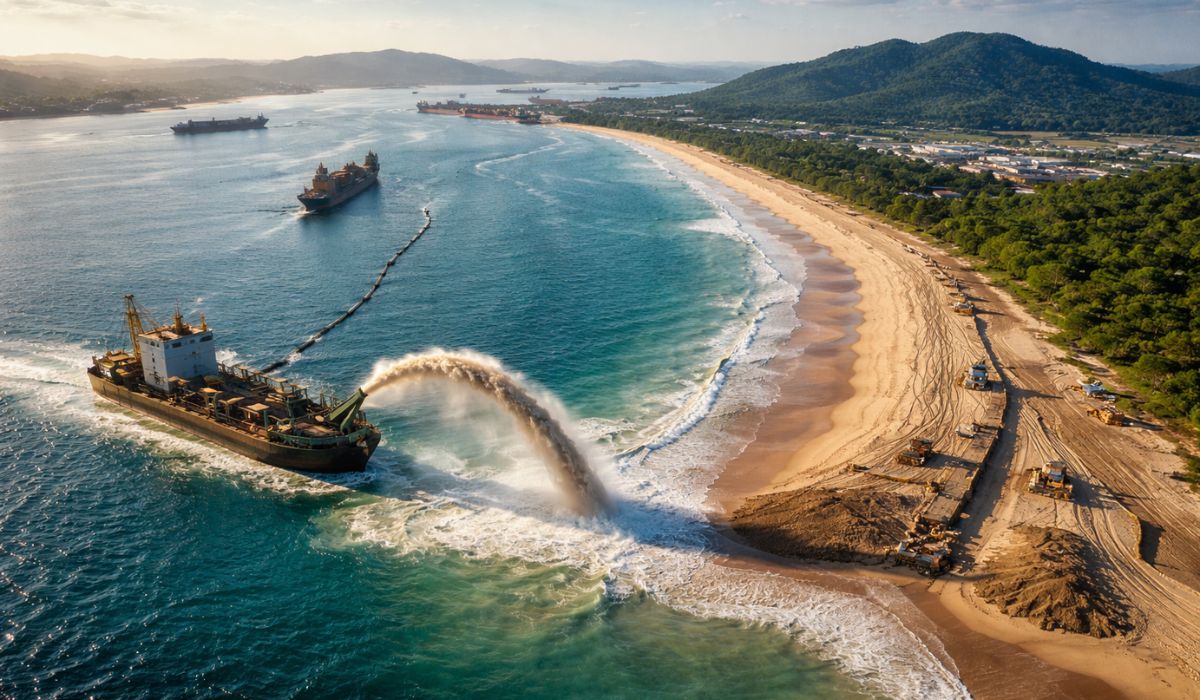


An intervention on the Santa Catarina coast gathered dredging, coastal engineering, and beach recovery in a single operation, transforming the dynamics of the waterfront and the port canal into a case of interest for infrastructure, environment, and navigation.
A project in Itapoá, on the northern coast of Santa Catarina, combines two fronts in the same intervention: the deepening of the access channel to the Babitonga Bay and the reuse of part of the sand removed from the bottom to restore the beach area.
According to information released by agencies and companies involved in the project, this is the largest beach widening ever executed in Brazil and the first initiative in the country to allocate dredged material from port dredging for this type of coastal recovery.
The intervention was structured to enhance navigation conditions in the port area while simultaneously reinforcing a stretch of coastline subject to erosion.
-
How to Prevent Brown Recluse Spider Bites: Common Hiding Spots and Free Tips to Reduce Risks

-
Natto: The Unusual Japanese Superfood Gaining Popularity on Social Media and Driving Record Exports
-
Brazilian Mayor Goes Undercover as Homeless for 24 Hours to Assess Public Services

-
15-Year-Old Entrepreneur Malu Lira Publishes 20 Children’s Books on Financial Education, Earns $500,000, and Expands Her Project to the Amazon Rainforest




The most recent investment officially disclosed is R$ 333 million, with overall completion expected in the second half of 2026.
Dredging in the Babitonga Bay and channel expansion
In the external channel of Babitonga, the project plans to deepen from 14 to 16 meters.
According to the Port of São Francisco do Sul, the change is expected to expand the operational window for the entry and exit of vessels, with less dependence on tidal variations and the possibility of accommodating larger ships.
According to official data, the additional depth will allow the operation of vessels up to 366 meters in length, compared to the previous limit of 336 meters.
The reported projection also indicates an increase in transport capacity, from 10,000 to 16,000 TEUs, a measure used in the sector for containers.

How the sand from dredging is used in beach widening
In practice, dredging removes sediments from the channel to ensure more depth and, in part, redirects this sand to the Itapoá waterfront.
The method is known as artificial beach nourishment, or widening, and is adopted in areas facing loss of sand due to wave action, currents, and storm surges.
The technical note from the Court of Accounts of Santa Catarina describes this type of solution as the execution of hydraulic fills with sandy sediments to mitigate erosion, recover leisure areas, and protect structures in the coastal zone.
Instead of treating all the dredged material as waste, the project uses part of it as input for the recomposition of the beach.
The most recent official communications from the Port of São Francisco do Sul indicate that the work should remove about 12.5 million cubic meters of sand from the channel throughout the entire intervention.
Of this total, the most updated forecast is that 5.8 million cubic meters will be allocated to the beach, while the remainder will go to an ocean area licensed by Ibama.
However, in previous disclosures, different numbers appeared for the total dredged volume and for the portion allocated to the shoreline.
Therefore, the data was treated here based on the most recent official information, without unifying values that still appear distinctly in the public communications of the project.

What changed in the sand strip of Itapoá
The recomposition of the beach has also changed in scale throughout the announced phases.
Information released at the beginning of the work indicated an expansion of 8 kilometers of coastal strip, with sections that could reach up to 200 meters in width.
The first phase executed between October 2025 and January 2026 was presented by the company Jan De Nul as the delivery of an initial base along 8 kilometers, with a minimum width of 40 meters.
According to the company, about 4 million cubic meters of sand were released on the coast in this first phase.
The section received reinforcement along the shoreline to form a wider strip of natural protection against the action of the sea.
Galileo Galilei and the coastal engineering operation
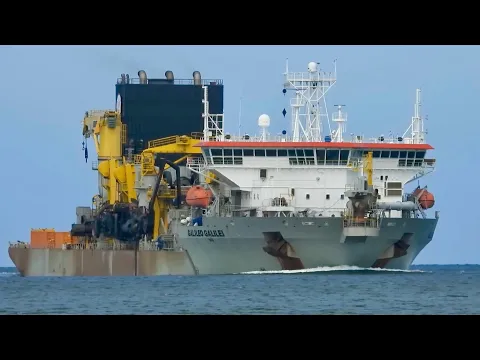
The operation was carried out by the dredger Galileo Galilei.
According to the Port of São Francisco do Sul, the vessel is 166 meters long and has the capacity to transport 18 thousand cubic meters of material per trip, a volume officially compared to 1,800 truckloads.

This type of vessel sucks up sand from the seabed, transports the sediment, and then pumps it to the beach, where the material is spread with the help of machines on land.
The sequence requires coordination between maritime operation and surface work to distribute the sand according to the profile defined in the project.
Restinga, Dunes, and Erosion Monitoring
After the arrival of the sediment, the stability of the new stretch of sand depends on other stages.
In 2026, the project entered the phase of replanting restinga vegetation, a measure identified by technicians and environmental agencies as important for helping to stabilize the dunes and reduce sand mobility.
According to information released by the Port of São Francisco do Sul and reproduced by the regional press, the plan foresees the planting of up to 280 thousand seedlings of six native species by the end of 2026.
The vegetation recovery is part of the attempt to give greater permanence to the new profile of the beach.
Additionally, Itapoá has started using laser monitoring to track the advance of the sea and the evolution of erosion in sections of the shoreline.
The use of this technology allows for more precise measurements of terrain variations and monitoring the beach’s response after the deposition of the dredged material.
The monitoring is considered relevant because works of this type do not end with the pumping of sand.
The evolution of the coastline depends on the behavior of waves, currents, tides, and local sediment dynamics, which requires continuous observation to verify the stability of the recovered section.

Partnership Between Public Port and Private Terminal
The project also draws attention for the institutional format adopted.
The dredging was structured as a partnership between the port authority of São Francisco do Sul and the private terminal of Itapoá, a model officially presented as unprecedented in the country for this type of intervention.
According to the numbers released, R$ 33 million is allocated to the public port and R$ 300 million to the private terminal.
The official forecast is for reimbursement over the following years, based on the increase in movement and the revenues associated with the expansion of port capacity.
Overall, the intervention connects themes that usually appear separately in public debate: port logistics, coastal erosion, maritime engineering, and environmental recovery.
In Itapoá, the sand removed from the channel to facilitate navigation is also being used for beach restoration, as part of a project that combines infrastructure and coastal management in the same operation.