






 Portuguese
  Spanish


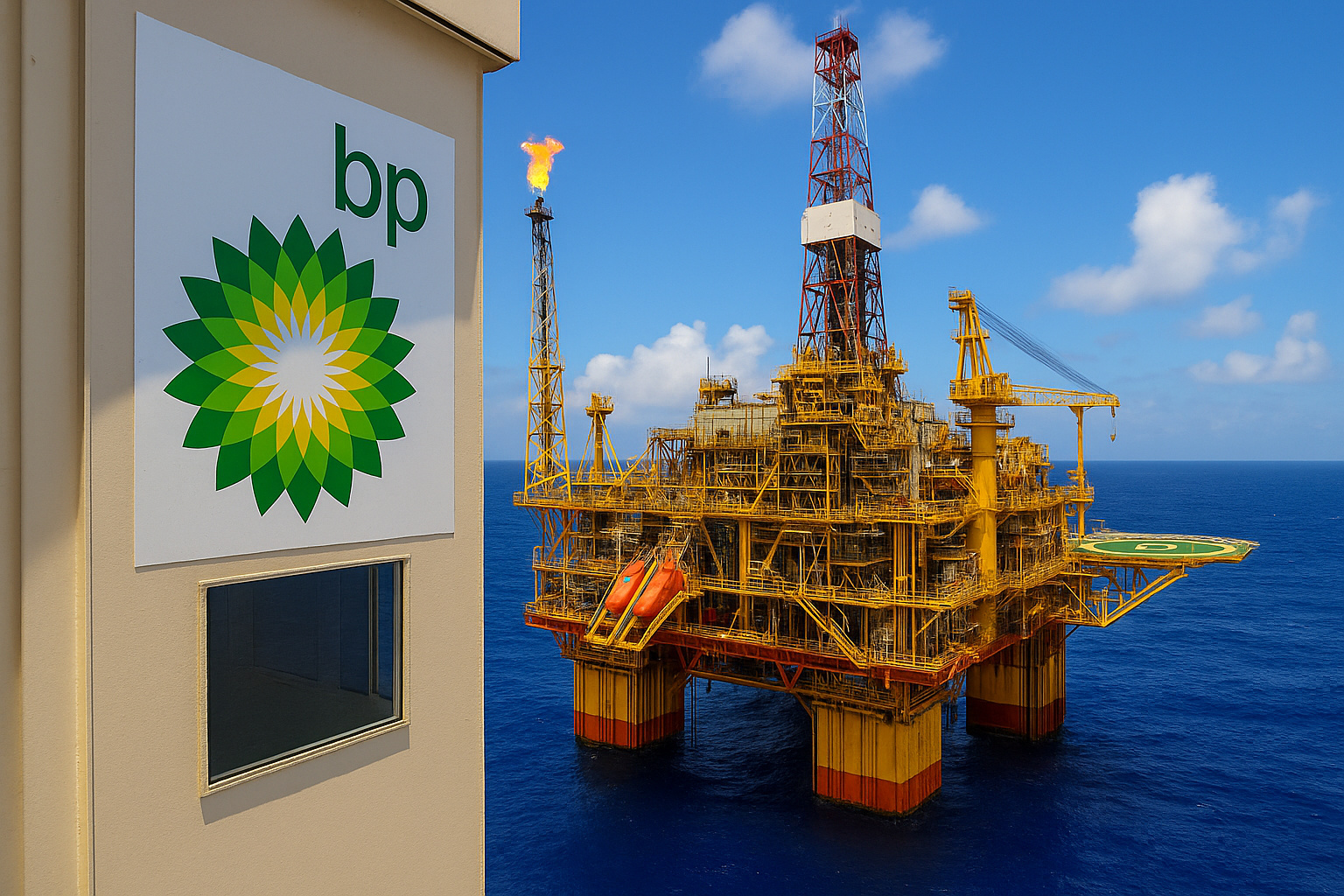
BP Discovers Promising Oil Field and Rekindles Industry Excitement
In August 2024, BP announced the discovery of Bumerangue, a gigantic oil field off the Brazilian coast.
The revelation was described by CEO Murray Auchincloss as the most significant for the company in 25 years.
The announcement resulted in a 8% immediate rise in shares in London, outperforming its peers in the energy sector.
This movement signaled to the market that concerns about stranded assets may be easing.
The announcement also reinforced Brazil’s relevance on the global energy map.
Technical Details of the Offshore Discovery
BP will need months to complete the evaluation of the newly discovered field.
The initial results revealed a hydrocarbon column of 500 meters in the Brazilian pre-salt.
The reservoir may extend over 300 square kilometers, according to energy experts.
The Oxford Institute for Energy Studies estimates a potential of 2 billion to 2.5 billion recoverable barrels.
If fully developed, the project could produce up to 400,000 barrels daily for decades.
This volume would solidify BP’s position in the global market.
The company plans to increase annual upstream investments by 20%, reaching US$ 10 billion by 2027.
The aim is to maintain production between 2.3 million and 2.5 million barrels per day until 2030.
History of Exploration and Stranded Assets
In the last two decades, reserves have always been fundamental metrics for investors in the energy sector.
Between 1995 and 2013, exploration spending rose from US$ 5 billion to over US$ 35 billion annually, according to Thunder Said Energy.
Following the Paris Agreement in 2015 and the decline in oil prices, costs increased and returns shrank.
Companies like ExxonMobil, Chevron, Shell, BP, and TotalEnergies reduced investments to less than US$ 10 billion annually.
In 2024, BP’s reserves were 6.25 billion equivalent barrels, an 8% decrease from the previous year.
This volume equates to only 7.25 years of production, compared to 15 years recorded a decade ago.
-
Oil production grows in Rio, but reserve replacement raises a warning sign

-
Petrobras is expected to complete the drilling of the Morpho well in the Foz do Amazonas in August 2026, the first well in the Equatorial Margin, an oil frontier that the ANP estimates at more than 30 billion barrels and could redraw the map of Brazil.

-
Oil returns to the center of concerns with tension between the US and Iran

-
IEA reduces forecast for global oil demand in 2026 after impacts of the Middle East crisis



Strategic Redirection of Energy Majors
The industry landscape is changing rapidly.
After Russia’s invasion of Ukraine in 2022, energy security gained global prominence.
Global demand also increased with the growth of artificial intelligence, which propelled the need for energy.
Chevron’s CEO, Mike Wirth, stated in August 2024 that recent exploration results were unsatisfactory.
The American company would expand investments, including in new basins like Suriname, Namibia, and Egypt.
Consulting firm Rystad estimated that there are still 1.5 trillion potentially recoverable barrels, but highlighted the need for large financial outlays.
The International Energy Agency predicts demand stability until 2030.
OPEC, on the other hand, expects continuous growth until 2050.
Impacts on the Global Energy Sector
The discovery of Bumerangue comes at a pivotal moment for the energy sector, therefore, it reinforces expectations about the future of the industry.
BP, valued at US$ 93 billion, faces challenges in reserve replacement and, in addition, is under strong pressure from investors to remain competitive.
The Brazilian field could be a game changer, thus, it may redefine the company’s trajectory and, consequently, influence the global sector.
Market enthusiasm reinforces the perception that the era of stranded assets may be coming to an end and, therefore, creates optimism among analysts.
There is also a need to ensure energy supply amid the transition to renewable sources and, thus, BP reaffirms Brazil’s strategic importance.
BP is resuming its strategy from the 2000s and, in this sense, signals that the country remains a key player in the global energy landscape.






-

-

2 people reacted to this.