Portuguese
  Spanish


New Liming Calculation Developed by UFLA, After Ten Years of Research, Corrects Failures of Traditional Methods and Guarantees More Productivity, Better Soil Utilization and Greater Resilience of Crops in Tropical Environments
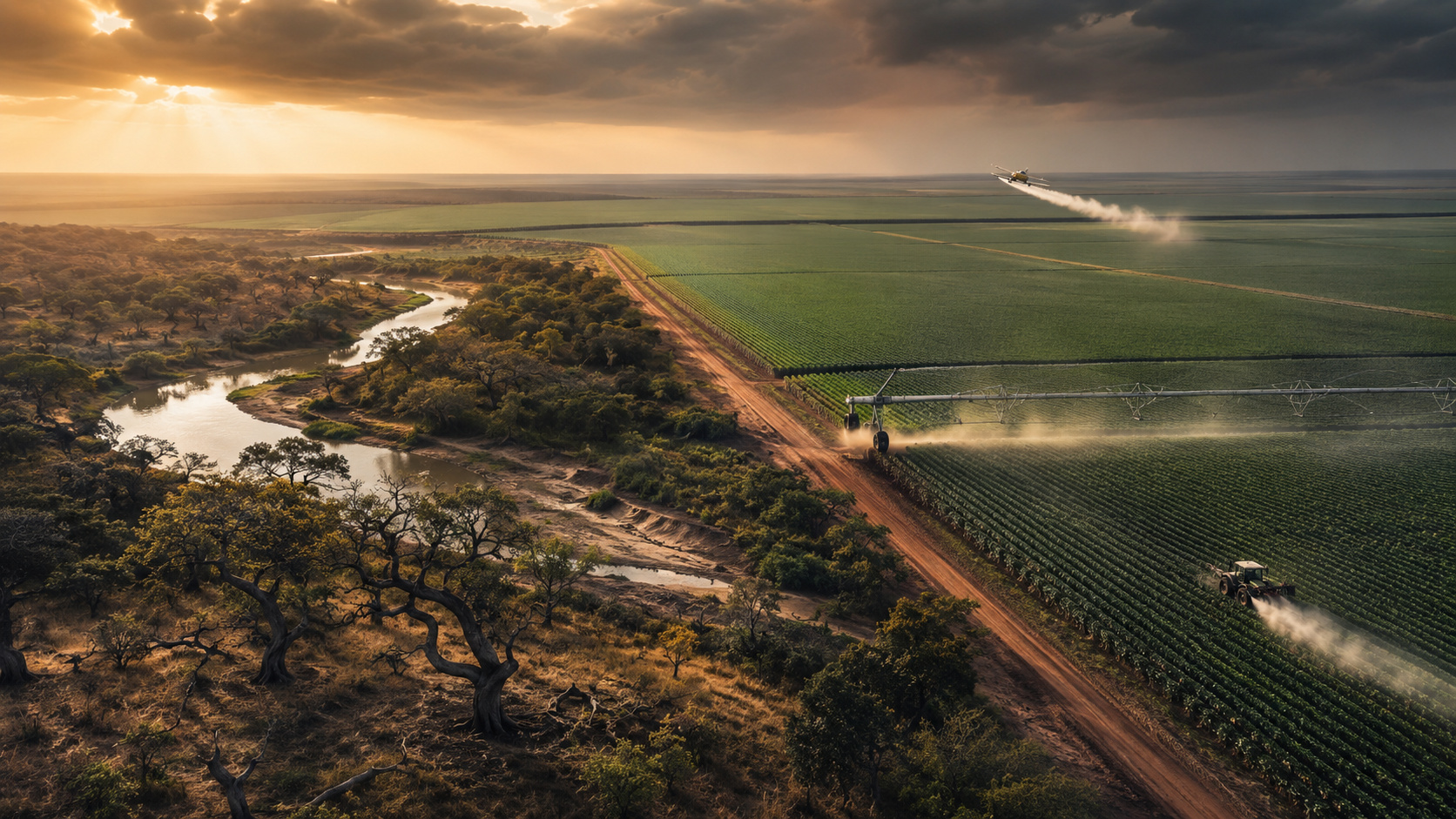
Researchers from the Federal University of Lavras (UFLA) announced an unprecedented solution to one of the biggest challenges of Brazilian agriculture: high acidity and low natural fertility of tropical soils.
The study, published in the international journal Soil & Tillage Research, presents a new calculation method for liming, a fundamental practice in agricultural management.
An Advance After Decades of Experience
The work is the result of ten years of investigations and relies on the nearly three decades of experience of Professor Silvino Guimarães Moreira from the School of Agricultural Sciences of Lavras (Esal/UFLA).
-
India’s Sugar Export Cuts and Ethanol Shift Amid El Niño Threat Could Impact Global Prices and Stocks

-
Quarantine Pest Threatening Palm Trees Puts Brazilian Authorities on Alert, Prompts Monitoring at University of Taubaté and Potential Control Measures Across São Paulo
-
Global Alert: Report Finds 159 Pesticides in Coffee Beans Sold in Europe, Posing Serious Risks to Millions of Farm Workers
-
Low-Demand Brazilian Beef Offal Gains Popularity Abroad: Indonesia Purchases $19.5 Million, Boosting Revenue and Reducing Waste



The method was developed to correct failures in current liming calculations, which often underestimate the necessary doses. This error leads to successive reapplications, wasted time, and extra costs.
In rented areas, the impact is even greater because the return on investment needs to keep pace with the production cycle.
Difference in Relation to Traditional Methods
Unlike conventional practices, the new approach takes into account the relationship between calcium, magnesium, and soil pH.
Recommendations are now made for two depths: from 0 to 20 cm and from 0 to 40 cm. This inclusion of the deeper layer increases the volume of soil explored by roots, improves subsoil fertility, and strengthens plant resilience.
Experiments in Minas Gerais
To verify the effectiveness of the method, the researchers conducted seven experiments in municipalities of Minas Gerais: Ijaci, Nazareno, Ingaí, Uberlândia, Araguari, São João del Rei, and Formiga.
There were four years of testing, covering 14 different crops in varied soils and climates. This diversity added consistency to the results.
Results Achieved in the Field
With the new methodology, the data showed significant increases in agricultural productivity.
In corn, the gains reached 50%, especially in the second crop, during dry spells. In soybeans, yields increased by up to 30%.
Another highlight was the development of root systems at depth. Plants began to access water and nutrients even during periods of water deficit.
The researchers also defined new critical levels of calcium and magnesium. To achieve 95% of potential productivity, 60% calcium is necessary in the 0–20 cm layer and 39% in the 20–40 cm layer.
Voice from the Field
Producer Evandro Ferreira from Fazenda Campo Grande in Nazareno closely monitored the results.
According to him, the research changed the way liming is perceived.
“The so-called high doses of lime do not represent excess, but rather a careful application, adjusted to the actual needs of the soil,” he stated.
On his property, corn crops fertilized with 12 t/ha of lime performed much better than areas corrected with only 3 t/ha.
Practical Application of the Liming Method and Expansion
The method has already been transformed into a practical recommendation formula. It is being used in no-till areas and in agricultural reopening.
Additionally, tests are beginning to expand to perennial crops, such as coffee.
Among the expected benefits are greater efficiency in the use of inputs, reduction of long-term costs, and increased resilience of crops in the face of climate change.
Therefore, this is an advance with a direct impact on food security and agricultural sustainability in the country.
Scientific Contribution and Legacy of UFLA
The study reaffirms UFLA’s tradition as a reference in soil science in Brazil and around the world.
It was conducted by the Research Group in Production Systems (GMAP), which involved about 30 undergraduate, master’s, and doctoral students.
Among the participants are names like Josias Reis Flausino Gaudencio, Flávio Araújo de Moraes, Everton Geraldo de Morais, Devison Souza Peixoto, Hugo Carneiro de Resende, Júnior Cézar Resende Silva, and Otávio Lopes Vieira Campos.
The project originated from Flávio Moraes’ doctoral thesis in 2017 and expanded in 2018 with new research in the Triângulo Mineiro region.
Now, with the international publication, the methodology gains global prominence.
Impact on Tropical Agriculture
For Professor Silvino Guimarães Moreira, the contribution goes beyond Minas Gerais.
“This is a relevant contribution not only for Minas Gerais but for all tropical agriculture, where acidic and weathered soils still pose barriers to high productivity,” he concluded.
With information from Compre Rural.