Portuguese
  Spanish


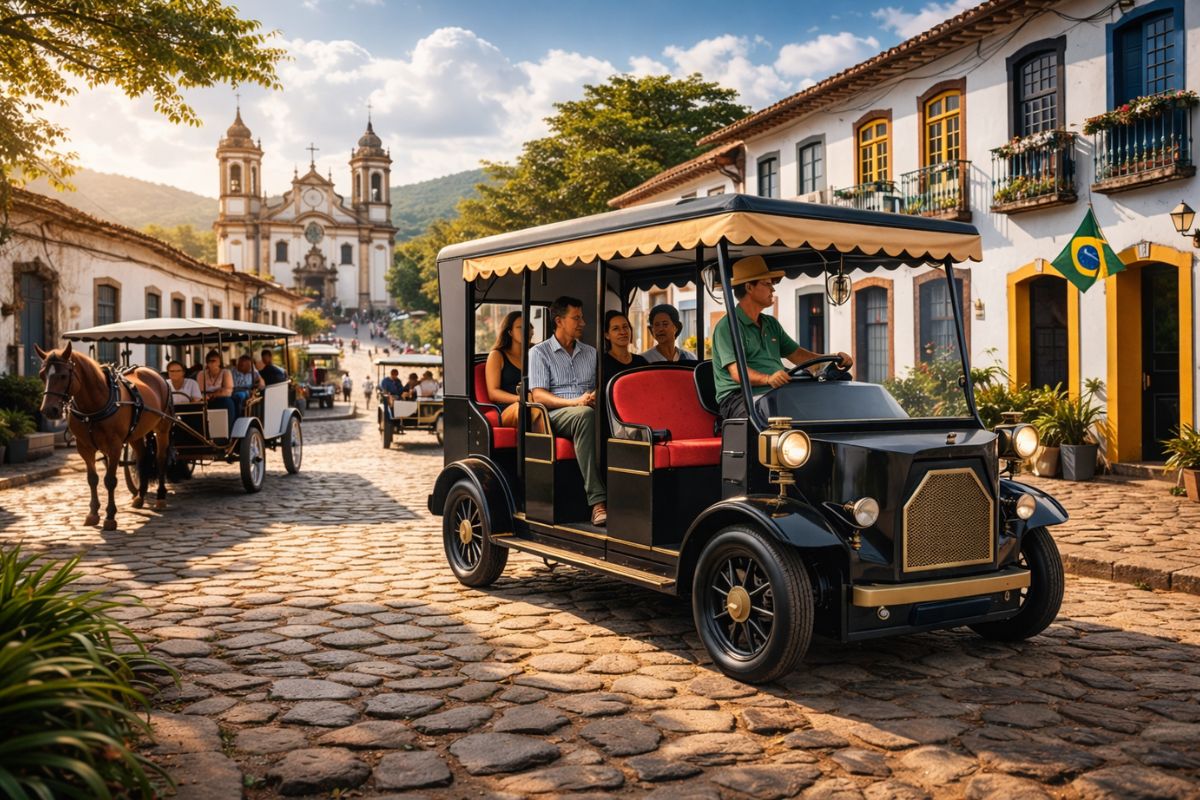

With municipal laws, support from the Public Ministry, and compensations, cities in Minas Gerais maintain the service and reduce risks in the transportation of visitors
Historic and tourist cities in Minas Gerais have begun to replace horse-drawn carriages with electric models, in a transition supported by municipal laws and agreements with the Public Ministry.
The change aims to preserve the traditional ride, but with less risk in the transportation of visitors and without the dependence on horses, following incidents of accidents and concerns about mistreatment.
Why Minas is replacing horse-drawn carriages with electric models
The changes were motivated by risks of animal mistreatment and incidents of accidents involving horses during the operation of the tourist service. Therefore, municipalities began to approve regulations to prohibit animal-drawn vehicles.
-
Amazonas Updates Flag After Over 40 Years to Represent All 62 Municipalities in Historic Legislative Decision

-
Going to travel and leave your pet alone? Brazilian city creates strict rule, targets temporary abandonment, and can fine dog and cat owners up to R$10,000.
-
Traffic jammed between BH and Nova Lima may get significant relief with the Viaduto Ferradura, a R$ 48 million project that promises to connect MG-30 and MGC-356 without passing through the Belvedere junction.

-
Rio Pinheiros catches the attention of those passing by the bike path with less strong odor, more capybaras and birds on the banks, a reduction of up to 55% in organic matter, and a record removal of trash in São Paulo.


In practice, the proposal is to preserve the tourist experience of the carriages, but in a format that reduces critical safety and animal care points.
Tiradentes: agreement with the Public Ministry and delivery of vehicles

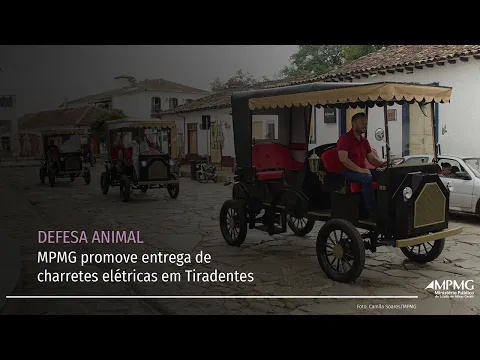
In Tiradentes, the initiative came from an agreement between the city hall and the Public Ministry of Minas Gerais, through the state coordination for animal defense.
In March, ten electric carriages were delivered to the local association, funded by compensatory measures obtained by the agency. The plan is to complete the transition by the end of the year, with the delivery of another 20 units.
After that, horse-drawn carriages will be prohibited in the city, according to municipal law.
What changes for the drivers and for the tourists
Drivers who adopt the new model must turn in their old vehicles and the two horses used in each carriage. The animals will be “retired” and destined for donation.
Prosecutor Luciana Imaculada de Paula stated that there was initial resistance from the association, but the position changed after contact with a prototype. She also highlighted the cost of maintaining two animals per driver, as the horse needs rest between days.
With electric models, drivers will be able to operate until 8 PM, whereas the previous limit was 5 PM. The vehicles also expand circulation to areas where horses had difficulty, in addition to featuring seat belts, capacity for four passengers, and an average speed of 12 km/h.
Poços de Caldas: end of animal traction and compensation during the transition

In southern Minas, Poços de Caldas ended the activity with animal traction on March 13, after the city approved a law prohibiting carriages pulled by horses. The service with electric models will be operated under concession.
During the transition, the legislation provides for compensation to the carriage drivers, paid in installments, and a monthly aid of R$ 3,640 for 12 months for the animals’ feeding during this period. Owners can choose to donate the animals to the zoonoses control center.
The city hall claims that it has guided workers for reintegration into the market and for potential participation in the future concession of electric carriages.
Caxambu and São Lourenço: deadlines, benefits, and prohibition already in effect
In Caxambu, carriages can circulate until May, according to a law sanctioned after guidance from the Public Prosecutor’s Office. In 2024, a mare died in the city while transporting tourists, and the report indicated poisoning.
The city hall reported that it offered registered carriage drivers a benefit of R$ 15,000, which can be used for the purchase of electric models. They will also receive basic food baskets for 12 months.
In São Lourenço, rides in carriages have been prohibited since December 2023. The 35 carriage drivers received R$ 30,000 in three installments and a year of food baskets.
The movement in Minas indicates a transition that mixes tourism, legislation, financial compensation, and reorganization of the service, without ending the activity.
Do you think that replacing carriages with electric models improves tourism or changes the experience too much for those visiting historical cities?