Portuguese
  Spanish



Strategic Partnership Between Porto do Açu and Vale Aims to Develop Hub for Sustainable HBI Manufacturing
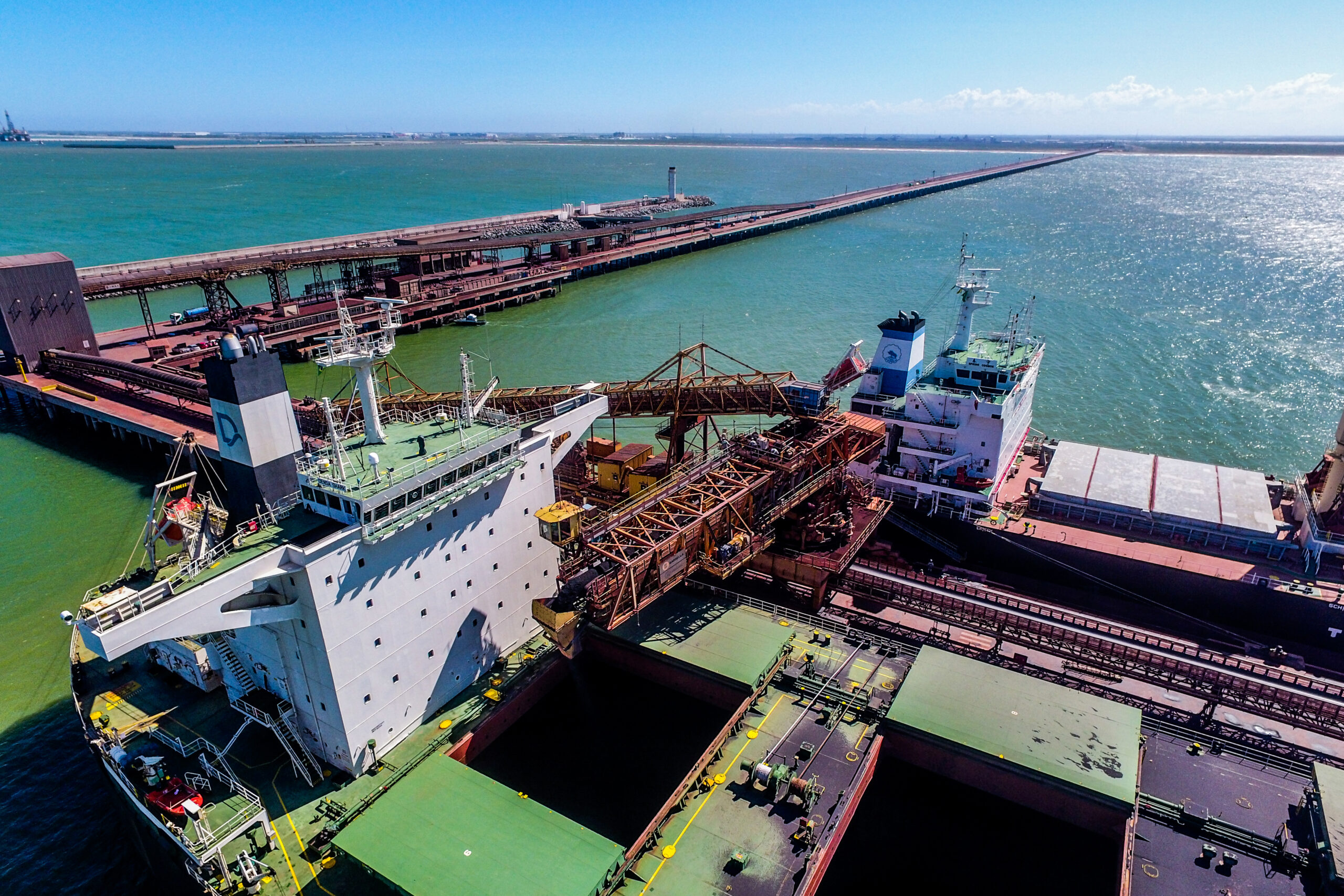
Vale and Porto do Açu are taking a crucial step towards a more sustainable future in the steel industry by signing a Memorandum of Understanding (MoU). This agreement aims to study the development of a mega hub at Porto do Açu, located in the northern region of the state of Rio de Janeiro, for the manufacturing of HBI (Hot Briquetted Iron).
This pioneering initiative is coordinated by Porto do Açu and involves sector academics, focusing on the use of HBI as a partial charge in blast furnaces, aiming to reduce greenhouse gas emissions and increase productivity in steelmaking, without the need to replace existing productive assets, according to the Portos e Navios website.
HBI is currently most commonly used in electric arc furnaces, while most Brazilian steel mills use blast furnaces. Vale’s proposal to use HBI in this type of furnace represents a smooth transition towards the decarbonization process of the steel industry. Vale will explore alternatives for supplying iron ore pellets, such as pellets or briquettes, to support this project.
-
Havaianas: From Humble Beginnings to a $900 Million Global Fashion Icon

-
Helsinki Residents Receive Water That Travels 120 Kilometers Through a Hidden Rock Tunnel from a Lake Before Treatment
-
Canada Builds 6.2-Hectare Containment Box to Trap 615,000 Cubic Meters of Toxic Sediment in Lake Ontario
-
SENAI Launches $36 Million Innovation Round to Boost Brazilian Manufacturing Productivity and Reduce Business Risks with R&D Projects by 2026




Clean Energy and Potential for Green Hydrogen in the Steel Industry
The project plans to produce HBI using natural gas, which will be available at Porto do Açu. Additionally, there is the possibility of converting this production to green hydrogen in the future, which would result in HBI with near-zero carbon emissions in the steel industry. This represents a significant advancement towards a cleaner and more sustainable steel industry.
This agreement with Porto do Açu is part of Vale’s efforts to develop the Mega Hub model in Brazil. These industrial complexes are focused on manufacturing low-carbon steel products. Vale is already implementing this model in three Middle Eastern countries (Saudi Arabia, United Arab Emirates, and Oman). The aim is to transform Brazil into a hub for low-carbon steelmaking, leveraging the country’s natural resources, such as high-quality iron ore and abundant natural gas reserves, along with the potential to develop green hydrogen.
The Potential of Energy Transition at Porto do Açu
The CEO of Porto do Açu, José Firmo, emphasizes the importance of this partnership for energy transition in Brazil. With its unique port infrastructure, strategic location, and competitive prices for Brazilian natural gas, Porto do Açu is well-positioned to significantly contribute to the decarbonization of the steel industry, both domestically and internationally.
The use of HBI in blast furnaces could reduce greenhouse gas emissions by approximately 25%, aligning with the goals for emissions reduction by 2030. This places Brazil on track to become a major producer of HBI, supplying steel mills around the world. This strategic partnership between Vale and Porto do Açu is a significant step towards cleaner, more efficient, and environmentally friendly steelmaking.