Portuguese
  Spanish


With Pilot Production Started, The Japanese Automaker Aims Not Only to Increase Range and Dramatically Reduce Charging Time, But Also to Lower Costs and Battery Size, Transforming The Electric Vehicle Market.
Honda has taken a decisive step towards the future of electric mobility. The company has initiated the pilot production of its own solid-state batteries (SSB), a technology seen as a game changer for the industry. The promise is to end the major nightmares of electric vehicle owners: low range and long charging time. With ambitious goals, Honda plans to launch vehicles with the new technology in the second half of the 2020s.
Honda’s Response to The Challenges of Electric Vehicles
The transition to electric vehicles (EVs) still faces significant obstacles. The “range anxiety”, or the fear of the battery dying before reaching a charger, is a real concern. Additionally, the time required to recharge an EV is considerably longer than refueling a gasoline car. These factors, combined with the high cost of batteries, limit mass adoption.
In this context, solid-state batteries are viewed as the “holy grail” of technology. They promise to solve these problems all at once. By replacing the liquid electrolyte of current batteries with a solid material, they offer greater energy density, ultra-fast recharges, and enhanced safety, as they eliminate the risk of fires. For a traditional Japanese automaker like Honda, mastering this technology is essential to ensure its leadership in the future.
-
Suitcase-sized hydrogen engine spins at 25,000 rpm, nearly doubling the efficiency of conventional cars and replacing exhaust smoke with water vapor

-
1983 Chevrolet Runs Over 100,000 km Without Gasoline, Powered by Wood Chips, Reaches 125 km/h in Airport Test

-
Workshop Converts Giant Tractor Tire Tricycle into a Three-Wheel Drive Hybrid with 36,000-Watt Electric Motor Capable of Climbing Hills

-
Sales of Brazil’s Cheapest Electric Car Halted Before First Deliveries: E-Motors Suspends Emova Easy Due to Import Tax Increase and Rising Freight Costs

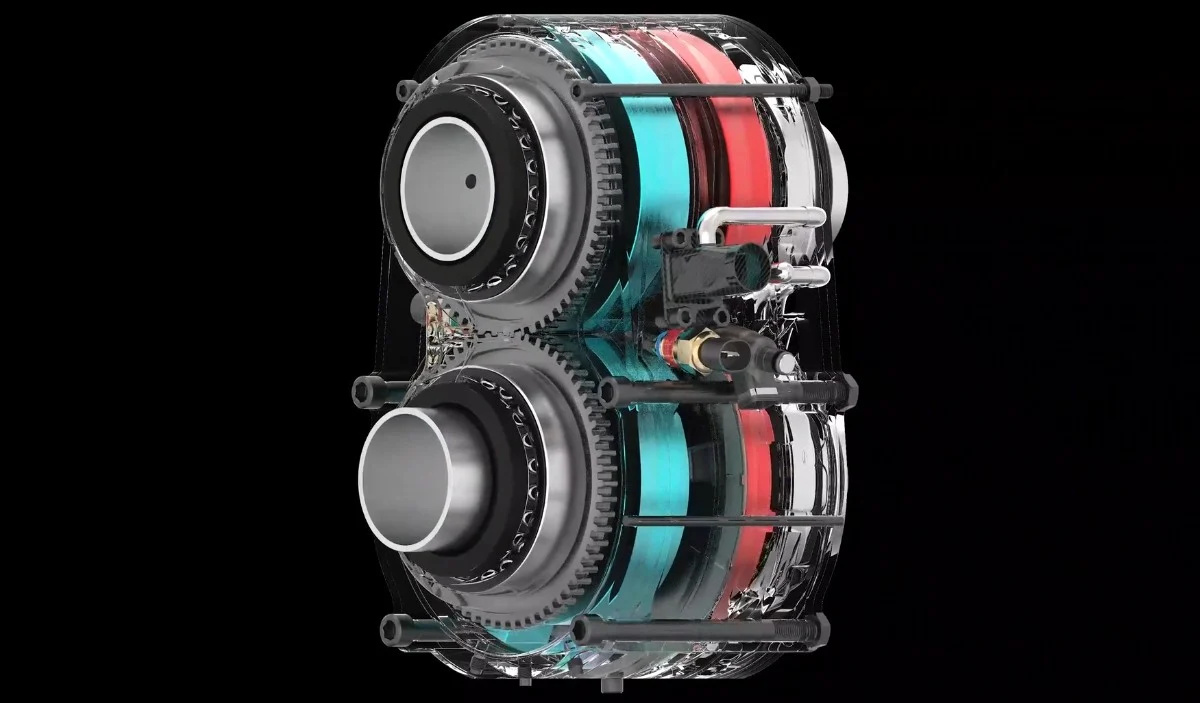



What to Expect from The Honda Battery
It is crucial to clarify the numbers. Although there are talks of ultra-fast recharges, Honda’s official goal for its solid-state battery is a full charge in 10 minutes. This time already represents a giant leap forward.
Range will also receive an impressive boost. Honda projects that its EVs equipped with the new battery will achieve up to 1,000 km on a single charge by 2030. Looking further ahead, the goal is even bolder: to reach 1,249 km by 2040.
Furthermore, the technology allows for other significant improvements. The new batteries are designed to be 50% smaller and 35% lighter than current lithium-ion batteries. This optimization allows for better vehicle design, improved drivability, and increased interior space.
The Japanese Automaker’s Ace in The Technological Race
Honda’s approach to this challenge is its great differentiator. Unlike many competitors who rely on partnerships with other companies, Honda bets on a fully internal development strategy. This allows for greater control over the process, from design to production, accelerating development.
The concrete proof of this strategy is its demonstration production line in Sakura City, Japan. Pilot production officially began in January 2025. In this facility, the company tests and validates the necessary technologies for mass manufacturing, including a proprietary lamination technique that enhances the efficiency and durability of the batteries.
The Challenges and Mass Production
The road to commercialization of solid-state batteries is complex. One of the biggest technical challenges is preventing the formation of “dendrites”, filaments that can cause short circuits. Another critical point is ensuring perfect contact between the solid components of the battery.
Honda is focused on solving these issues with its manufacturing innovations. The strategic goal of the Japanese automaker is clear: to achieve a 25% reduction in production costs compared to current batteries. Making EVs cheaper is essential for them to become competitive and accessible to the general public.
The Impact of Solid-State Batteries
Honda has a clear timeline. The company plans to introduce its first vehicles equipped with solid-state batteries to the market in the second half of the 2020s.
This technology is central to the company’s electrification goals. Honda aims for 40% of its global sales to be EVs and fuel cell vehicles by 2030, rising to 80% by 2035 and reaching 100% by 2040. The success of this battery will not only resolve the “range anxiety”, but could accelerate the energy transition and completely reshape the global automotive market.