






 Portuguese
  Spanish
  5 min of reading
  0 comments


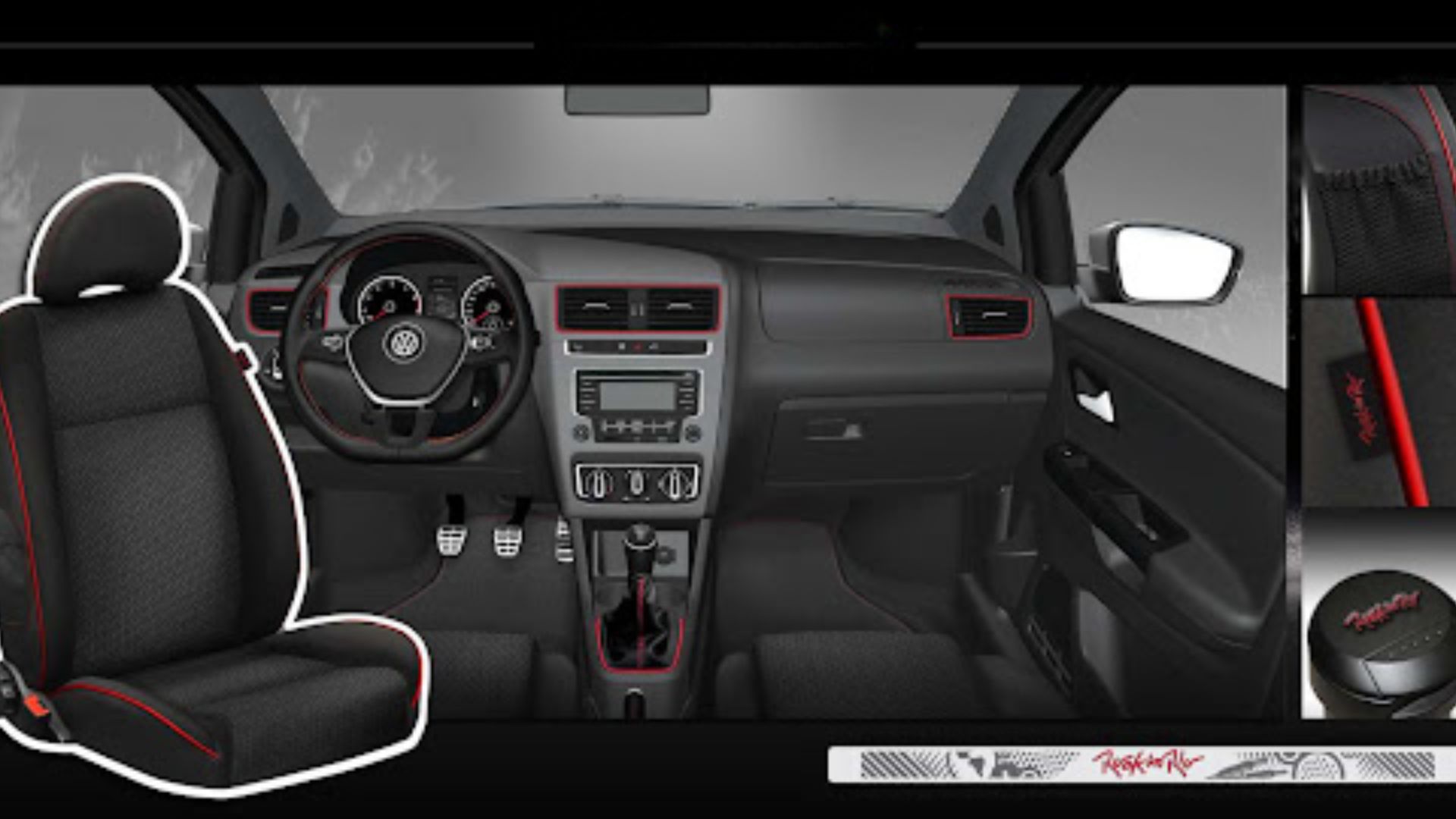
Special Series Brings Exclusive Design, 1.6 Engine of Up to 104 HP and Complete Equipment Package for Price Below R$ 35 Thousand.
Launched as a special series inspired by the music festival, the Volkswagen Fox Rock in Rio features items that still catch attention in used car ads: 1.6 flex engine of up to 104 hp, 15-inch alloy wheels, exclusive design, and leather-wrapped steering wheel with sound system controls.
In the used vehicle market, it is not uncommon to find units listed in the range of R$ 34.9 thousand, especially from the years 2012 and 2013, making the hatch a good option for those looking for a more equipped compact without spending too much.
Special Series Fox Rock in Rio and Proposal in the Market
The Fox Rock in Rio series emerged in the early 2010s as a derivative of an intermediate configuration of the Fox, created to capitalize on Volkswagen’s partnership with the festival.
-
Is the BYD Song Pro worth it? The Anderson Sincero channel says it doesn’t exceed R$ 140,000, and the price dropped by R$ 47,000, reinforcing the depreciation of the plug-in hybrid in the Fipe table.

-
Caoa Changan CS75 arrives for R$ 199,990 with 4.77 m in length, a trunk of up to 1,620 liters, 8-speed Aisin transmission, 180 hp, 37.2 inches in screens, and Zero Gravity seat with massage.
-
Cheaper than a brand new Fiat Cronos, this used SUV offers a giant 516-liter trunk, a 1.0 Turbo 200 flex engine, CVT automatic transmission, and six airbags; the 2023 Fiat Fastback Impetus positions itself as a more complete alternative than the entry-level Cronos for those seeking more for the same budget.

-
The Ford Ranger plug-in hybrid, the same rugged pickup that handles 800 mm of water, becomes a plug-in pickup with a flex-fuel ethanol engine and is chosen as the International Pickup of 2026.


The goal was to associate the hatch with a younger image, featuring an exclusive visual package and a more extensive list of equipment than the entry-level versions.
While the conventional Fox competed mainly on price, the Rock in Rio aimed at the audience willing to pay a bit more for style and comfort differentials but still wanting a compact, easy-to-use car in the city and relatively economical.
Exclusive Design, 15-Inch Wheels and Interior Finish
On the outside, the special series stood out immediately.
The model featured 15-inch alloy wheels with a darkened finish, headlights and taillights with black masks, and shiny black elements on the front grille and mirrors.

Stripes and stickers with the festival logo identified the version and helped differentiate it from regular Fox models on the streets.
The interior also strayed from the standard of simpler versions.
The Rock in Rio featured exclusive fabric seats with red stitching, aluminum sport pedals, and red accents on the dashboard and air vents.
The environment reinforced the thematic proposal of the series, without altering the good driving position characteristic of the Fox, which is a bit taller than the average compact hatchback.
Among the convenience items, the model could come with air conditioning, power steering, power locks and windows, a sound system with auxiliary and USB input, and a trip computer, features that, combined with the multifunction leather steering wheel, provide a level of comfort still relevant for a project over ten years old.
In several ads, it is common to find units with electric mirrors and original sound systems with basic connectivity.
1.6 Engine, Performance and Manual Transmission
The mechanical highlight of the Fox Rock in Rio is the known 1.6 EA111 engine, flex, with eight valves.
On ethanol, it delivers 104 hp of power and about 15.6 kgfm of torque, while on gasoline the figures are 101 hp and 15.4 kgfm, always linked to a five-speed manual transmission.
For a compact hatch, this setup ensures accelerations on par with the category and good agility in urban use.
The suspension solution is simple, with a torsion beam in the rear and a McPherson system in the front, but appropriate for the car’s purpose.
In evaluations from the time, the model was balanced in curves and sufficiently comfortable on uneven surfaces, within the standard of national hatchbacks of the period.
Consumption, Comfort While Driving and Maintenance

Regarding fuel consumption, the Fox Rock in Rio 1.6 is not an economy champion, but it falls within the average for a naturally aspirated 1.6 compact.
Technical data indicate figures around 6.6 to 8 km/l in the city and up to about 11 km/l on the highway with ethanol, with slightly better numbers when fueled with gasoline.
These values may vary depending on the model year, the condition of the vehicle, and usage patterns, but they help position the car as a reasonably efficient option for urban and highway journeys.
In daily use, the mechanical setup tends to please those seeking a car that is simple to maintain.
The 1.6 EA111 engine has been widely used in other Volkswagen models, such as Gol and Voyage, making it easy to find parts and skilled labor familiar with the setup.
The interior space is one of the strong points of the Fox.
The taller body style favors access and improves occupant accommodation, especially in the rear seat, although the trunk is modest for families, with about 260 liters.
Safety Items and Equipment Level
In terms of safety, the scenario varies depending on the year and package of each unit.
There are technical sheets and ads that mention front airbags and ABS brakes in 2012 Fox Rock in Rio models, following the trend of the time to enhance the presence of these items in the compact segment.
However, other sources show versions from the same period without these features, indicating possible configuration differences between batches.
Therefore, it is essential to verify in person if the items are present.
In addition, many vehicles for sale come equipped with items such as alarms, remote key fobs, rear parking sensors, radios with USB and Bluetooth inputs, and height adjustments for the seat and steering wheel.
The presence of these items depends on the originally chosen package and any accessories added later.

How Much Does a Fox Rock in Rio Cost Today
In the used market, the price of the Fox Rock in Rio varies depending on the model year, mileage, and overall condition.
Data from Tabela Fipe indicates an average price of around R$ 35.5 thousand for the 2012 Fox Rock in Rio 1.6 flex.
Classified platforms show offers starting from R$ 34,900 for units with over ten years of use.
In newer or better-kept units, especially from 2013 and 2014, prices may exceed R$ 40 thousand.
Compared to a conventional 1.6 Fox, the Rock in Rio series usually costs a bit more due to the distinct design and equipment list.
Still, for those looking for a 1.6 flex engine, 15-inch wheels, reasonable consumption, and leather steering wheel with controls for around R$ 35 thousand, the model remains one of the most complete alternatives among compact cars of its time.
Would you prefer to invest in a well-maintained Fox Rock in Rio in the price range of R$ 34.9 thousand, or do you consider it more advantageous to look for a more recent hatch, even if it means giving up this equipment package?








Be the first to react!