Portuguese
  Spanish




German Multinational Automotive Parts Technology Company ZF Offers 800-Volt Components for Greater Efficiency in Electric Vehicles
Silicon carbide power electronics emerges as semiconductor technology to achieve greater efficiency and enhanced range, and the German multinational ZF is preparing launches for mass production to serve premium electric vehicle manufacturers in China and Europe. Looking for a job? Resume and work card in hand to compete for the 322 job openings available yesterday for maintenance activities
Read Also
- HR Consultancy has over 1555 job openings for temporary work in various Brazilian regions
- The world’s most powerful steam turbine will leave General Electric’s factories to equip a nuclear power plant in England
- Brazilian drilling company recruits for job openings in Macaé, Bahia, and Espírito Santo today
- Amaggi has job openings for Helpers, Electricians, Mechanics, Technicians, Engineers on this day, March 16
Automakers worldwide are responding to the need for faster charging times for battery electric vehicles, particularly in premium and sports electric vehicles; high-voltage vehicle power supplies are now designed for 800 volts instead of the current 400-volt systems.
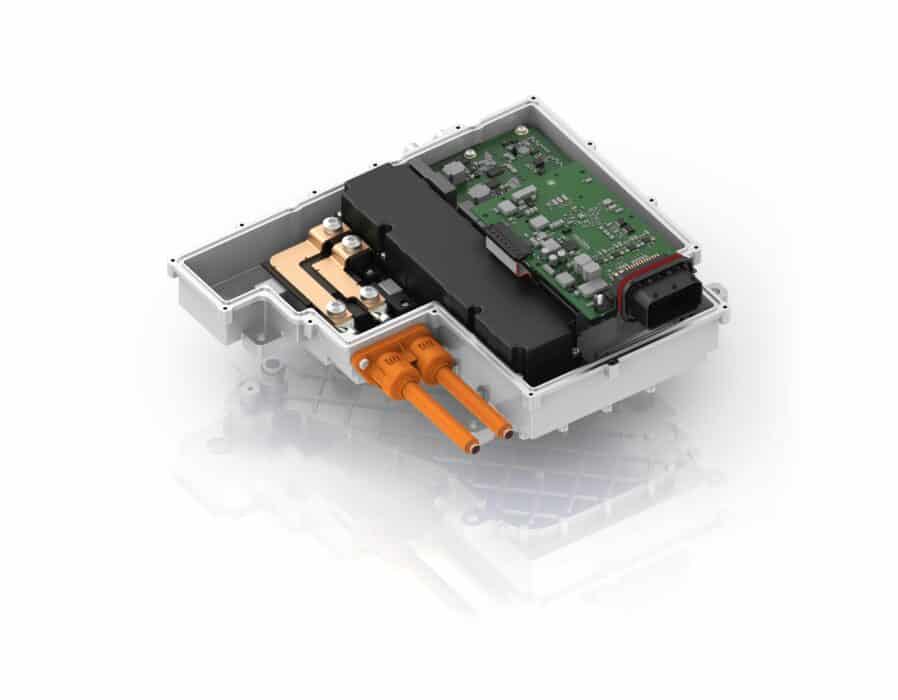
To meet demand, the multinational ZF reinforces this design trend with the development and production of corresponding components for the electric drive line. At its core is power electronics utilizing silicon carbide as a semiconductor.
-
Abandoned Factory in Rio’s North Zone Becomes Urban Hazard with Standing Water and Debris

-
Affordable Housing Project in Brazil’s Mato Grosso Aims for 700 Deliveries and $34 Million in 2026, Outpacing Major Developers in High-Demand Areas

-
Brazil’s Largest Port to Accommodate Bigger Ships by October as Ibama Approves Non-Explosive Removal of Hidden Rocks and Sediments
-
Mexico Develops 3D-Printed Concrete from Corn Waste, Cutting Emissions by 70% and Reducing Construction Waste by 90%


“It is becoming evident that the 800-volt architecture will establish itself in future electric or premium sports cars, while the 400-volt architecture will remain the standard in the larger scale and volume market,” says Bert Hellwig, head of electric drive system development at ZF. “For years, we have provided 400-volt technology for high-volume production, and this year we are preparing to start production for 800-volt applications.”
Charging Time Influences the Efficiency of Electric Vehicles
Charging time plays an important role in the usability of electric vehicles. For electric cars to become sustainable for longer distances, the battery must be able to reach its capacity nearly fully charged in one hour.
A fundamental problem with fast charging is the heat generated by higher currents. This requires thicker or cooled cables. The solution is a vehicle power supply architecture designed for higher performance from the start. For this reason, many electric vehicle manufacturers are planning future vehicles with higher 800-volt systems.
An essential component of drives for electric vehicles is power electronics, whose main task is to convert different types of electrical energy. “We are supplying a Chinese manufacturer with a complete electric drive, including power electronics, intended for various models. For a European sports car manufacturer, the German multinational ZF provides power electronics for high-voltage applications.” Other premium production launches are already anticipated. “By designing power electronics for 800 volts, we can expand synergies between passenger cars and other applications,” says Hellwig.
ZF is using a new chip technology for the first time for application in premium electric vehicles. Rather than silicon transistors, silicon carbide components are used. The experience and knowledge gained from this application will continuously be incorporated into the development of broader production volumes.