Portuguese
  Spanish




Understand Clearly What the No Parking Sign Means, How It Differs from the Total Prohibition Sign, and Avoid Fines. Know When to Stop and Park.
Did you know that the simple confusion between two traffic signs can result in a fine and even points on your driver’s license? Many drivers, especially in busy urban areas, still do not know how to correctly distinguish the no parking sign from the no stopping and parking sign, which can lead to unexpected penalties. This common mistake can be easily avoided with the right information.
The signs that regulate the stopping and parking of vehicles are present in every Brazilian city and play a fundamental role in traffic organization.
However, the incorrect interpretation of the symbols can be costly. According to the Brazilian Traffic Code (CTB), stopping and parking are distinct actions with specific regulations — which you need to know.
-
1983 Chevrolet Runs Over 100,000 km Without Gasoline, Powered by Wood Chips, Reaches 125 km/h in Airport Test

-
Workshop Converts Giant Tractor Tire Tricycle into a Three-Wheel Drive Hybrid with 36,000-Watt Electric Motor Capable of Climbing Hills

-
Sales of Brazil’s Cheapest Electric Car Halted Before First Deliveries: E-Motors Suspends Emova Easy Due to Import Tax Increase and Rising Freight Costs

-
Nissan Discontinues Qashqai SUV Amid Cost-Cutting, Chinese Competition, and Product Line Review




What Is the Difference Between Stopping and Parking According to the CTB?
Before understanding what each no parking sign really means, it is essential to comprehend the legal definition of these two actions.
According to Annex I of the CTB, stopping means immobilizing the vehicle for the strictly necessary time for boarding or disembarking passengers.
Parking, on the other hand, involves any other type of stop that does not fit into this context, including leaving the car with the engine running or with the driver inside.
Therefore, even a “quick stop” can be considered irregular parking, depending on the local signage. This applies to both app drivers and parents who stop in front of their children’s school.
No Parking Sign: What Does It Mean?
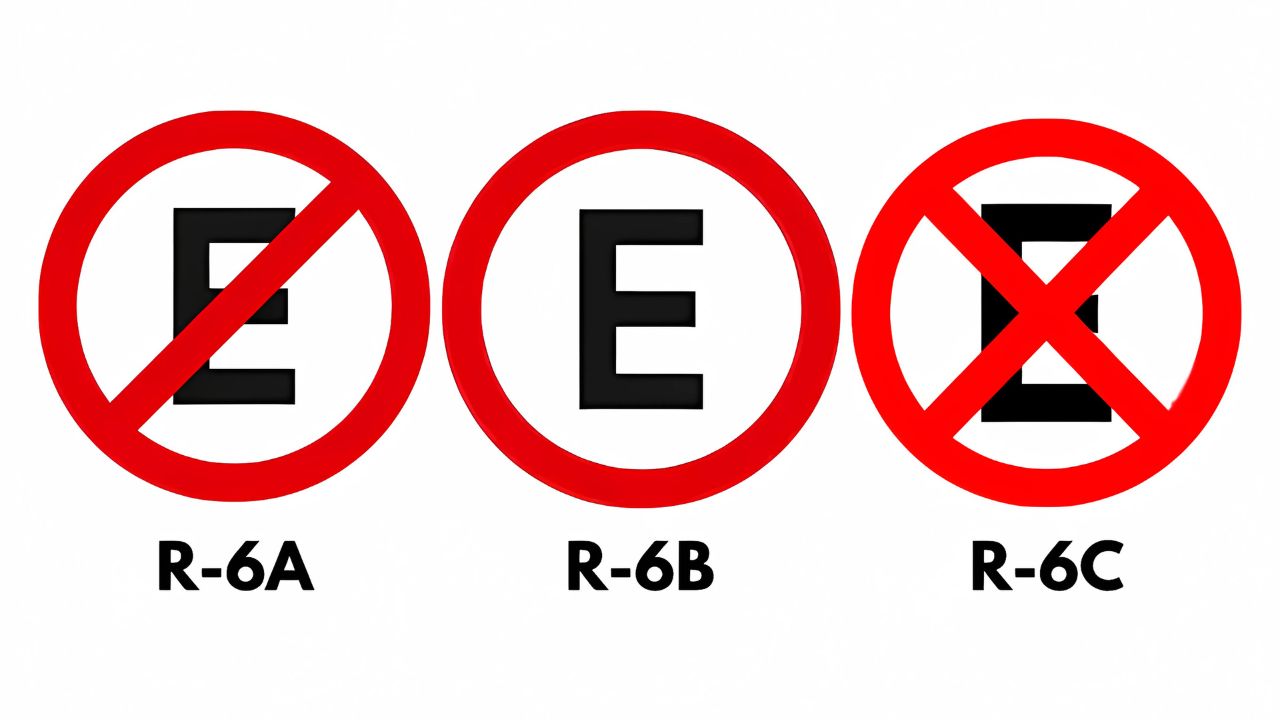
The no parking sign is represented by the letter “E” crossed by a single diagonal red band.
It indicates that, in that section of the road, only brief stops are allowed for someone to enter or exit the vehicle — but parking, even for a short time, is prohibited.

This type of signage is quite common in front of schools, hospitals, and loading and unloading zones, locations that require smooth traffic flow.
No Stopping and Parking Sign: Extra Attention
The sign with the letter “E” crossed by two red bands forming an “X” indicates total prohibition: neither stopping nor parking is allowed.

That is, even immobilizing the vehicle for a few seconds can result in a violation. This is provided for in Article 182, Section X of the CTB:
“Art. 182. X – in places and times specifically prohibited by signage (Sign – No Stopping):
Violation – medium (4 points);
Penalty – fine (R$ 130.16).”
The regulatory sign required for this violation is R-6c, which clearly indicates the complete prohibition.
Understand the Different Signs and How to Identify Them
In addition to the traditional R6A (no parking) and R6C (no stopping and parking) signs, there is also the R6B sign, which allows parking, provided that additional conditions are observed, such as:
- Permitted hours;
- Type of vehicle;
- Duration of stay;
- Loading and unloading;
- Exclusive spaces (elderly, disabled, motorcycles, bicycles, etc.).
Another important detail is the indication of start and end on the signs.
When the sign has the inscription “START,” it marks the beginning of the prohibition, valid until the next corner or until another signage. The sign with the word “END” indicates the endpoint of the restriction.
In the absence of these words, the general understanding is that the entire block is subject to the rule.
And What about the Famous Yellow Line on the Curb?
Have you seen the no parking sign with the phrase “ON THE YELLOW LINE”? This variation serves the same purpose as the traditional sign but depends on the presence of the yellow line painted on the curb to be effective.
This requires constant maintenance by the public authorities, as horizontal signage can wear away over time and impair the clarity of the prohibition.
Why Is It Important to Understand These Signages?
Avoiding fines, of course, is one of the main reasons. However, understanding the meaning of the no parking sign and its variations also contributes to safer and more organized traffic.
Moreover, respecting these signages helps maintain the flow of streets, reduces congestion, and facilitates access for essential services, such as ambulances, buses, and emergency vehicles.
Correctly interpreting the no parking sign and other traffic signs can prevent headaches, financial loss, and safety risks.
Therefore, before you “make that quick stop,” carefully observe the signage around you. Sometimes, five seconds can mean four points on your driver’s license and more than R$ 130 in fines.
Sources: AutoPapo and Setas Sinalização.