





 Portuguese
  English
  Spanish
  4 min of reading
  37 comments


NASA Reveals Existence Of Electric Field Around Earth That Is Expelling Pieces Of Our Atmosphere Into Space
The NASA, always at the forefront of cosmic exploration, has made a fascinating discovery that sheds light on an unknown aspect of Earth’s atmosphere. For the first time, scientists have detected a planetary electric field around the Earth, known as the ambipolar electric field. This discovery, made through the suborbital rocket Endurance, is seen as fundamental to our planet as the magnetic and gravitational fields we already know.
The concept of a planetary electric field is not new; in fact, it was initially theorized over 60 years ago. However, it is only recently that researchers have been able to measure it directly. The study, the findings of which were published in the prestigious journal Nature on August 28, opens new doors to understanding how Earth’s atmosphere has evolved over time and how it behaves today.
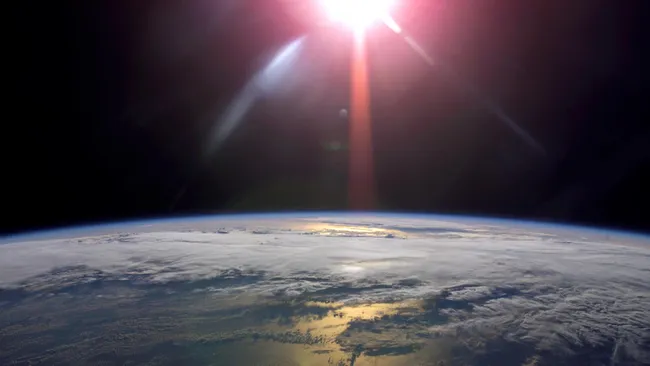
An Invisible Powerful Field
“Any planet with an atmosphere must have an ambipolar field“, explains Glyn Collinson, principal investigator of the Endurance mission at NASA’s Goddard Space Flight Center. Now that the field has finally been measured, scientists can begin to unravel the mysteries of how it has shaped our planet and other celestial bodies over the ions.
-
The USA looks at mountains of accumulated nuclear waste and considers transforming used fuel into a new energy source, in a plan that could reduce waste, reuse uranium, and supply long-lasting military systems.

-
Federal Police helicopter drops 12,000 kg of seeds in Brazil in an aerial reforestation operation that transforms seed bags into green rain and aims to plant 100 million trees by 2030, starting with areas in Paraná.
-
In the Xinjiang desert, China erects a giant chemical plant over 390 billion tons of coal, deploys 300 driverless trucks to work nonstop, and uses robotic arms that swap batteries in 6 minutes to reduce dependence on oil.
-
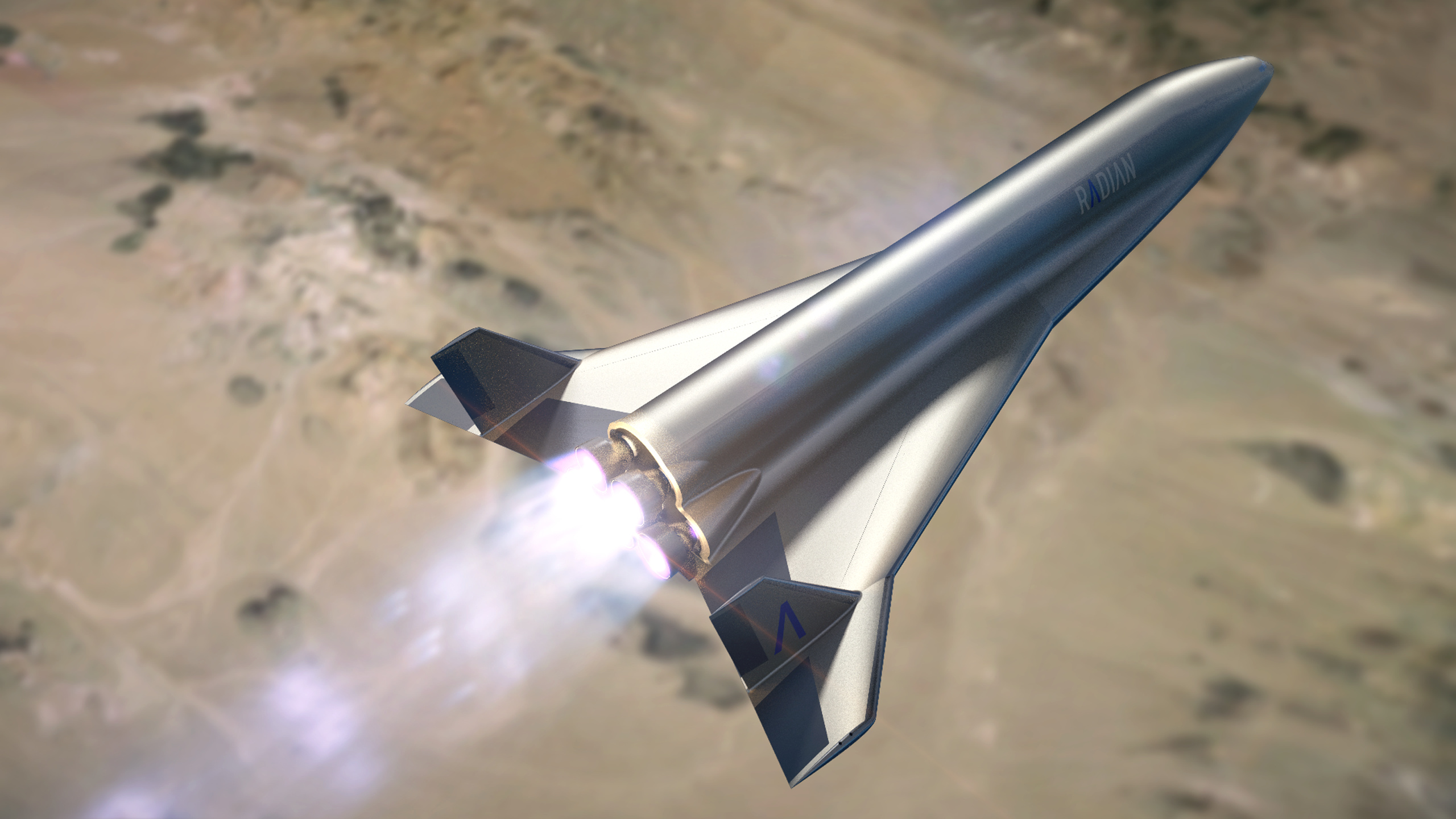
The spaceplane that promises to take off from a runway, reach orbit with up to five people, return in just 48 hours, and repeat 100 missions per vehicle: the Radian One aims for on-demand operation in 90 minutes and attempts to turn the “Holy Grail” of space aviation into commercial reality.


This electric field resides in a layer of the atmosphere called the ionosphere, located between 60 to 300 kilometers above the Earth’s surface. In this region, ultraviolet radiation from the Sun bombards the atoms present, stripping electrons and turning them into ions. Theoretically, this process creates a slight electric field around Earth, just like around other planets that have similar atmospheres.
The first indications of the existence of this electric field were detected in 1968 by spacecraft flying over the North and South Poles of Earth. These indications manifested in the form of a “polar wind“, a flow of particles escaping from the atmosphere into space.
Some of Earth’s atmosphere always escapes into space, especially when heated by sunlight. However, the polar wind presented an intriguing puzzle: the particles in this flow were cold, meaning they had not been heated, yet somehow still moved at supersonic speeds.
Exploring The Enigma Of The Polar Wind
This anomaly has intrigued scientists for decades. “Something had to be pulling these particles out of the atmosphere”, stated Collinson. Detecting this field, however, proved to be a formidable task. The field is extremely weak, with fluctuations that can only be detected at distances of hundreds of kilometers.
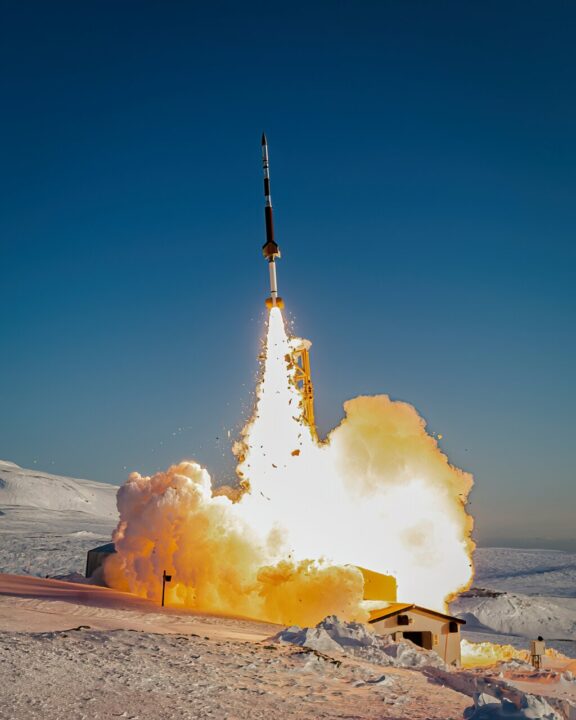
To investigate the origins of the polar wind, the research team launched the Endurance rocket from a base in Svalbard, near the North Pole. The rocket reached an impressive altitude of 768.03 kilometers before plunging into the Greenland Sea just 19 minutes later.
During the mission, Endurance collected data over a distance of 518 kilometers, detecting a tiny change of 0.55 volts, a voltage difference comparable to that of a small watch battery. However, this voltage difference is sufficient to push hydrogen ions, the particles most abundant in solar wind, with a force 10.6 times greater than Earth’s gravity.
“This force is more than enough to overcome gravity and, in fact, is powerful enough to launch atmospheric particles into space at supersonic speeds“, explained Alex Glocer, co-author of the study and scientist on the Endurance project at NASA Goddard. “It’s like a conveyor belt, lifting the atmosphere into space“, added Collinson.
Future Implications
Now that the ambipolar electric field has finally been detected, scientists are eager to study it in more detail. Understanding this field can teach us a lot about how it has altered Earth’s atmosphere over billions of years. Furthermore, the detection of this field on our planet opens up the possibility of finding it on other planets with atmospheres, such as Venus and Mars.
The study of the planetary electric field around Earth not only provides us with a deeper insight into the dynamics of our atmosphere but may also help answer fundamental questions about the atmospheric evolution of other celestial bodies. With these discoveries, NASA continues to push the boundaries of human knowledge, paving the way for a more complete understanding of our place in the universe.







Eu consegui hacker a nasa, eu quero 100 bilhões para guardar os arquivos que eu tenho em mãos, meu nome é Fhdkavr
Melhor você negociar a devolução dos dados, acredito que eles não ao vão querer te pagar para voce guardar na gaveta o disket, possivelmente junto com a foto da sua………..!
Bom dia pra vcs tb!!
Então quer dizer que não foi a nada que descobri? Já existia 🤣😂🤣😂😂😂
Descobriu