






 Portuguese
  Spanish


Once a Disposable Byproduct of Oil, the Gas Cylinder Became Essential in Brazilian Kitchens and a Symbol of Domestic Modernization. Discover the Origin and Impact of This Invention That Still Resists the Technological Era.
In the Brazilian imagination, the gas cylinder is as common as the stove or refrigerator. But few know that behind this seemingly simple metal cylinder lies a story of technological, social, and economic transformation that forever changed domestic life in the country — and it begins, curiously, with a waste considered useless in the oil industry. Today, even in the midst of the electrification era and smart homes, the gas cylinder remains present in about 90% of Brazilian households, resisting the passage of time and changes in energy paradigms. To understand this permanence, it is necessary to go back in time and follow the trajectory of LPG (Liquefied Petroleum Gas) — from its origin as an unwanted byproduct to becoming essential for cooking, heating, and even powering vehicles.
From Refinery Waste to the Fuel of the Domestic Future – Kitchen Gas Cylinder
LPG emerged in the early 20th century, when refineries began to realize that, during the crude oil refining process, part of the product generated highly flammable gases. Initially, these substances — which we now know as propane and butane — were discarded or burned in flares, since there was no technology or market to utilize them yet.
The change began in the United States in 1910 when the chemist Walter O. Snelling discovered that this gas could be compressed and stored in liquid form in metal cylinders. This allowed for the safe transportation and use of LPG in areas without access to piped natural gas. In 1912, Snelling sold his patent for US$ 50,000 (a fortune at the time), and soon the industry recognized the potential of a portable, efficient, and cleaner fuel than coal.
-
OPEC+ Boosts Oil Supply by 188,000 Barrels per Day in July 2026, Leading to Price Drop from $112 to $89 per Barrel in Under Two Months

-
TotalEnergies Signs 20-Year Deal to Purchase 2 Million Tons of LNG from Alaska, Boosting Project Viability
-
Turkey Deploys Çağrı Bey Drilling Ship to Explore New Oil Frontier Off Somalia’s Coast
-
Golden Pass LNG Ships First Liquefied Gas Cargo from the U.S., Completing $10 Billion QatarEnergy and ExxonMobil Investment

When the Kitchen Gas Cylinder Arrived in Brazil
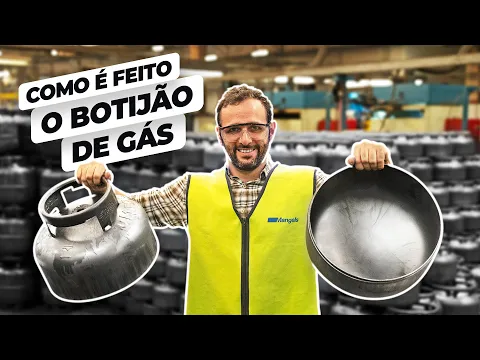

In Brazil, kitchen gas arrived officially in 1937, with the first initiatives from Esso Brasileira de Petróleo. But it was only in the 1940s that the gas cylinder began to spread among Brazilians, especially in urban areas. Until then, the country was primarily rural, and the wood stove reigned supreme, even in cities.
The first cylinders were large, heavy, and poorly standardized, but they were quickly adopted by the middle class as symbols of comfort and progress. In no time, the gas stove replaced the wood stove, bringing a silent revolution into the kitchens: it was possible to cook without smoke, without mess, quickly and with flame control.
In rural areas, the gas cylinder took longer to arrive, but its presence expanded as road infrastructure and distribution models evolved. Today, even in remote parts of the Amazon, LPG is delivered by boat or helicopter.
The Iconic Design and Standardization of the Cylinder
The shape we know today — the P13 gas cylinder of 13 kg — was standardized to facilitate transportation, refilling, and storage. This model became ubiquitous in Brazilian homes and is still the most used, although there are smaller (P2, P5) and larger (P20, P45) versions for commercial uses.
The metal cylinder is built to withstand high pressure and has safety systems that prevent explosions in case of overheating. Nevertheless, the myth of the gas cylinder explosion persists — despite being extremely rare and almost always linked to human errors, such as poorly managed leaks.
LPG in Brazil: Between Economy and Politics
LPG is strategic for Brazil. According to data from the ANP (National Agency of Petroleum), about 28 million cylinders are filled and distributed per month in the country, supplying both families and small businesses.
However, the price of the gas cylinder has historically been sensitive — being used as a indicator of the cost of living and often as a political thermometer. Over the decades, the government has intervened in prices several times, with subsidy policies, controls, and even freezes, as occurred during the Cruzado Plan and more recently with the creation of the Vale Gás for low-income families.
Additionally, Brazil imports part of the LPG it consumes, which makes the sector vulnerable to exchange rate fluctuations and international market conditions.
Why Does the Gas Cylinder Still Resist in the Era of Electricity?
In times of electric ovens, induction cooktops, and debates about energy transition, the gas cylinder remains the primary cooking method in Brazil. This occurs for several reasons:
- Cost-Effectiveness: Despite variations, LPG is still cheaper than cooking with electricity in regions where energy tariffs are high.
- Autonomy: A 13 kg cylinder lasts, on average, 30 days with moderate use — which is especially appealing to those who do not want to depend on the electricity grid.
- Infrastructure: In millions of homes and communities, there is no piped gas network, and not everyone has easy access to modern electric appliances.
- Culture and Tradition: Brazilians are accustomed to gas stoves. Cultural adaptation to induction cooking, for example, is still low.
Innovations and the Future of the Cylinder
Even a traditional product like the gas cylinder has not remained immune to innovation. Today, there are already:
- Composite Fiber Cylinders, lighter and transparent, showing the gas level;
- App Monitoring Systems, which alert when it’s running low;
- Smart Refilling and Subscription Delivery, in large urban centers.
Moreover, there are studies on the progressive replacement of LPG by biogas, bioLPG, or renewable synthesis gas, which could reduce the carbon footprint of domestic use without changing the already installed infrastructure in homes.
A Symbol of Progress and Permanence
What began as useless waste from the oil industry has been transformed into a universal domestic fuel through engineering, necessity, and innovation. The kitchen gas cylinder is more than just a common item — it is proof of how technology, when accessible, can shape habits, transform routines, and endure over time.
In a world where everything seems to evolve every semester, the silver cylinder remains there: quietly in the corner of the kitchen, sustaining food over the flame, the smell of lunch, and the life that unfolds around the stove.







Esqueceram de mencionar a “moda botijão” cujas capas feitas com sacos plásticos de leite nos anos 70 e 80 (assim como as capas de liquidificador) deram um toque sofisticado para esse objeto tão presente nas cozinhas dos lares brasileiros.
Com o tempo as capas feitas com sacos de leite foram substituídas por capas compradas prontas. Os mais humildes compravam capas feitas de plástico enquanto os mais sofisticados compravam capas metálicas, verdadeiras armaduras dos botijões a gás.
Hoje, ter um botijão de gás na cozinha é coisa de pobre ou de classe média baixa, entretanto possuir esse utensílio doméstico é algo que demonstra claramente o abismo social da sociedade brasileira e a falência desse sistema, que poderia ser estudado por antropólogos.
Quem sabe daqui a mil anos o uso de fogo nas nossas cozinhas nos equipare aos neandertais, lembrando que os neandertais apesar de mais fortes fisicamente e com maior capacidade craniana do que os sapiens desapareceram da face da Terra.