






 Portuguese
  Spanish


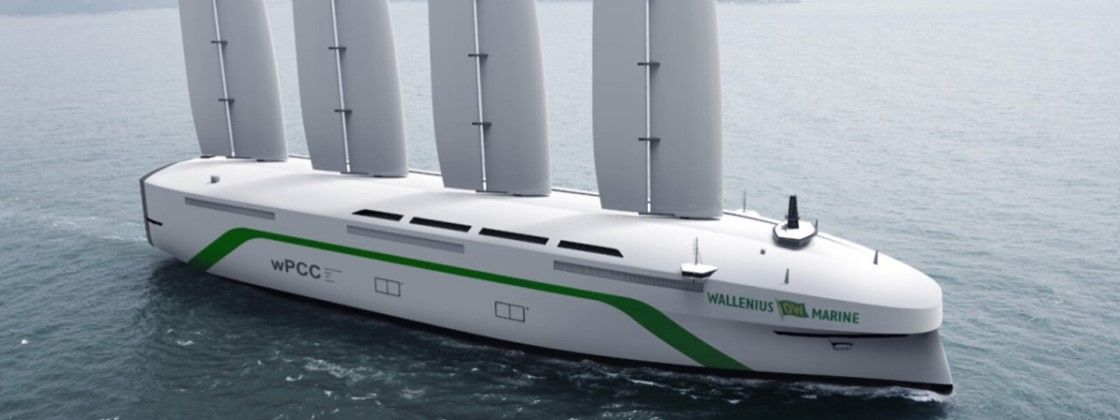

Wind-Powered Ship Uses Wings Instead of Sails, Along with Other Technologies; The Future Has Arrived
A Swedish consortium formed by the KTH Royal Institute of Technology in Stockholm, the maritime consultancy SSPA, and under the supervision of the ship designers at Wallenius Marine, has developed the Wind Powered Car Carrier (wPCC), a transatlantic cargo ship powered by wind energy.
Read Also
- Over 2,000 Job Openings to Work on Vale and ArcelorMittal Projects in ES
- Gaucho Naval Industry Frustrated Because MODEC Chose Brasfels Over EBR
- Electric Cars: The Advantages and Challenges Brazil Will Face
- Wind Turbine Blade Removed from Highway Two Days After Accident That Resulted in the Death of Two People in Ceará
While the electric vehicle segment for end users has been experiencing strong growth in recent years, commercially, it has not made significant strides, especially when it comes to maritime transport using wind energy.
Electric ships are not a very close approach to electric cars, as the weight of batteries would have much more relevance at sea than on land. Therefore, instead of using batteries, the wind-powered ship uses “sails” that are driven by the force of the wind, transmitting the thrust to the hull, just like a sailing boat.
-
Giant Batteries Take Center Stage in Chile Auction as Company Offers 960 GWh of Solar Energy for Nighttime Use, Aiming to Stabilize Solar Power Supply

-
Eni Acquires 25% Stake in Chilean Lithium Project, Plans to Invest Up to $225 Million in Eco-Friendly Extraction Method
-
After a Year of Success in Switzerland, Solar Railway Attracts Italy’s Interest for Clean Energy Transformation
-
French Brand Transforms 6 Million Brazilian PET Bottles into Sustainable Sneakers for Global Fashion Market




Up to 90% Cleaner Than Common Ships
The wPCC is slightly shorter than a medium-sized container ship, but it is much taller due to the sails. It measures 200 meters in length, 40 meters in width, and 100 meters in height, with 20 meters being the ship itself and an additional 80 meters for the sails.
For safety reasons and to enter and exit the port, the cargo ship will have additional engines, which should be electric, in order to maintain its sustainable aspect. Speaking of sustainability, the wPCC will be able to transport up to 7,000 vehicles, emitting up to 90% less gas than a fossil fuel-powered ship of the same size.
The wPCC is expected to begin operations in 2024, and for now, it only has one disadvantage compared to vessels using non-renewable energy: it will take 12 days to cross the Atlantic, nearly double the time required for a common ship, which crosses the ocean in seven days.







