Portuguese
  Spanish


New York launched its first urban forest plan with the goal of raising the city’s tree canopy from 25% to 30% by 2040. Climate director Louise Yeung warns that the city could face 35 days per year above 35°C in the 2050s, compared to only four currently, and that neighborhoods without trees already record temperatures up to 12 degrees higher than tree-lined areas.
New York has just officially recognized that its trees are infrastructure as essential as sewers, bridges, and subway lines. The city’s first urban forest plan was launched this week with an ambitious goal: to raise the tree canopy from just under 25% to 30% by 2040. The decision is not cosmetic. Climate projections indicate that the city could face 35 days per year with temperatures above 35°C in the 2050s, compared to only four days in a typical current year.
The urgency is explained by a fact that exposes climate inequality within the city itself. The temperature difference between neighborhoods with high tree canopy and those with only 6% trees already reaches 12 degrees today. On a summer day, walking down a shadeless street where asphalt and concrete radiate heat back is a radically different experience from walking along a tree-lined street. The urban forest plan aims to reduce this disparity by investing first in neighborhoods that have historically received fewer trees and less public investment.
Why trees are climate infrastructure and not just decoration

According to information from NY1 and Spectrum News Journal, New York‘s plan treats trees as a tool to combat climate change, not as a landscaping element. In addition to providing shade that reduces street temperatures, trees capture rainwater and help prevent floods, a growing problem in a city facing increasingly intense storms. They also purify the air, absorb carbon, and generate proven benefits for the population’s mental health.
-
Viking Textile Factory Unearthed in Denmark Reveals Ancient International Trade Links

-
Bruno Guimarães, 28, Misses Crucial Penalty Against Norway in World Cup After Replacing Vinicius Jr.

-
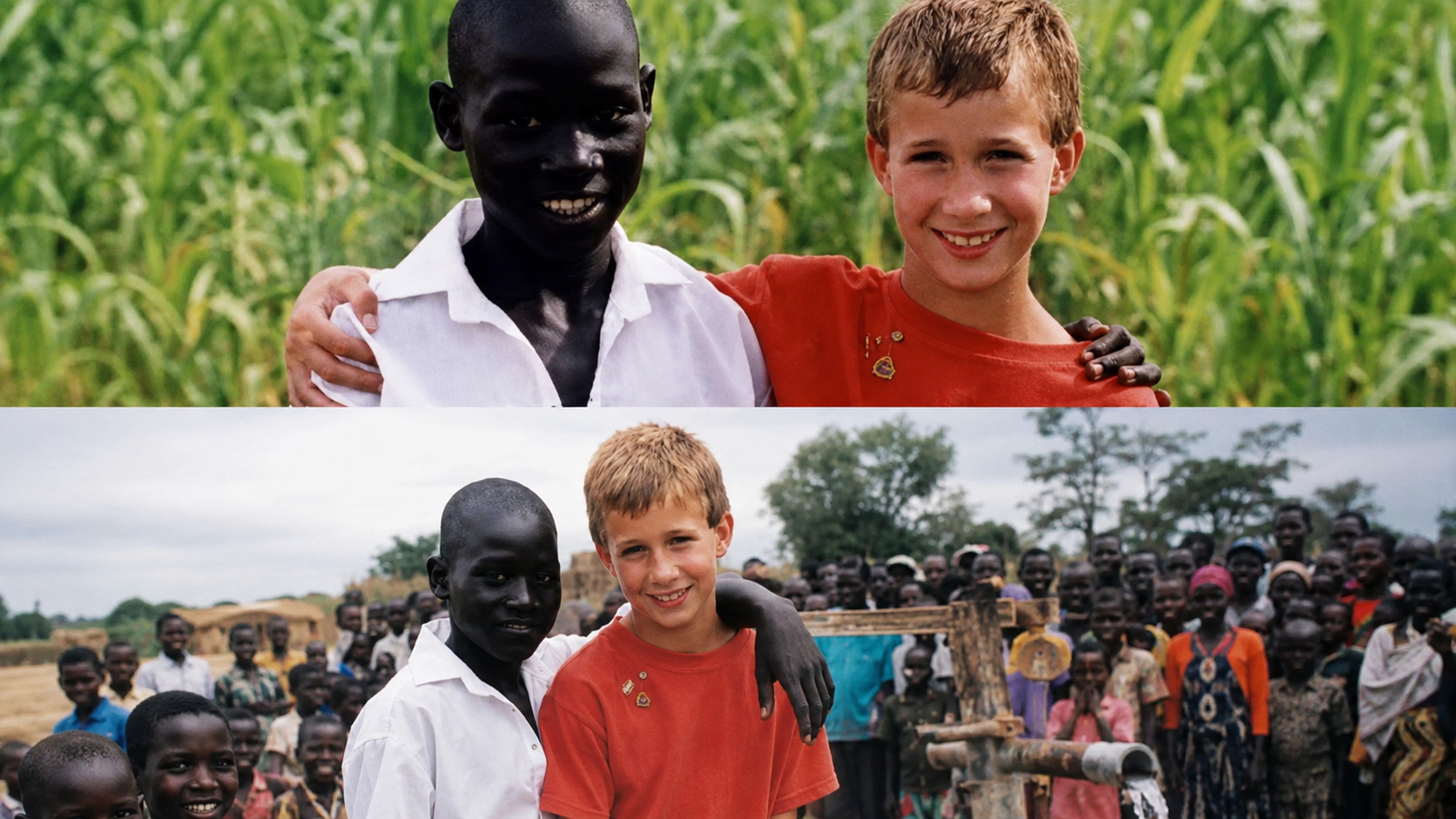
Inspired by a school lesson on Africa’s water crisis, a young boy raised money through chores to fund a well that transformed a Ugandan community.
-
Brazilian Construction Worker Moves to France, Earns Up to €2,500 Monthly with Home Renovations, Gains Social Media Attention




Louise Yeung, the city’s climate director, stated that trees are one of the most cost-effective tools for addressing the climate crisis. The plan highlights that tree canopy is not uniformly distributed across the five boroughs, with some neighborhoods showing over one-third coverage while others do not reach 6%. This inequality causes low-income and historically marginalized communities to suffer disproportionately from extreme heat.
The 12-degree inequality between neighborhoods with and without trees
The most impactful number in the plan is the temperature difference of up to 12 degrees between tree-lined areas and areas without vegetation cover within the same city. This disparity is not abstract: it translates into more heat-related hospitalizations, higher energy consumption for air conditioning, and a poorer quality of life for residents of neighborhoods that have historically been deprived of investment in green spaces.
The plan classifies this issue as a matter of racial and environmental justice. Neighborhoods with less tree canopy often coincide with predominantly Black and Latino communities that also face poorer air quality and more degraded infrastructure. The strategy is to begin planting in these areas, reversing decades of underinvestment that have left entire parts of New York without the natural protection that trees provide against urban heat.
How New York intends to increase tree canopy from 25% to 30%
The goal of increasing the tree canopy by five percentage points may seem modest, but in a city as dense as New York, each percentage point represents a considerable logistical challenge. Beneath the streets are sewers, utility lines, and all kinds of underground infrastructure that limit the available spaces for planting new trees. The plan needs to map where it is possible to establish roots without conflicting with this invisible network.
The strategy is divided into three fronts. The first is to plant new trees, focusing on neighborhoods most lacking in tree canopy. The second is to better care for existing trees, as about 90% of tree canopy growth comes from specimens that mature and expand their canopies over the years. The third is to cultivate a community of residents engaged in the maintenance of the urban forest, offering resources and education on how to plant, prune, and care for trees on private properties, which house about one-third of the total canopy.
The challenge of planting trees that survive the future climate
It’s not enough to plant just any species. The plan emphasizes the need for diversity in planted trees to ensure the urban forest survives the more extreme climatic conditions that the city will face in the coming decades. Species that thrive in the current climate may not withstand summers with 35 days above 35°C, and the wrong choice would mean losing investment and time.
Director Yeung highlighted that New York intends to expand its seedling production capacity and select species proven to be resistant to the heat and storms that the future holds. Another critical point is that a 160-year-old tree cannot be replaced with a young specimen, which reinforces the importance of preserving existing mature trees that provide most of the current environmental benefits. The loss of 500 trees in the Red Hook housing complex after Hurricane Sandy illustrates how extreme weather events can devastate the urban forest in a matter of hours.
What New York can teach other cities about trees and heat


New York‘s urban forest plan is not just a local policy. It establishes a replicable model for any city facing increasing heatwaves and inequality in the distribution of green spaces, problems that affect metropolises on all continents. The approach that connects trees to environmental justice, climate infrastructure, and public health offers a framework that other administrations can adapt to their realities.
For New Yorkers, the plan is an invitation to participate. Eight thousand residents contributed feedback during workshops and public surveys, and the most frequent response was enthusiasm for receiving resources and guidance on how to plant and care for trees in their backyards and on sidewalks. The nyc.gov/climate website centralizes information, and any resident can request a tree planting in front of their home by calling 311. New York‘s urban forest will not be built solely by the city government: it will depend on millions of people who understand that a tree planted today is protection against the heat that will come tomorrow.
Do you think your city needs an urban forest plan like New York’s, or do trees already receive enough attention where you live? Tell us in the comments if you notice a temperature difference between tree-lined neighborhoods and neighborhoods without trees in your area.